Application of modified cellulose acetate composite filters for the removal of pollutants from textile industry wastewater
УДК 628.3+677
Abstract
This article investigates the potential of modified cellulose acetate-based composite filter materials for the effective removal of dyes, colloidal substances, and organic pollutants from textile industry wastewater. Composite filter materials based on diacetylcellulose were prepared using various organo-inorganic components, including titanium dioxide, silicon dioxide, activated carbon, and chitosan. The effects of the type, concentration, and ratio of modifiers on the porosity, water permeability, sorption capacity, and mechanical strength of the filter materials were studied. Structural and morphological analyses demonstrated that the formation of a homogeneous porous structure in the composite materials enhances the efficiency of filtration and sorption processes. Based on the experimental results, an optimal composition containing diacetylcellulose, plasticizer, fillers, TiO2, activated carbon, and chitosan was proposed. The obtained filter materials were tested in dye baths, confirming their high adsorption properties, mechanical stability, and potential for long-term operation. The optimal porosity was found to be within the range of 60–70 %, providing a favorable balance between purification efficiency and filtration rate. The developed composite filter materials were evaluated as promising materials for textile wastewater treatment, water reuse, and reduction of environmental pollution. The relationship between composition–structure–property was identified as a key factor governing the sorption and filtration characteristics of the materials. The obtained results demonstrate the potential application of modified cellulose acetate-based filters in industrial enterprises to reduce wastewater color and organic pollution, improve the economic efficiency of treatment processes, and contribute to reducing water scarcity.
Аннотация
В статье исследована возможность применения модифицированных композиционных фильтрующих материалов на основе ацетатцеллюлозы для эффективного удаления красителей, коллоидных и органических загрязняющих веществ из сточных вод текстильной промышленности. На основе диацетатцеллюлозы получены композиционные фильтрующие материалы с использованием различных органо-неорганических компонентов, включая диоксид титана, диоксид кремния, активированный уголь и хитозан. Изучено влияние вида, содержания и соотношения модифицирующих компонентов на пористость, водопроницаемость, сорбционную способность и механическую прочность фильтрующих материалов. Результаты структурных и морфологических исследований показали, что формирование однородной пористой структуры композиционных материалов способствует повышению эффективности процессов фильтрации и сорбции. На основании полученных экспериментальных результатов предложен оптимальный состав композиционного материала, включающий диацетатцеллюлозу, пластификатор, наполнители, TiO2, активированный уголь и хитозан. Полученные фильтрующие материалы испытаны в условиях красильных ванн, что подтвердило их высокие адсорбционные свойства, механическую стабильность и возможность длительной эксплуатации. Оптимальная пористость материалов составила 60–70 %, при которой обеспечивается рациональный баланс между эффективностью очистки и скоростью фильтрации. Разработанные композиционные фильтрующие материалы могут рассматриваться как перспективные материалы для очистки сточных вод текстильной промышленности, повторного использования воды и снижения экологической нагрузки. Установлена взаимосвязь «состав–структура–свойство», определяющая сорбционные и фильтрационные характеристики материалов. Полученные результаты свидетельствуют о перспективности применения модифицированных ацетатцеллюлозных фильтров на промышленных предприятиях
Keywords: cellulose acetate; composite filter material; textile industry; wastewater; water purification; modification; activated carbon; chitosan; titanium dioxide; silicon dioxide; sorption; adsorption; porosity; filtration; purification efficiency.
Ключевые слова: ацетатцеллюлоза; композиционный фильтрующий материал; текстильная промышленность; сточные воды; очистка воды; модификация; активированный уголь; хитозан; диоксид титана; диоксид кремния; сорбция; адсорбция; пористость; фильтрация; эффективность очистки.
Introduction
Today, along with the rapid development of the textile industry, the effective treatment and reuse of wastewater generated during production processes is one of the important environmental challenges. Textile enterprises consume large amounts of water during dyeing, washing, bleaching, and finishing processes, resulting in the formation of wastewater containing dyes, organic compounds, salts, and other pollutants [3; 4; 7].
Various methods, including coagulation-flocculation, adsorption, oxidation, flotation, and membrane filtration, are widely used for textile wastewater treatment. However, due to the complex composition of wastewater and the presence of different types of pollutants, the use of a single treatment method does not always provide the required purification efficiency [3;7]. In particular, adsorption and membrane filtration are considered promising approaches for the removal of dye compounds from wastewater [4–6].
During the adsorption process, activated carbon, silicon dioxide, zeolites, and various carbon-based materials are widely used as effective adsorbents. These materials can remove dye molecules due to their porous structure and developed specific surface area [4; 6]. Membrane technologies make it possible to separate suspended particles and dissolved components based on membrane pore size and selective permeability. However, membrane fouling, service life, and operating costs remain important limitations in the application of these technologies [1; 5].
From this perspective, the use of cellulose acetate as a polymer matrix is considered a promising approach. Modification of cellulose acetate-based filter and membrane materials with various modifiers makes it possible to control their porosity, water permeability, mechanical strength, and sorption properties. Recent studies have demonstrated the potential of cellulose acetate-based fibrous and nanofibrous materials for the removal of dyes, including methylene blue, from aqueous media [2].
At the same time, incorporation of organic and inorganic components such as TiO2, SiO2, activated carbon, and chitosan into a cellulose acetate matrix can improve the functional properties of composite materials. Such components play an important role in increasing the number of adsorption sites, developing the porous structure, and improving the mechanical stability of filter materials [4; 2; 8].
The aim of this study is to evaluate the applicability of modified cellulose acetate-based composite filter materials for the effective removal of dyes, colloidal substances, and organic pollutants from textile industry wastewater.
The study focuses on determining the filtration and sorption properties of modified cellulose acetate composite filters, evaluating their wastewater treatment efficiency, determining the optimal porosity of the filter material, and assessing their applicability under dye-bath conditions. Based on the experimental results, the optimal composition and practical potential of the developed composite filters for textile wastewater treatment were evaluated.
Materials
The materials used in this study included diacetylcellulose as the polymer matrix, titanium dioxide (TiO2), silicon dioxide (SiO2), chitosan, activated carbon, and plasticizer as the main modifying components. Textile industry wastewater and dye-bath wastewater were used as the objects of the study. The selected organic and inorganic components were used to prepare modified cellulose acetate-based composite filter materials with controlled porous structures and improved sorption and filtration properties.
Research Methods
Experimental investigations were carried out throughout the study. The composition, physicochemical, structural, and filtration properties of the developed modified cellulose acetate-based composite filter materials were investigated using appropriate analytical methods. Fourier-transform infrared (FTIR) spectroscopy was used to identify the functional groups and chemical interactions between the components. Scanning electron microscopy (SEM) was employed to examine the surface morphology and porous structure of the composite filter materials. The porosity, water permeability, water absorption, swelling, and mechanical strength of the obtained materials were determined using standardized experimental procedures. The purification efficiency of the composite filters was evaluated using textile industry wastewater and dye-bath wastewater. The changes in the main wastewater quality parameters before and after filtration were analyzed to determine the effectiveness of the developed filter materials. The experimental data were processed using mathematical and statistical methods to determine the optimal composition and operating characteristics of the composite filter materials.
Results and Discussion
Several types of cellulose acetate were selected as binders for the preparation of composite filter materials. Cellulose acetate is characterized by good film-forming ability, chemical stability, and mechanical properties. It is readily soluble in organic solvents such as acetone, ethanol, and methylene chloride.
To improve the porosity, mechanical strength, and sorption properties of the cellulose acetate-based filter materials, SiO2, TiO2, activated carbon, and chitosan were incorporated into the composition. SiO2 contributes to structural stabilization and the formation of a stable porous structure. TiO2 contributes to the functional properties and structural modification of the material. Activated carbon, due to its high sorption capacity, contributes to the removal of organic compounds and dyes from wastewater, while chitosan enhances the sorption properties through its functional amino groups.
The composite filter materials were prepared under laboratory conditions. Cellulose acetate was dissolved in an organic solvent and stirred continuously at 40–50 °C to obtain a homogeneous solution. The solution was then maintained under vacuum for 20–30 min to remove entrapped air bubbles. Polyethylene glycol (PEG) was added at a concentration of 5 wt.% as a plasticizing and pore-forming component. The pre-prepared SiO2, TiO2, activated carbon, and chitosan were then introduced in predetermined amounts and mixed uniformly for 10–15 min.
The resulting composite mixture was poured into molds and dried at 25–60 °C by evaporating the solvent to obtain film-like filter materials. The developed materials exhibited high porosity, good mechanical strength, and enhanced sorption properties.
The incorporation of the selected fillers improved the water permeability, sorption characteristics, and operational stability of the materials. Based on the experimental results, optimal compositions of the composite filter materials for textile wastewater treatment were selected.
The optimal compositions of the developed composite filter materials for textile wastewater treatment are presented in Table 1.
Table 1.
Optimal composition of the developed composite filter materials for textile wastewater treatment
| Components | Composition of components, wt.% | ||
|---|---|---|---|
| CFM- 1 | CFM -2 | CFM -3 | |
| Diacetylcellulose | 100 | 100 | 100 |
| Polyethylene glycol (PEG) | 5 | 5 | 5 |
| Titanium dioxide (TiO₂) | 8- | 6 | 4 |
| Silicon dioxide (SiO₂) | 10 | 8 | 6 |
| Chitosan | 8 | 6 | 4 |
| Activated carbon | 10 | 10 | 10 |
To determine the chemical structure of the composite filter material and the effect of the fillers incorporated into its composition, Fourier-transform infrared spectroscopy (FTIR) analysis was performed (Fig. 1).
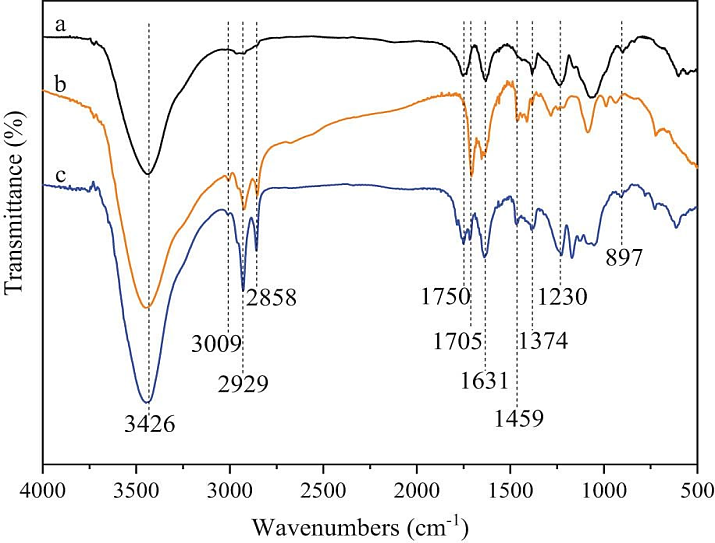
The analysis of the spectra showed that the broad absorption band observed in the range of 3200–3500 cm-¹ corresponds to hydroxyl (–OH) groups and is associated with the hydroxyl groups present in cellulose acetate and SiO2. At the same time, the broadening and increase in intensity of the band in this region indicate the formation of hydrogen bonds between the components. The absorption bands observed at around 1600–1650 cm-¹ are attributed to amino (–NH2) groups of chitosan, confirming the presence of the biopolymer in the composite material. The band in the range of 1730–1750 cm-¹ corresponds to carbonyl (C=O) groups characteristic of cellulose acetate and indicates that the main polymer matrix is retained in the composite. The strong absorption bands observed in the 1000–1200 cm-¹ region are attributed to silicon–oxygen (Si–O–Si) bonds, confirming the presence of the SiO2 filler. The bands in the 700–900 cm-¹ range are attributed to titanium–oxygen (Ti–O) bonds, indicating the incorporation of TiO2 nanoparticles into the composite. In addition, absorption bands corresponding to aromatic C=C bonds were observed in the 1500–1600 cm-¹ region, which can be associated with the presence of activated carbon.
The FTIR spectral analysis results fully confirmed the presence of cellulose acetate, chitosan, SiO2, TiO2, and activated carbon in the composite material. The shifts of the absorption bands and changes in their intensity indicate the occurrence of interactions between the components, including hydrogen bonding and physical interactions. This indicates the formation of a stable structure in the composite material.
To investigate the surface morphology of the composite materials, scanning electron microscopy (SEM) analysis was performed (Fig. 2). According to the obtained results, the pure cellulose acetate sample exhibited a relatively smooth and homogeneous surface. A low number of pores and a densely packed structure were observed.
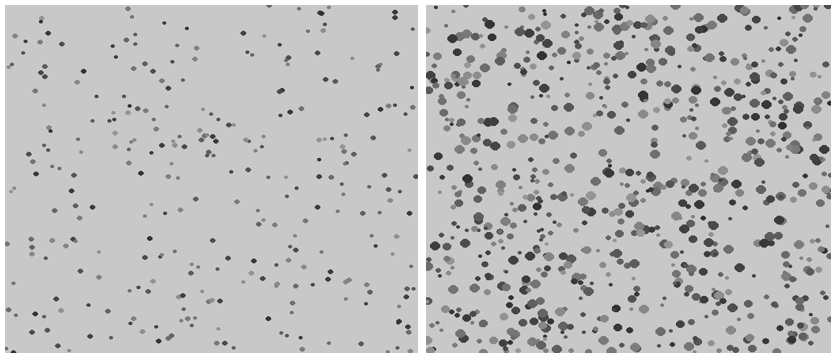
SEM analysis revealed clear differences in the surface morphology of pure and modified cellulose acetate materials. The pure cellulose acetate sample (Fig. 2a) exhibited a relatively smooth and homogeneous surface with a dense structure and a low number of visible pores. After incorporation of activated carbon, chitosan, TiO2, and SiO2, the surface morphology changed considerably (Fig. 2b), showing a rougher and more porous structure with an increased number and size of pores. The inorganic particles were relatively uniformly distributed throughout the polymer matrix, while the incorporation of chitosan contributed to the formation of additional active sites on the surface. These morphological changes are favorable for improving the sorption and filtration properties of the composite material.
The efficiency of cellulose acetate-based composite filter materials is largely determined by their porous structure and permeability. Porosity directly affects the ability of the material to transport liquids and gases and is closely related to the internal structure, filler distribution, and interactions between the components.
In this study, the porosity and permeability of filter materials based on different types of cellulose acetate were comparatively investigated. The total porosity was determined using the pycnometric method based on the actual and theoretical densities of the materials in accordance with GOST 28513-90. The permeability characteristics were evaluated by determining the volume of liquid or gas passing through the filter material per unit of time under a specified pressure.
The results obtained for filter materials based on monoacetate, diacetate, and triacetate cellulose demonstrated that the type of cellulose acetate significantly affects the structural and filtration properties of the materials. Among the investigated samples, the diacetate cellulose-based material exhibited the most favorable combination of porosity and permeability, indicating a more suitable porous structure for filtration applications. In contrast, triacetate cellulose showed comparatively lower permeability, which was associated with its denser structure and lower porosity. Based on these results, diacetate cellulose was selected as the optimal polymer matrix for the subsequent preparation of modified composite filter materials.
Table 2.
Porosity and filtration properties of cellulose acetate-based filter materials
| № | Material properties | Monoacetate cellulose | Diacetate cellulose | Triacetate cellulose | Determination method |
|---|---|---|---|---|---|
| 1 | Porosity, % | 38 ± 1.2 | 45 ± 1.4 | 30 ± 1.0 | GOST 18898-89 |
| 2 | Permeability, cm³/s | 0.70 ± 0.03 | 0.90 ± 0.04 | 0.60 ± 0.03 | GOST 3584-73 |
| 3 | Density, g/cm³ | 1.18 ± 0.02 | 1.20 ± 0.02 | 1.28 ± 0.03 | GOST 28513-90 |
| 4 | Water absorption, % | 20 ± 0.8 | 18 ± 0.7 | 12 ± 0.6 | Gravimetric method |
| 5 | Average pore diameter, μm | 10 ± 0.5 | 14 ± 0.7 | 8 ± 0.4 | Microscopic analysis |
| 6 | Filtration efficiency, % | 82 ± 1.5 | 88 ± 1.3 | 80 ± 1.6 | Experimental method |
Values are presented as mean ± standard deviation (SD), n = 3.
The main practical performance of the developed composite filter materials was evaluated based on their ability to reduce the major pollutants present in textile wastewater. Particular attention was paid to color intensity, chemical oxygen demand (COD), biochemical oxygen demand (BOD), and suspended solids, as these parameters are important indicators of wastewater quality.
Textile wastewater was treated using the developed CFM-1, CFM-2, and CFM-3 composite filters. The changes in the main wastewater quality parameters before and after filtration were compared. The results obtained for the three filter compositions are presented in Table 3.
Table 3.
Changes in the main quality parameters of textile wastewater after filtration
| Parameter | Before treatment | CFM-1 | CFM-2 | CFM-3 |
|---|---|---|---|---|
| Color intensity, % | 100 ± 1.0 | 18 ± 0.8 | 12 ± 0.6 | 15 ± 0.7 |
| COD, mg/L | 620 ± 12 | 145 ± 5 | 105 ± 4 | 125 ± 5 |
| BOD, mg/L | 210 ± 6 | 52 ± 3 | 38 ± 2 | 45 ± 3 |
| Suspended solids, mg/L | 185 ± 5 | 32 ± 2 | 24 ± 1 | 28 ± 2 |
Values are presented as mean ± standard deviation (SD), n = 3.
The results presented in Table 3 indicate that all developed composite filter materials substantially reduced the main pollution parameters of textile wastewater. The most pronounced purification effect was observed for CFM-2, which reduced color intensity from 100 % to approximately 12 %, COD from 620 to 105 mg/L, BOD from 210 to 38 mg/L, and suspended solids from 185 to 24 mg/L.
The higher efficiency of CFM-2 can be associated with the balanced ratio of the modifying components in its composition. The combination of activated carbon, SiO2, TiO2, and chitosan provides favorable conditions for the retention of dye molecules, suspended particles, and organic pollutants. CFM-1 and CFM-3 also demonstrated significant purification efficiency, although their overall performance was somewhat lower than that of CFM-2.
Thus, the comparative results suggest that CFM-2 represents the most promising composition for the treatment of textile wastewater, providing a favorable combination of filtration and sorption properties. The developed composite filter materials can therefore be considered promising for further practical application in textile wastewater treatment.
Conclusion
The results of this study demonstrate the potential of modified cellulose acetate-based composite filter materials for the treatment of textile industry wastewater. Among the investigated cellulose acetate types, diacetate cellulose showed the most favorable filtration characteristics, with a porosity of 45 %, permeability of 0.90 cm³/s, and filtration efficiency of 88 %, and was therefore selected as the polymer matrix.
The incorporation of SiO2, TiO2, activated carbon, and chitosan into the cellulose acetate matrix improved the functional properties of the developed composite filters. Comparative evaluation of CFM-1, CFM-2, and CFM-3 showed that the composition and ratio of the modifying components significantly affected the filtration performance.
Among the developed materials, CFM-2 demonstrated the most favorable overall purification performance, showing a greater reduction in color intensity, COD, BOD, and suspended solids compared with the other compositions. This effect can be attributed to the balanced composition of the polymer matrix and functional fillers, which provides favorable filtration and sorption properties.
Overall, the developed modified cellulose acetate-based composite filters, particularly CFM-2, demonstrate considerable potential for textile wastewater treatment and may serve as a basis for further optimization and practical application.
References