
Mapping the knowledge structure and research evolution of ammonium nitrate thermal stability: a bibliometric review
УДК 004.9+543.3+661.9
Abstract
The growing scientific interest in ammonium nitrate thermal stability reflects increasing concerns regarding storage safety, thermal decomposition, explosion hazards, and performance optimization of ammonium nitrate-based materials. Despite the expanding body of literature, a comprehensive understanding of the intellectual structure, research evolution, and emerging trends within this field remains limited. Therefore, this study presents a bibliometric review aimed at mapping the knowledge structure and scientific development of research related to ammonium nitrate thermal stability. Bibliographic data were retrieved from the Scopus database using the search query TITLE-ABS-KEY («ammonium nitrate») AND TITLE-ABS-KEY («thermal stability»). A total of 247 publications were analyzed using Bibliometrix, Biblioshiny, and VOSviewer. Various bibliometric techniques, including citation analysis, co-occurrence analysis, co-authorship analysis, thematic mapping, Multiple Correspondence Analysis (MCA), Bradford’s Law, Lotka’s Law, and keyword evolution analysis, were employed to evaluate the development and conceptual organization of the research field. The conceptual structure analysis highlighted the multidisciplinary nature of the field, integrating knowledge from chemistry, materials science, chemical engineering, environmental science, and industrial safety. Furthermore, the findings revealed emerging opportunities associated with mineral-based stabilization technologies. Natural aluminosilicate materials such as bentonite and glauconite were identified as promising yet underexplored additives with potential applications in thermal stabilization, caking reduction, and safety enhancement of ammonium nitrate products.
Аннотация
Растущий научный интерес к термической стабильности аммиачной селитры обусловлен возрастающим вниманием к вопросам безопасности её хранения, термического разложения, предотвращения взрывоопасных ситуаций, а также оптимизации эксплуатационных характеристик материалов на основе аммиачной селитры. Несмотря на значительный рост числа научных публикаций, целостное представление об интеллектуальной структуре, эволюции исследований и современных тенденциях развития данного научного направления до настоящего времени остается недостаточно изученным. В связи с этим настоящее исследование представляет собой библиометрический обзор, направленный на картирование структуры знаний и научной эволюции исследований, посвящённых термической стабильности аммиачной селитры. Библиографические данные были получены из базы данных Scopus с использованием поискового запроса TITLE-ABS-KEY («ammonium nitrate») AND TITLE-ABS-KEY («thermal stability»). В общей сложности было проанализировано 247 научных публикаций с применением программных пакетов Bibliometrix, Biblioshiny и VOSviewer. Для оценки динамики развития, концептуальной организации и интеллектуальной структуры исследуемой области использовались различные библиометрические методы, включая анализ цитирования, анализ совместной встречаемости ключевых слов, анализ соавторства, тематическое картирование, анализ множественных соответствий (Multiple Correspondence Analysis, MCA), закон Брэдфорда (Bradford’s Law), закон Лотки (Lotka’s Law), а также анализ эволюции ключевых слов. Результаты анализа концептуальной структуры продемонстрировали междисциплинарный характер рассматриваемой области исследований, объединяющей достижения химии, материаловедения, химической технологии, экологических наук и промышленной безопасности. Кроме того, полученные результаты свидетельствуют о формировании новых перспективных направлений исследований, связанных с применением технологий стабилизации на основе минеральных материалов. В частности, природные алюмосиликатные материалы, такие как бентонит и глауконит, были идентифицированы как перспективные, однако недостаточно изученные минеральные добавки, обладающие высоким потенциалом для повышения термической стабильности аммиачной селитры, снижения её слёживаемости и улучшения эксплуатационной безопасности соответствующих продуктов.
Keywords: ammonium nitrate; thermal stability; bibliometric analysis; science mapping; knowledge structure; VOSviewer; Bibliometrix; thermal decomposition; thermodynamic stability; decomposition kinetics; keyword evolution; Multiple Correspondence Analysis; Bradford’s Law; Lotka’s Law; polymer modification; mineral additives; bentonite; glauconite.
Ключевые слова: аммиачная селитра; термическая стабильность; библиометрический анализ; картирование науки; структура знаний; VOSviewer; Bibliometrix; термическое разложение; термодинамическая стабильность; кинетика разложения; эволюция ключевых слов; анализ множественных соответствий (MCA); закон Брэдфорда; закон Лотки; полимерная модификация; минеральные добавки; бентонит; глауконит.
Introduction
Ammonium nitrate (AN) is one of the most extensively utilized inorganic compounds in modern agriculture and industry. Due to its high nitrogen content, favorable agronomic performance, and relatively low production cost, ammonium nitrate has become an essential component of nitrogen-based fertilizers worldwide. The growing demand for agricultural productivity and food security has contributed significantly to the continued use of ammonium nitrate in fertilizer manufacturing. As a result, considerable scientific attention has been devoted to improving its physicochemical properties, storage characteristics, and operational safety. In addition to its agricultural importance, ammonium nitrate plays a critical role in the production of energetic materials. Its strong oxidizing capability makes it suitable for various industrial applications, including blasting agents, mining explosives, and propellant formulations. The dual significance of ammonium nitrate in both agricultural and industrial sectors has stimulated extensive research aimed at understanding its behavior under different environmental and operating conditions.
Over the past several decades, advancements in thermal analysis techniques, materials science, and chemical engineering have enabled researchers to investigate the fundamental properties of ammonium nitrate in greater detail. These efforts have contributed to a deeper understanding of its decomposition mechanisms, thermal behavior, phase transformations, and interactions with various additives and modifiers. Consequently, ammonium nitrate has remained an important subject of scientific investigation across multiple disciplines, including chemistry, chemical engineering, materials science, environmental science, and industrial safety.
Despite its widespread application, ammonium nitrate presents several challenges associated with thermal stability and safe handling. The compound undergoes a series of temperature-dependent phase transitions and decomposition reactions that can significantly influence its physical properties and performance. Under certain conditions, thermal decomposition may generate large quantities of gaseous products, resulting in pressure buildup and increased safety risks. The thermal behavior of ammonium nitrate is influenced by numerous factors, including temperature, moisture content, impurities, particle size distribution, storage conditions, and the presence of catalytic substances. Variations in these parameters may alter decomposition pathways and affect the overall stability of the material. Consequently, understanding the mechanisms governing thermal degradation has become a major research priority.
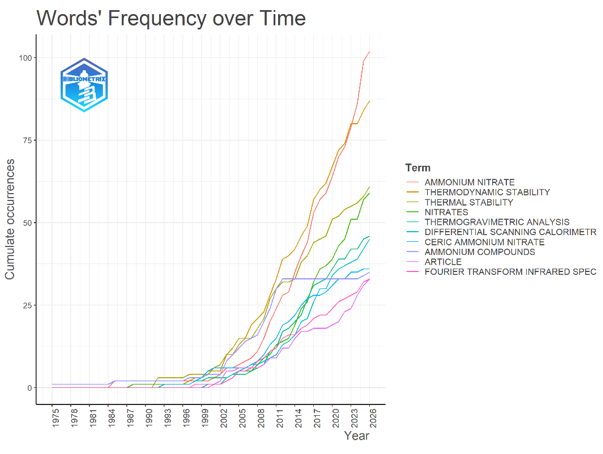
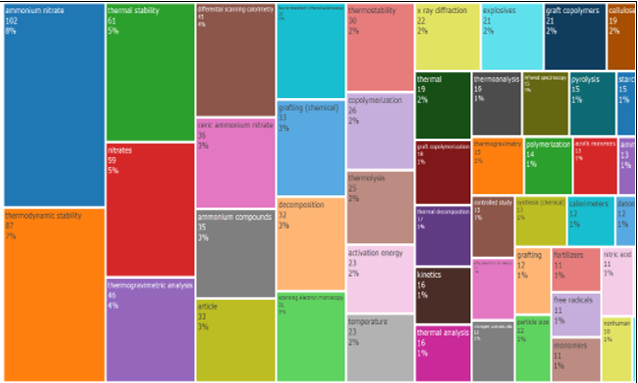
Fig. 1 presents the cumulative occurrence of the most frequently used keywords throughout the study period.
The analysis reveals a substantial increase in the usage of terms such as «ammonium nitrate», «thermodynamic stability», and «thermal stability», indicating growing scientific interest in thermal behavior, decomposition mechanisms, and safety-related aspects of ammonium nitrate systems.
Industrial incidents involving ammonium nitrate have further highlighted the importance of thermal stability studies. Accidental decomposition and explosion events have demonstrated the potential hazards associated with improper storage, contamination, and exposure to elevated temperatures.
These concerns have encouraged both researchers and industry practitioners to develop strategies aimed at enhancing thermal resistance, improving storage stability, and reducing safety risks throughout the product life cycle. In recent years, increasing attention has been directed toward the development of stabilization technologies based on polymers, mineral additives, surface coatings, and composite materials. Such approaches seek to improve the thermal performance of ammonium nitrate while maintaining its functionality and economic viability for large-scale industrial applications.
The rapid expansion of scientific literature related to ammonium nitrate thermal stability has created a need for systematic methods capable of evaluating research progress and identifying emerging trends. Traditional review articles provide valuable qualitative insights; however, they often face limitations when attempting to synthesize large volumes of publications produced over extended periods. Bibliometric analysis offers a quantitative approach for examining the structure, development, and dynamics of scientific research.
By analyzing publication records, citation patterns, collaboration networks, and keyword relationships, bibliometric methods enable researchers to identify influential contributors, highly cited studies, dominant research themes, and evolving scientific directions. Furthermore, science mapping techniques facilitate the visualization of conceptual relationships and knowledge structures within a research field.
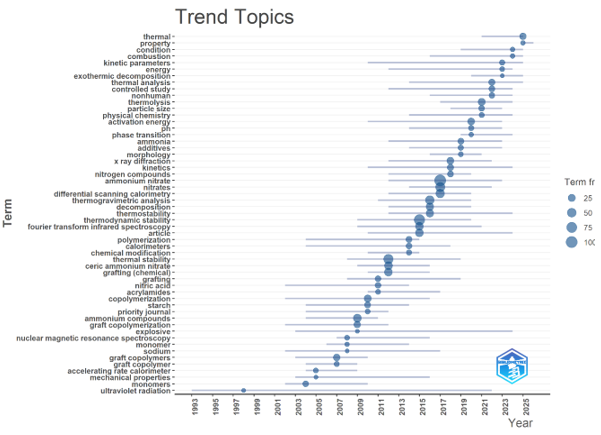
Fig. 2 depicts the temporal evolution of research topics identified from author keywords. The figure demonstrates a transition from fundamental studies involving thermal decomposition and calorimetric analysis toward advanced themes such as kinetic modeling, polymer modification, thermodynamic behavior, and stabilization strategies.
Research Objectives
Given the growing body of literature on ammonium nitrate thermal stability, a comprehensive evaluation of research trends and knowledge structures is necessary to better understand the evolution of this field. Therefore, the present study aims to provide a systematic bibliometric overview of global research related to ammonium nitrate thermal stability. Specifically, this study seeks to analyze publication growth patterns, identify the most productive authors, institutions, countries, and journals, and evaluate the intellectual and conceptual structure of the field through citation, co-occurrence, and collaboration analyses. In addition, the study investigates thematic evolution, research hotspots, and emerging scientific directions that have shaped the development of ammonium nitrate thermal stability research over time. By integrating bibliometric indicators with knowledge-mapping techniques, this work provides a comprehensive understanding of the current research landscape and identifies future opportunities associated with thermal stabilization technologies, advanced material modification strategies, and the development of safer ammonium nitrate-based products.
Materials and Methods
This study employed the Scopus database as the primary source of bibliographic information. Scopus was selected because of its extensive coverage of peer-reviewed scientific literature across multiple disciplines, including chemistry, chemical engineering, materials science, environmental science, and industrial safety. The database provides comprehensive bibliographic records, citation information, author affiliations, and keyword metadata, making it particularly suitable for bibliometric and scientometric investigations. All bibliographic records were retrieved directly from Scopus to ensure consistency in data collection and avoid discrepancies that may arise when combining multiple databases. The retrieved records constituted the foundation for subsequent analyses of publication trends, scientific impact, collaboration networks, conceptual structures, and thematic evolution within the field of ammonium nitrate thermal stability research. A systematic search strategy was developed to identify publications specifically related to the thermal stability of ammonium nitrate. The search was conducted within the titles, abstracts, and author keywords indexed in the Scopus database using the following search query: TITLE-ABS-KEY («ammonium nitrate») AND TITLE-ABS-KEY («thermal stability»).
Fig. 3 presents the local impact of the most influential journals measured by the H-index within the analyzed dataset. The Journal of Applied Polymer Science, Journal of Thermal Analysis and Calorimetry, and Thermochimica Acta emerged as the leading publication sources, reflecting their significant contribution to the development of ammonium nitrate thermal stability research.
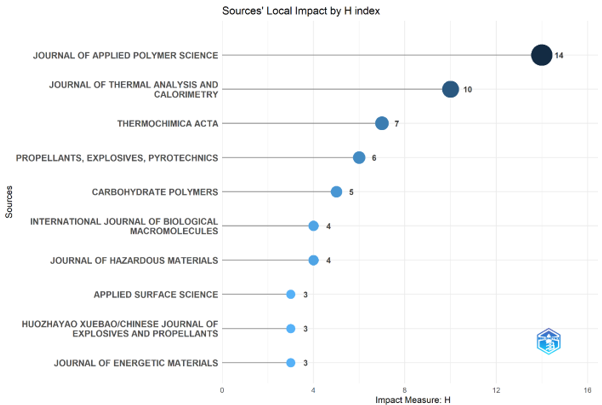
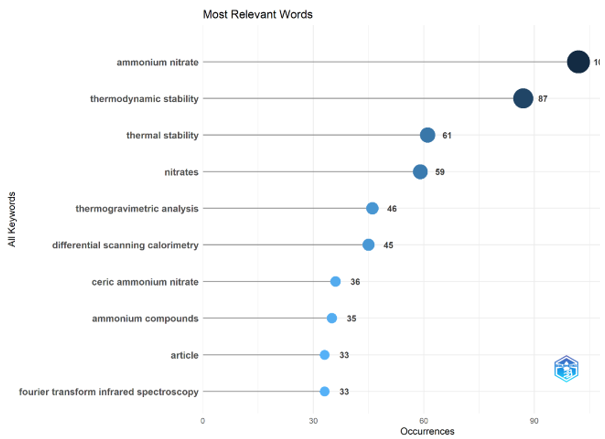
Fig. 4 depicts the most frequently occurring keywords extracted from the analyzed publications. «Ammonium nitrate» represents the dominant research theme, followed by «thermodynamic stability», «thermal stability», «thermogravimetric analysis», and «differential scanning calorimetry», highlighting the central role of thermal characterization techniques in this field. The search was performed on a single date to ensure consistency of the dataset and to minimize variations associated with database updates. All available records matching the search criteria were exported in CSV format. The exported data included information on publication titles, authors, affiliations, abstracts, author keywords, source titles, publication years, references, and citation counts. The initial search yielded 247 publications. These records were subsequently examined and prepared for bibliometric analysis.
The final dataset represents the global scientific literature associated with ammonium nitrate thermal stability and reflects contributions from a wide range of scientific disciplines and research communities. To ensure the reliability and relevance of the analysis, specific inclusion and exclusion criteria were applied during the dataset preparation process. The inclusion criteria comprised publications that explicitly addressed topics related to ammonium nitrate thermal stability, thermal decomposition, thermodynamic behavior, calorimetric analysis, safety assessment, stabilization technologies, or related physicochemical properties.
Only documents indexed in the Scopus database and containing the selected search terms within their titles, abstracts, or keywords were considered eligible for inclusion.
Publications unrelated to ammonium nitrate thermal behavior were excluded from the analysis. Duplicate records, incomplete entries, and documents lacking essential bibliographic information were also removed where necessary. The screening process was conducted to ensure that the final dataset accurately reflected the research domain under investigation and minimized the influence of irrelevant publications.
Fig. 5 presents the most productive research institutions contributing to studies on ammonium nitrate thermal stability.
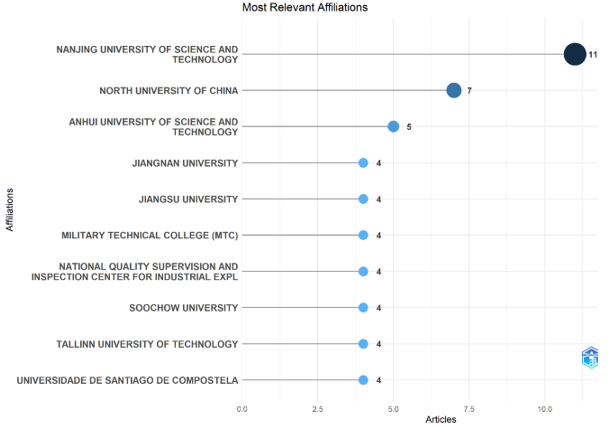
The results indicate that Chinese universities and research centers dominate publication output, demonstrating their leading role in advancing thermal analysis, energetic materials, and stabilization technologies.
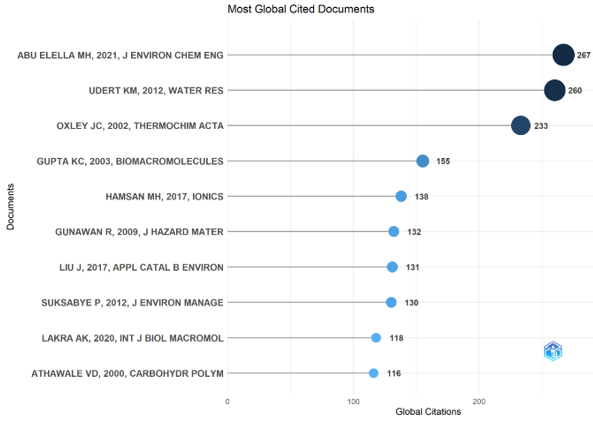
Fig. 6 depicts the most globally cited publications identified within the dataset. These highly influential studies have substantially shaped current understanding of ammonium nitrate decomposition mechanisms, thermal behavior, environmental impacts, and material modification approaches. Prior to analysis, the retrieved bibliographic data underwent a preprocessing procedure to improve data quality and analytical accuracy. The dataset was examined for duplicate entries, inconsistencies in author names, variations in institutional affiliations, and differences in keyword terminology.
Keyword standardization was performed to merge synonymous expressions and reduce fragmentation within the keyword network. Variations in spelling, abbreviations, and singular-plural forms were carefully reviewed to ensure consistency across the dataset.
Author names and institutional affiliations were also checked for possible inconsistencies that could affect productivity and collaboration analyses.The cleaned dataset was subsequently converted into formats compatible with the selected bibliometric software packages. This preprocessing stage enhanced the reliability of network visualizations and improved the interpretation of thematic relationships among publications.
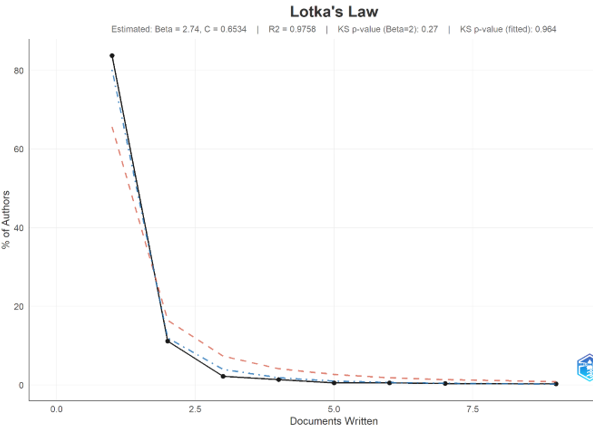
Fig. 7 presents the distribution of author productivity based on Lotka's Law. The results indicate that the majority of authors contributed only a small number of publications, whereas a limited group of highly productive researchers generated a substantial proportion of the scientific output in this field.
Bibliometric Analysis Tools
The bibliometric analyses were conducted using Bibliometrix, Biblioshiny, and VOSviewer, which are among the most widely used tools for science mapping and bibliometric investigations.
Bibliometrix, an open-source package developed within the R environment, was employed to calculate descriptive bibliometric indicators and evaluate publication performance.
Biblioshiny, the web-based interface of Bibliometrix, facilitated data exploration and visualization through an interactive analytical environment.
These tools were used to generate publication trends, source analyses, author productivity assessments, citation indicators, thematic maps, trend topic analyses, Bradford’s law distributions, and Lotka’s law evaluations.
Fig. 8 depicts a treemap representation of keyword frequency within the analyzed literature. Larger blocks correspond to more frequently occurring terms, illustrating the predominance of topics related to ammonium nitrate, thermal stability, thermodynamic analysis, decomposition behavior, and polymer-modified systems.
Conclusions
This study presents a comprehensive bibliometric assessment of the global scientific literature on ammonium nitrate thermal stability.
By integrating performance analysis with science mapping techniques, the study provides a detailed overview of the development, intellectual structure, and emerging directions of research within this field.
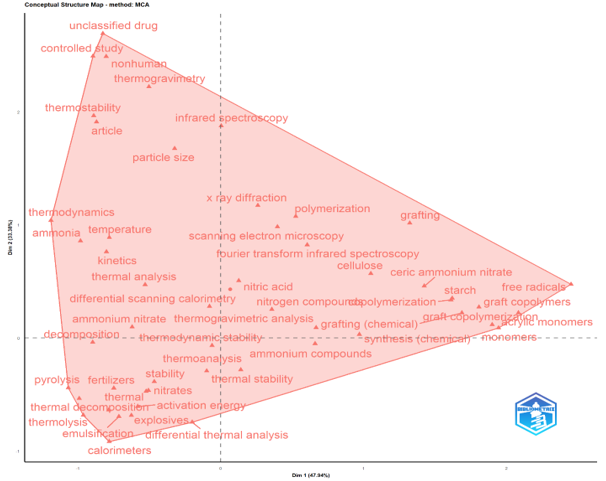
Fig. 9 presents the conceptual structure of the research field generated using multiple correspondence analysis. The map identifies several thematic clusters associated with thermal analysis, decomposition kinetics, spectroscopic characterization, polymerization processes, and stabilization mechanisms, demonstrating the multidisciplinary nature of AN thermal stability research.
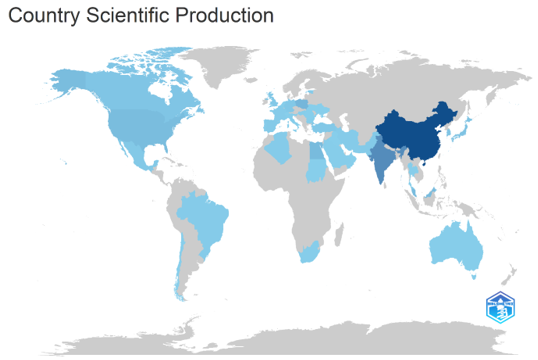
Fig. 10 depicts the geographical distribution of scientific production related to ammonium nitrate thermal stability. Countries with darker coloration exhibit higher publication output, highlighting China as the leading contributor, followed by several countries actively engaged in thermal analysis, energetic materials, and fertilizer safety research. The findings reveal a steady expansion of scientific activity related to ammonium nitrate thermal stability, particularly during the last decade. The increasing number of publications reflects growing academic and industrial interest in understanding the thermal behavior, decomposition mechanisms, safety characteristics, and stabilization strategies associated with AN-based materials.
This trend demonstrates the continued relevance of thermal stability research in addressing both technological and safety-related challenges. The analysis identified significant contributions from a relatively limited number of countries, institutions, and researchers. China emerged as the leading contributor in terms of scientific productivity and research impact, supported by strong institutional participation and extensive publication activity. The collaboration networks further indicate the existence of active international partnerships that contribute to knowledge exchange and scientific advancement in this research domain.
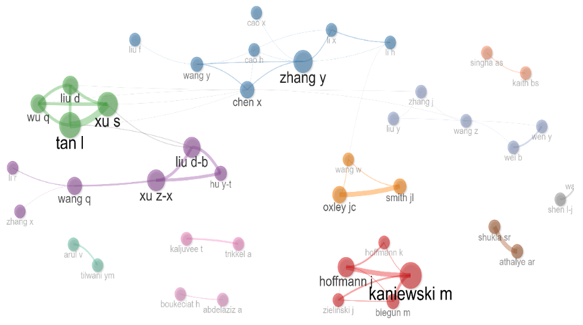
Fig. 11 presents the co-authorship network of the most productive researchers. Distinct collaboration clusters are observed, indicating active scientific partnerships and knowledge exchange among leading authors working on thermal decomposition, stability enhancement, and characterization of ammonium nitrate systems.
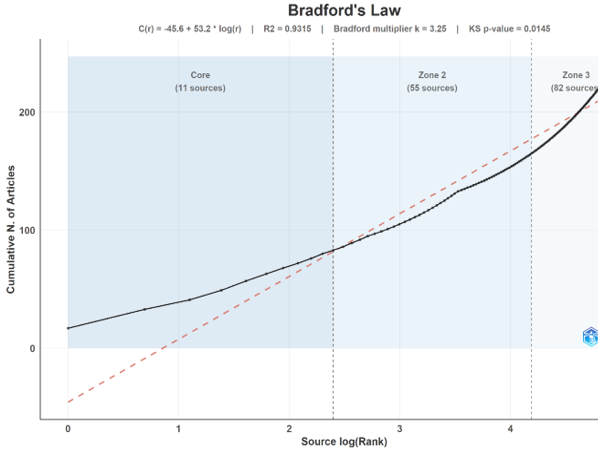
Fig. 12 depicts the distribution of scientific articles according to Bradford's Law. The analysis identifies a core group of highly productive journals responsible for publishing a significant proportion of the literature, followed by broader zones containing journals with progressively lower publication frequencies.
Keyword co-occurrence, thematic mapping, and conceptual structure analyses demonstrated that thermal decomposition, thermodynamic stability, thermal analysis, and decomposition kinetics remain the principal research themes.
These topics form the scientific foundation of the field and continue to drive investigations aimed at improving the understanding of ammonium nitrate behavior under various thermal conditions.
The intellectual structure of the literature further highlights the multidisciplinary nature of the field, incorporating concepts from chemistry, materials science, chemical engineering, environmental studies, and industrial safety.
Fig. 13 presents the local scientific impact of the most influential authors measured by the H-index. The identified researchers have contributed substantially to the advancement of knowledge regarding ammonium nitrate thermal stability, decomposition kinetics, and safety enhancement technologies.
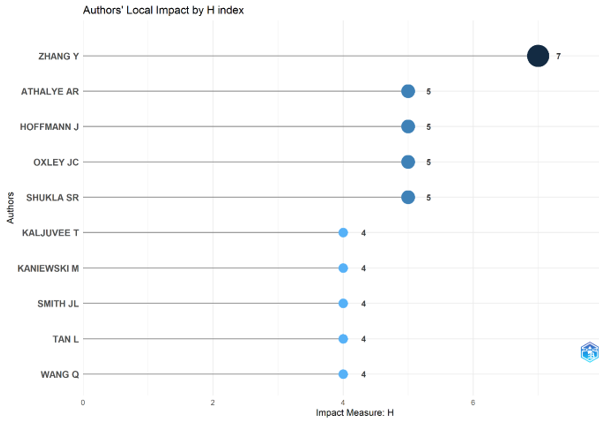
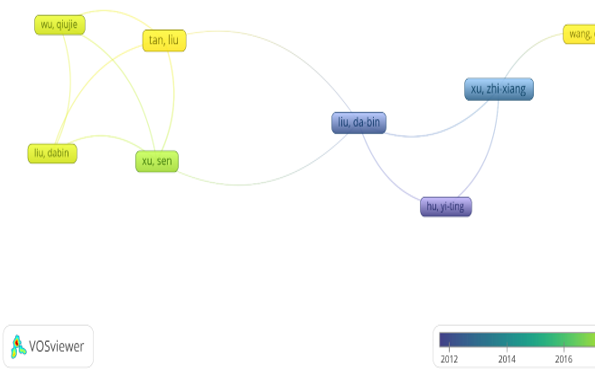
Fig. 14 depicts the temporal evolution of research keywords across different time periods. The network illustrates how research themes have evolved from fundamental investigations of ammonium nitrate and thermal stability toward advanced studies involving copolymerization, graft polymers, and material modification technologies. The evolution of research themes revealed a gradual transition from fundamental thermal characterization studies toward application-oriented approaches involving material modification and performance enhancement.
In particular, increasing attention has been directed toward polymer-based stabilization technologies, advanced characterization methods, and strategies designed to improve thermal resistance and operational safety. The emergence of these themes reflects the growing emphasis on developing practical solutions to challenges associated with storage, transportation, and industrial utilization of ammonium nitrate.
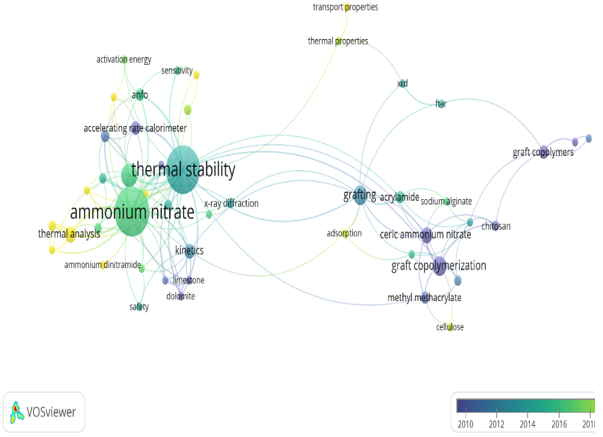
Fig. 15 presents an overlay visualization of the keyword co-occurrence network generated using VOSviewer. The color gradient reflects the temporal evolution of research topics, with recent studies increasingly focusing on polymer-based modification strategies, advanced stabilization approaches, and thermal performance optimization of ammonium nitrate materials.
The results also suggest that several promising research opportunities remain insufficiently explored. Among these, mineral-based stabilization approaches represent a particularly important direction for future investigation. Natural aluminosilicate materials, including bentonite and glauconite, possess physicochemical properties that may contribute to improved thermal stability, reduced caking behavior, and enhanced storage safety. Despite their potential advantages, these materials remain underrepresented within the existing literature and warrant more comprehensive experimental and mechanistic studies.
References
