
Пример оформления статьи на английском языке
Received: 07.03.2026
Accepted: 22.03.2026
Published: 11.05.2026
Educational example for Universum: Psychology and Education. Author details, dates, funding, and research results are illustrative.
UDC 37.025.7:159.922.6
Gamification in primary school mathematics instruction: Effects on motivation and learning outcomes
Stepanova Olga Mikhailovna
PhD in Pedagogy, Associate Professor,
Department of Primary Education Methods, Moscow Pedagogical State University,
Moscow, Russia
E-mail: stepanova.om@mpgu.su
ORCID: 0000-0001-2345-6789
RSCI SPIN code: 1234-5678
Геймификация в обучении математике в начальной школе: влияние на мотивацию и учебные результаты
Степанова Ольга Михайловна
канд. пед. наук, доцент,
кафедра методики начального образования, Московский педагогический государственный университет,
Москва, Россия
E-mail: stepanova.om@mpgu.su
ORCID: 0000-0001-2345-6789
SPIN-код: 1234-5678
Abstract
Gamification—the application of game elements in non-game contexts—is viewed as a strategy for enhancing student engagement and improving mathematics learning outcomes in primary school settings, where a lack of motivation and mathematics anxiety frequently hinder academic performance. This quasi-experimental study (N = 186 third-grade students, aged 8–9) investigated the impact of a 12-week gamification intervention on intrinsic motivation, mathematics anxiety, and arithmetic performance across six primary schools in Moscow. The experimental group followed a gamified curriculum (incorporating points, badges, leaderboards, and narrative-based quest elements), while the control group followed a standard curriculum. The experimental group demonstrated significantly higher intrinsic motivation (d = 0.71), lower mathematics anxiety (d = 0.54), and higher arithmetic performance (d = 0.63). The motivational effects were particularly pronounced among students with initially low levels of motivation. These findings support the integration of gamification into primary school mathematics curricula. Motivational and learning outcomes are considered together to assess the educational relevance of the intervention beyond its immediate appeal to students. Practical implementation requires alignment between game elements and the mathematics curriculum. Limitations include the use of a custom platform and the absence of delayed follow-up measurement. Further work should examine whether the effects persist after the intervention and generalise to other school settings.
Аннотация
Геймификация — применение игровых элементов в неигровых контекстах — рассматривается как стратегия повышения вовлечённости учащихся и улучшения результатов обучения математике в начальной школе, где дефицит мотивации и математическая тревожность нередко препятствуют успеваемости. В настоящем квазиэкспериментальном исследовании (N = 186 учащихся 3-го класса, 8–9 лет) изучалось влияние 12-недельного геймификационного вмешательства на внутреннюю мотивацию, математическую тревожность и арифметическую успеваемость в шести московских начальных школах. Экспериментальная группа занималась по геймифицированной программе (баллы, бейджи, таблицы лидеров, нарративные квест-элементы); контрольная — по стандартной. Экспериментальная группа продемонстрировала достоверно более высокую внутреннюю мотивацию (d = 0,71), меньшую математическую тревожность (d = 0,54) и более высокую арифметическую успеваемость (d = 0,63). Мотивационные эффекты были особенно выражены у учащихся с исходно низкой мотивацией. Результаты обосновывают интеграцию геймификации в учебные программы по математике начальной школы. Результаты рассматриваются совместно для мотивационных и учебных показателей, что позволяет оценить образовательную значимость вмешательства, а не только его привлекательность для учащихся. Практическое применение подхода предполагает согласование игровых элементов с содержанием математической программы. К ограничениям относятся использование специально разработанной платформы и отсутствие отсроченного контрольного измерения. Дальнейшая проверка должна установить, сохраняются ли обнаруженные эффекты после завершения вмешательства и в иных школьных условиях.
Keywords: gamification, primary school, mathematics, intrinsic motivation, mathematics anxiety, quasi-experiment.
Ключевые слова: геймификация, начальная школа, математика, внутренняя мотивация, математическая тревожность, квазиэксперимент.
Funding: The study was supported by RFBR, project No. 20-013-00512 “Gamification as a Tool for Enhancing Learning Motivation in Primary School Students.”
Финансирование: Исследование выполнено при финансовой поддержке РФФИ, проект № 20-013-00512 «Геймификация как инструмент повышения учебной мотивации младших школьников».
Conflict of interest: The author declares no conflict of interest (illustrative wording).
Конфликт интересов: автор заявляет об отсутствии конфликта интересов (учебный пример формулировки).
Acknowledgements: ChatGPT (OpenAI) was used to translate, edit, and harmonise the formatting of this educational example. Numerical data were retained from the original example. The tool was not used to produce research findings.
Благодарности: при обновлении данного учебного примера использован ChatGPT (OpenAI) для перевода, языковой редакции и согласования оформления; числовые данные сохранены из исходного примера. Инструмент не использовался для получения исследовательских результатов.
Introduction
Gamification applies game elements in a non-game context and should be distinguished from learning through complete games [5, 9, 10]. Self-determination theory provides a framework for examining motivation [4]. Reviews and meta-analyses consider motivational and cognitive outcomes of gamification and game-based approaches, with attention to implementation conditions [1–3, 6]. Mathematics anxiety is a separate factor associated with achievement [7, 8]. This educational study examines changes in motivation, anxiety, and arithmetic achievement among third-grade pupils following a 12-week intervention.
Materials and methods
A quasi-experimental pre-test/post-test design with a non-equivalent control group was implemented across six Moscow primary schools (three experimental, three control), matched by school size, administrative district, and prior mathematics achievement. The study involved 186 3rd-grade students (92 experimental, 94 control; mean age 8.7 years, SD = 0.4; 51% girls). The gamification intervention lasted 12 school weeks (3 sessions per week, 40 min each). Mathematics content corresponded to the standard curriculum; gamification was implemented via a custom digital platform providing immediate feedback, experience points, achievement badges, class leaderboards, and an embedded narrative. Experimental-class teachers received a one-day orientation. Instruments: Intrinsic Motivation Inventory (IMI; alpha = 0.84); Children Mathematics Anxiety Scale (CMAS); researcher-developed standardised arithmetic test (content validity confirmed; alpha = 0.84). ANCOVA was used with baseline scores as covariates; effect sizes expressed as Cohen d. Multilevel modelling accounted for class-level clustering.
Results and discussion
Pre-test results did not differ significantly between groups on any measure (all p > 0.20). Post-test ANCOVA showed that the experimental group outperformed the control group on all three outcomes: intrinsic motivation (F(1, 183) = 34.7, p < 0.001, d = 0.71); mathematics anxiety (F(1, 183) = 21.3, p < 0.001, d = 0.54, lower in experimental group); arithmetic achievement (F(1, 183) = 28.9, p < 0.001, d = 0.63). Moderation analysis revealed that motivational effects were significantly stronger among students with below-median baseline motivation (interaction F(1, 182) = 7.4, p < 0.01), suggesting gamification is especially beneficial for the least motivated pupils. Teacher interviews (n = 6) confirmed high implementation fidelity. Figure 1 presents the main comparative values. Table 1 summarises effect sizes across outcomes.
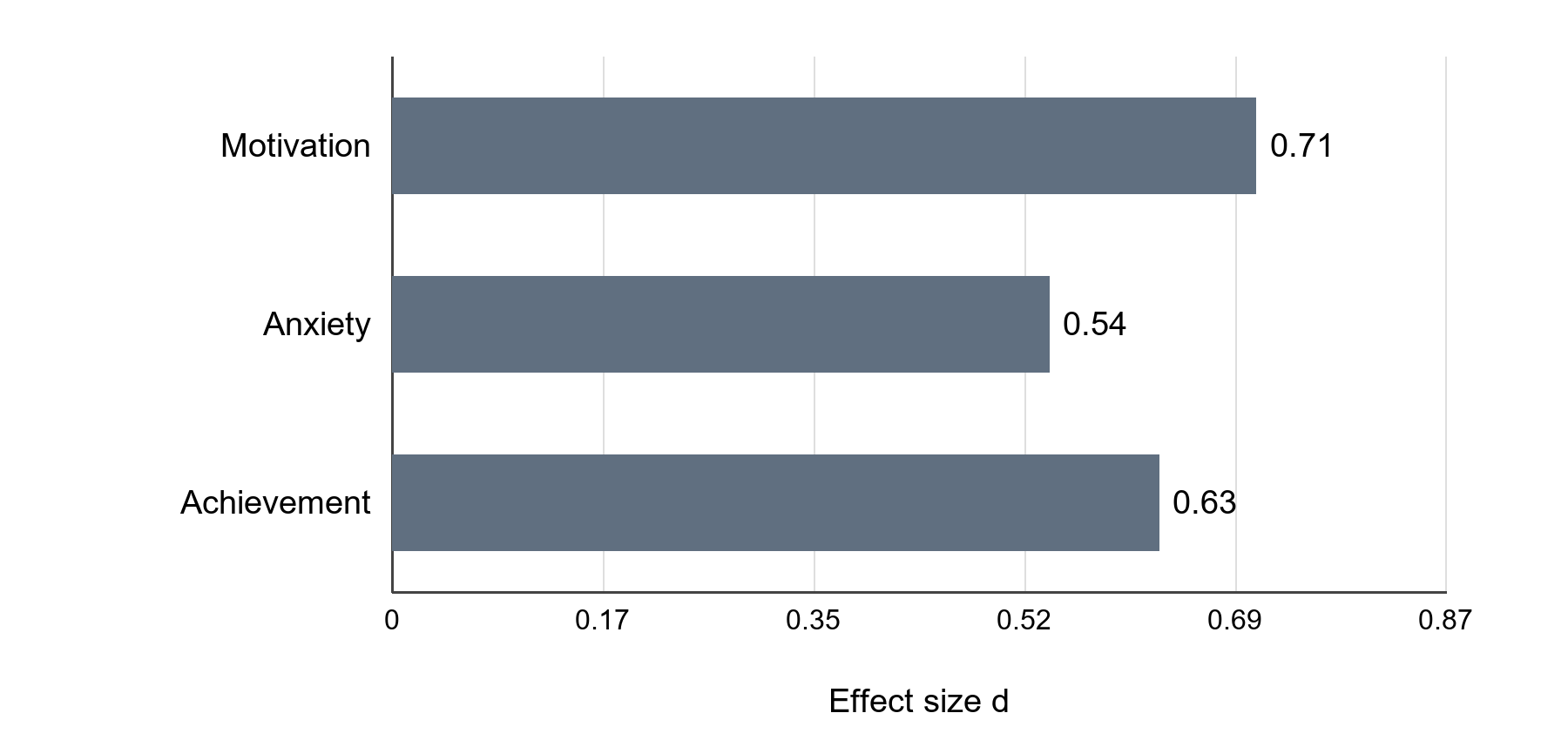
Figure 1. Effect sizes of gamification for three outcomes
Table 1. ANCOVA results and effect sizes
| Outcome measure | F (1, 183) | Cohen d |
|---|---|---|
| Intrinsic motivation | 34.7*** | 0.71 |
| Mathematics anxiety | 21.3*** | 0.54 |
| Arithmetic achievement | 28.9*** | 0.63 |
Note: * p < 0.05; ** p < 0.01; *** p < 0.001; ns = not significant. Data from the educational example.
Conclusion
The 12-week gamification intervention produced significant improvements in intrinsic motivation, reductions in mathematics anxiety, and gains in arithmetic achievement among 3rd-grade students compared with conventional instruction. Effect sizes are educationally meaningful and comparable to those found in meta-analyses of other active learning methods. The disproportionate benefit for initially low-motivated students is particularly significant from an educational equity perspective. Practical limitations include reliance on a custom platform and the absence of a delayed follow-up measurement. Future research should examine long-term motivational retention, optimal gamification element combinations, and adaptation for students with special educational needs.
References:
1. Sailer M., Homner L. The Gamification of Learning: a Meta-analysis // Educational Psychology Review. – 2020. – Vol. 32. – No. 1. – pp. 77–112. – DOI: 10.1007/s10648-019-09498-w.
2. Dichev C., Dicheva D. Gamifying education: what is known, what is believed and what remains uncertain: a critical review // International Journal of Educational Technology in Higher Education. – 2017. – Vol. 14. – No. 1. – Article 9. – DOI: 10.1186/s41239-017-0042-5.
3. Hamari J., Koivisto J., Sarsa H. Does Gamification Work? -- A Literature Review of Empirical Studies on Gamification // 2014 47th Hawaii International Conference on System Sciences. – 2014. – pp. 3025–3034. – DOI: 10.1109/hicss.2014.377.
4. Deci E.L., Ryan R.M. The "What" and "Why" of Goal Pursuits: Human Needs and the Self-Determination of Behavior // Psychological Inquiry. – 2000. – Vol. 11. – No. 4. – pp. 227–268. – DOI: 10.1207/s15327965pli1104_01.
5. Deterding S., Dixon D., Khaled R., Nacke L. From game design elements to gamefulness: defining gamification // Proceedings of the 15th International Academic MindTrek Conference: Envisioning Future Media Environments. – 2011. – pp. 9–15. – DOI: 10.1145/2181037.2181040.
6. Wouters P., van Nimwegen C., van Oostendorp H., van der Spek E.D. A meta-analysis of the cognitive and motivational effects of serious games // Journal of Educational Psychology. – 2013. – Vol. 105. – No. 2. – pp. 249–265. – DOI: 10.1037/a0031311.
7. Barroso C., Ganley C.M., McGraw A.L., Geer E.A. et al. A meta-analysis of the relation between math anxiety and math achievement // Psychological Bulletin. – 2021. – Vol. 147. – No. 2. – pp. 134–168. – DOI: 10.1037/bul0000307.
8. Hembree R. The Nature, Effects, and Relief of Mathematics Anxiety // Journal for Research in Mathematics Education. – 1990. – Vol. 21. – No. 1. – pp. 33–46. – DOI: 10.2307/749455.
9. Plass J.L., Homer B.D., Kinzer C.K. Foundations of Game-Based Learning // Educational Psychologist. – 2015. – Vol. 50. – No. 4. – pp. 258–283. – DOI: 10.1080/00461520.2015.1122533.
10. Landers R.N. Developing a Theory of Gamified Learning: Linking Serious Games and Gamification of Learning // Simulation & Gaming. – 2014. – Vol. 45. – No. 6. – pp. 752–768. – DOI: 10.1177/1046878114563660.
