
Пример оформления статьи на английском языке
Received: 05.02.2026
Accepted: 20.02.2026
Published: 11.05.2026
Educational example for Universum: Chemistry and Biology. Author details, dates, funding, and research results are illustrative.
UDC 547.913:615.322
Antioxidant activity of flavonoid complexes isolated from Siberian plants: An in vitro study
Voronova Natalia Sergeyevna
PhD in Chemistry, Senior Researcher,
Laboratory of Natural Compounds Chemistry, Novosibirsk Institute of Organic Chemistry SB RAS,
Novosibirsk, Russia
E-mail: voronova@nioc.ru
ORCID: 0000-0001-2345-6789
RSCI SPIN code: 1234-5678
Антиоксидантная активность флавоноидных комплексов, выделенных из растений Сибири: исследование in vitro
Воронова Наталья Сергеевна
канд. хим. наук, старший научный сотрудник,
лаборатория химии природных соединений, Новосибирский институт органической химии СО РАН,
Новосибирск, Россия
E-mail: voronova@nioc.ru
ORCID: 0000-0001-2345-6789
SPIN-код: 1234-5678
Abstract
Flavonoids represent a structurally diverse class of plant polyphenols with well-documented antioxidant, anti-inflammatory, and cytoprotective properties. Despite extensive research on European plant species, the flavonoid composition and radical-scavenging capacity of Siberian flora remain insufficiently characterised. The present study evaluated the antioxidant activity of flavonoid complexes isolated from three species of Siberian flora using DPPH, ABTS, and FRAP assays. The species were Bergenia crassifolia, Rhodiola rosea, and Saussurea controversa. Total flavonoid content was determined using an aluminium chloride colorimetric assay. B. crassifolia extract exhibited the highest DPPH radical-scavenging activity (IC50 = 18.4 ± 1.2 µg/mL). FRAP values correlated significantly with total flavonoid content (r = 0.91, p < 0.001). The findings support further investigation of these species as sources of natural antioxidants for pharmaceutical and functional food applications. Using several analytical assays allows activity to be considered in relation to the different reaction mechanisms involved. An important part of the analysis is the comparison between radical-scavenging activity and total flavonoid content. These in vitro estimates do not establish clinical efficacy. Practical use requires further characterisation of composition, safety, and reproducibility. The findings provide a basis for selecting plant materials and subsequently standardising the corresponding flavonoid complexes.
Аннотация
Флавоноиды представляют собой структурно разнообразный класс растительных полифенолов с доказанными антиоксидантными, противовоспалительными и цитопротекторными свойствами. Несмотря на широкое изучение флавоноидов европейских видов растений, состав и радикалсвязывающая активность флавоноидных комплексов сибирской флоры остаются недостаточно охарактеризованными. В настоящем исследовании оценена антиоксидантная активность флавоноидных комплексов, выделенных из трёх видов растений сибирской флоры — Bergenia crassifolia, Rhodiola rosea и Saussurea controversa — методами DPPH, ABTS и FRAP. Суммарное содержание флавоноидов (ССФ) определяли колориметрическим методом с хлоридом алюминия. Экстракт B. crassifolia проявил наибольшую радикалсвязывающую активность по DPPH (IC50 = 18,4 ± 1,2 мкг/мл), за ним следуют R. rosea (IC50 = 24,7 ± 1,8 мкг/мл) и S. controversa (IC50 = 31,5 ± 2,1 мкг/мл). Значения FRAP достоверно коррелировали с ССФ (r = 0,91, p < 0,001). Полученные результаты обосновывают дальнейшее изучение указанных видов как источников природных антиоксидантов для фармацевтической промышленности и функционального питания. Применение нескольких аналитических тестов позволяет рассматривать активность комплексов с учётом различий между механизмами используемых реакций. Важным результатом является сопоставление радикалсвязывающей активности с суммарным содержанием флавоноидов. Полученные оценки относятся к условиям in vitro и не доказывают клиническую эффективность экстрактов. Для практического использования необходимы дальнейшее изучение состава, оценка безопасности и воспроизводимости показателей. Работа формирует основу для отбора растительного сырья и последующей стандартизации соответствующих комплексов.
Keywords: flavonoids, antioxidant activity, Siberian plants, DPPH, ABTS, FRAP.
Ключевые слова: флавоноиды, антиоксидантная активность, растения Сибири, DPPH, ABTS, FRAP.
Funding: The study was supported by the Russian Science Foundation (RSF), grant No. 23-14-00098 “Bioactive Flavonoid Complexes of Endemic Siberian Plants.”
Финансирование: Исследование выполнено при финансовой поддержке Российского научного фонда (РНФ), грант № 23-14-00098 «Биологически активные флавоноидные комплексы эндемичных растений Сибири».
Conflict of interest: The author declares no conflict of interest (illustrative wording).
Конфликт интересов: автор заявляет об отсутствии конфликта интересов (учебный пример формулировки).
Acknowledgements: ChatGPT (OpenAI) was used to translate, edit, and harmonise the formatting of this educational example. Numerical data were retained from the original example. The tool was not used to produce research findings.
Благодарности: при обновлении данного учебного примера использован ChatGPT (OpenAI) для перевода, языковой редакции и согласования оформления; числовые данные сохранены из исходного примера. Инструмент не использовался для получения исследовательских результатов.
Introduction
Flavonoids are plant compounds whose antioxidant properties depend on molecular structure and assay conditions [6, 7, 9, 10]. Laboratory evaluation may combine DPPH, ABTS, and FRAP assays [1–3]. Measurements of total phenolics and flavonoids require attention to the properties of the colorimetric methods used [4, 5]. Differences between assay mechanisms are relevant to interpreting results [8]. This educational study compares flavonoid complexes from three plant species and demonstrates the presentation of in vitro findings.
Materials and methods
Plant material (aerial parts of B. crassifolia, rhizomes of R. rosea, and leaves of S. controversa) was collected in the Altai Republic in July 2024; authenticity was confirmed by a certified taxonomist. Dried and ground material (10 g) was extracted with 70% ethanol (200 mL) by maceration at room temperature for 72 h with periodic stirring. Extracts were filtered, concentrated at 40 °C under reduced pressure, and lyophilised. TFC was determined by the aluminium chloride colorimetric method using quercetin as standard and expressed as mg quercetin equivalents per g dry extract (mg QE/g). Antioxidant activity was assessed by three complementary methods: DPPH (IC50 from dose-response curves), ABTS (Trolox equivalents, mM TE/g), and FRAP. All measurements were performed in triplicate. Statistical analysis was conducted in SPSS Statistics 27.0; Pearson correlation was used to evaluate the relationship between TFC and antioxidant indices.
Results and discussion
TFC differed significantly among species: B. crassifolia showed the highest value (142.6 ± 8.3 mg QE/g), followed by R. rosea (98.4 ± 6.1 mg QE/g) and S. controversa (71.2 ± 5.7 mg QE/g). DPPH IC50 values were 18.4 ± 1.2, 24.7 ± 1.8, and 31.5 ± 2.1 µg/mL respectively, indicating that B. crassifolia extract exhibited approximately 1.7-fold greater radical-scavenging activity than ascorbic acid (IC50 = 32.1 µg/mL). ABTS results were consistent: B. crassifolia showed the highest activity (87.3 ± 3.6 mM TE/g). FRAP values correlated significantly with TFC (r = 0.91, p < 0.001), confirming the predominant contribution of flavonoids to ferric reducing capacity. The higher activity of B. crassifolia is likely attributable to elevated content of arbutin, bergenin, and catechins acting synergistically as hydrogen donors. Figure 1 presents the main comparative values. Table 1 summarises key antioxidant parameters.
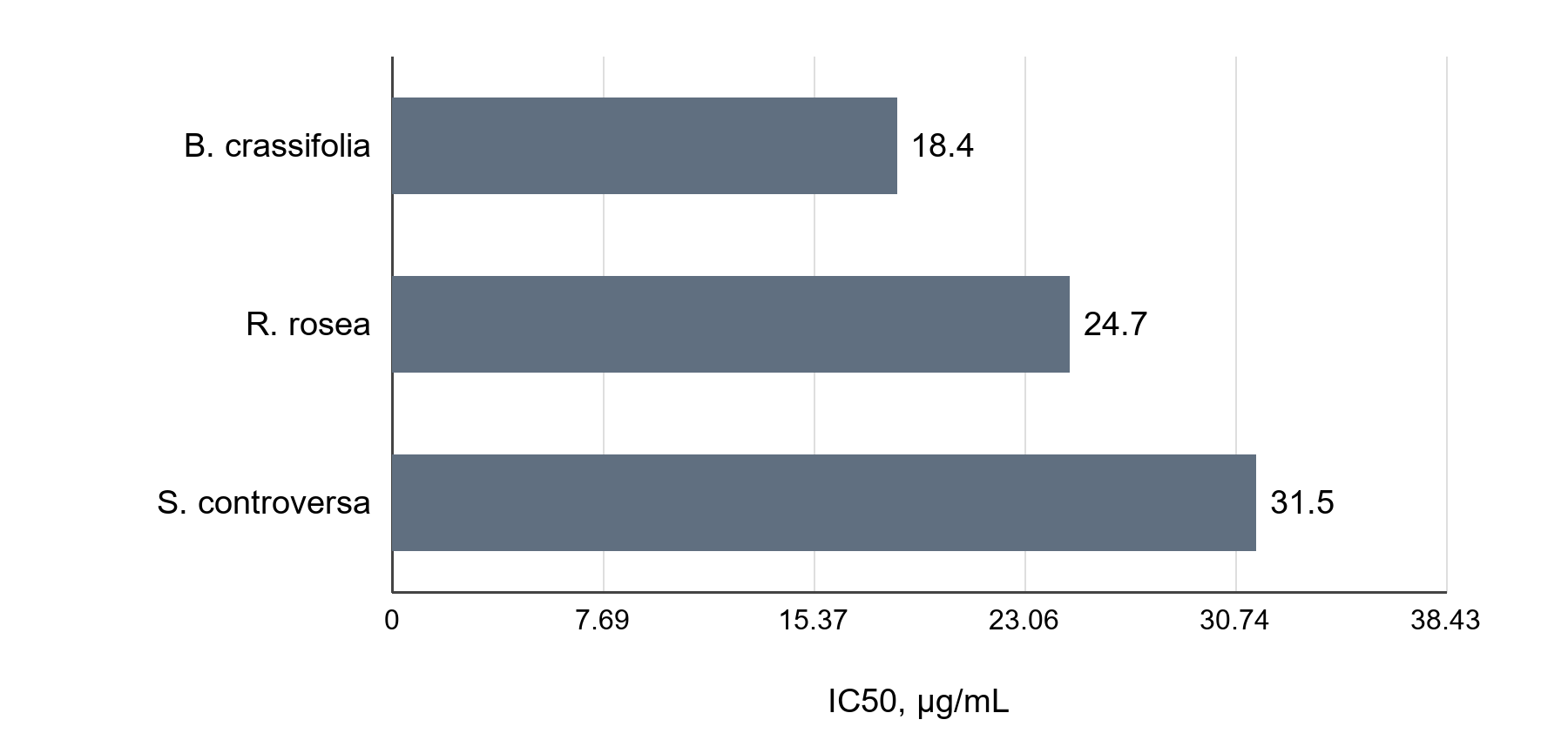
Figure 1. DPPH radical-scavenging activity of the extracts
Table 1. Flavonoid content and antioxidant assay results of the extracts
| Parameter | B. crassifolia | R. rosea |
|---|---|---|
| TFC (mg QE/g) | 142.6 ± 8.3 | 98.4 ± 6.1 |
| DPPH IC50 (µg/mL) | 18.4 ± 1.2 | 24.7 ± 1.8 |
| ABTS (mM TE/g) | 87.3 ± 3.6 | 61.2 ± 2.9 |
| FRAP (mM Fe2+/g) | 4.81 ± 0.21 | 3.34 ± 0.18 |
Note: data from the educational example.
Conclusion
All three Siberian species demonstrated substantial in vitro antioxidant activity, with Bergenia crassifolia showing the greatest radical-scavenging and ferric-reducing capacity, surpassing Rhodiola rosea and Saussurea controversa. TFC correlated significantly with FRAP values, confirming the determining role of flavonoids. The results provide a scientific basis for further investigation of Siberian plant flavonoids as candidates for nutraceutical and pharmaceutical development. Future work should focus on isolation and structural characterisation of individual bioactive flavonoid compounds and their mechanistic in vivo evaluation.
References:
1. Brand-Williams W., Cuvelier M.E., Berset C. Use of a free radical method to evaluate antioxidant activity // LWT - Food Science and Technology. – 1995. – Vol. 28. – No. 1. – pp. 25–30. – DOI: 10.1016/s0023-6438(95)80008-5.
2. Re R., Pellegrini N., Proteggente A., Pannala A. et al. Antioxidant activity applying an improved ABTS radical cation decolorization assay // Free Radical Biology and Medicine. – 1999. – Vol. 26. – No. 9-10. – pp. 1231–1237. – DOI: 10.1016/s0891-5849(98)00315-3.
3. Benzie I.F.F., Strain J.J. The Ferric Reducing Ability of Plasma (FRAP) as a Measure of “Antioxidant Power”: The FRAP Assay // Analytical Biochemistry. – 1996. – Vol. 239. – No. 1. – pp. 70–76. – DOI: 10.1006/abio.1996.0292.
4. Singleton V.L., Orthofer R., Lamuela-Raventós R.M. Analysis of total phenols and other oxidation substrates and antioxidants by means of folin-ciocalteu reagent // Methods in Enzymology. – 1999. – pp. 152–178. – DOI: 10.1016/s0076-6879(99)99017-1.
5. Chang C.C., Yang M.H., Wen H.M., Chern J.C. Estimation of total flavonoid content in propolis by two complementary colometric methods // Journal of Food and Drug Analysis. – 2002. – Vol. 10. – No. 3. – pp. 178–182. – DOI: 10.38212/2224-6614.2748.
6. Nijveldt R.J., van Nood E., van Hoorn D.E., Boelens P.G. et al. Flavonoids: a review of probable mechanisms of action and potential applications // The American Journal of Clinical Nutrition. – 2001. – Vol. 74. – No. 4. – pp. 418–425. – DOI: 10.1093/ajcn/74.4.418.
7. Pietta P.G. Flavonoids as Antioxidants // Journal of Natural Products. – 2000. – Vol. 63. – No. 7. – pp. 1035–1042. – DOI: 10.1021/np9904509.
8. Huang D., Ou B., Prior R.L. The Chemistry behind Antioxidant Capacity Assays // Journal of Agricultural and Food Chemistry. – 2005. – Vol. 53. – No. 6. – pp. 1841–1856. – DOI: 10.1021/jf030723c.
9. Rice-Evans C.A., Miller N.J., Paganga G. Structure-antioxidant activity relationships of flavonoids and phenolic acids // Free Radical Biology and Medicine. – 1996. – Vol. 20. – No. 7. – pp. 933–956. – DOI: 10.1016/0891-5849(95)02227-9.
10. Panche A.N., Diwan A.D., Chandra S.R. Flavonoids: an overview // Journal of Nutritional Science. – 2016. – Vol. 5. – Article e47. – DOI: 10.1017/jns.2016.41.
