Synthesis, in silico adme evaluation and preliminary copper(II) chelation of a tetradentate N,N′,O,O′-Schiff base derived from benzoylacetone and 1,3-diaminopropane
УДК 547+546.56+615.015
Abstract
A tetradentate N,N′,O,O′-donor Schiff base, (3Z,3′Z)-3,3′-(propane-1,3-diyldiazanediyl)bis(1-phenylbut-2-en-1-one) (H2L), was obtained by the condensation of benzoylacetone with 1,3-diaminopropane in a 2:1 molar ratio, and its chelation with copper(II) was examined in a preliminary experiment: H2L and copper(II) acetate dihydrate gave a dark green solid. The electronic absorption spectrum of this solid in ethanol is reported: it absorbs strongly throughout the ultraviolet region, with a band at 334 nm and a minimum at 310 nm, the absorbance falling to the baseline beyond 450 nm. Because the reaction was carried out in the presence of aqueous ammonia, which is itself a potential N-donor towards copper(II), and because elemental, infrared and EPR data have not yet been obtained, the composition of the isolated solid is not assigned here. In the solid state and in solution the ligand exists predominantly as the keto-enamine tautomer stabilised by an intramolecular N–H···O hydrogen bond, and this form was used for the computational study. The pharmacokinetic behaviour and drug-likeness of the free ligand were evaluated in silico with the SwissADME server. H2L complies with the Lipinski, Ghose, Veber and Egan rules without a single violation and departs from the Muegge criteria in one parameter only, the XLOGP3 lipophilicity; it is predicted to display high gastrointestinal absorption and blood–brain barrier permeation, not to be a P-glycoprotein substrate, and it receives a bioavailability score of 0.55. The predicted inhibition of four of the five cytochrome P450 isoforms examined and the low aqueous solubility are the principal limitations of the scaffold. The results identify this Schiff base as a synthetically accessible and pharmacokinetically favourable platform for the design of biologically active copper(II) coordination compounds.
Аннотация
Конденсацией бензоилацетона с 1,3-диаминопропаном в мольном соотношении 2:1 получено тетрадентатное основание Шиффа N,N′,O,O′-типа — (3Z,3′Z)-3,3′-(пропан-1,3-диилдиазандиил)бис(1-фенилбут-2-ен-1-он) (H2L), а H2L и дигидрат ацетата меди(II) в предварительном эксперименте дают тёмно-зелёный твёрдый продукт. Приведён электронный спектр поглощения этого продукта в этаноле: он интенсивно поглощает в ультрафиолетовой области, с полосой при 334 нм и минимумом при 310 нм, а за 450 нм поглощение выходит на базовую линию. Поскольку реакция проводилась в присутствии водного аммиака, который сам является потенциальным N-донором для меди(II), и поскольку данные элементного анализа, ИК- и ЭПР-спектроскопии пока не получены, состав выделенного продукта в настоящей работе не устанавливается. В твёрдом состоянии и в растворе лиганд существует преимущественно в кето-енаминной таутомерной форме, стабилизированной внутримолекулярной водородной связью N–H···O; именно эта форма использована в расчётах. Фармакокинетические характеристики и лекарствоподобность свободного лиганда оценены in silico с помощью сервера SwissADME. H2L удовлетворяет правилам Липински, Гоша, Вебера и Игана без единого нарушения и отклоняется от критериев Мюгге лишь по одному параметру — липофильности XLOGP3; прогнозируются высокая желудочно-кишечная абсорбция и проницаемость гематоэнцефалического барьера, отсутствие субстратных свойств по отношению к P-гликопротеину и показатель биодоступности 0,55. Основными ограничениями являются прогнозируемое ингибирование четырёх из пяти рассмотренных изоформ цитохрома P450 и низкая растворимость в воде. Полученные результаты характеризуют данное основание Шиффа как синтетически доступную и фармакокинетически благоприятную платформу для создания биологически активных координационных соединений меди(II).
Keywords: Schiff base; benzoylacetone; 1; 3-diaminopropane; tetradentate N₂O₂ ligand; copper(II) complex; UV-Vis spectroscopy; keto–enamine tautomerism; SwissADME; drug-likeness; ADME prediction.
Ключевые слова: основание Шиффа; бензоилацетон; 1; 3-диаминопропан; тетрадентатный лиганд N₂O₂; комплекс меди(II); УФ-спектроскопия; кето-енаминная таутомерия; SwissADME; лекарствоподобность; прогноз ADME.
Introduction
Tetradentate Schiff bases of the salen and acacen type, obtained by the condensation of β-dicarbonyl compounds or salicylaldehyde with aliphatic diamines, occupy a central position in coordination chemistry: the preorganised N,N′,O,O′ donor set binds 3d metal ions firmly and in a well-defined geometry, and the resulting chelates are widely exploited in homogeneous catalysis, in materials chemistry and as models of metalloenzyme active sites [1]. Copper(II) is a particularly attractive partner for such ligands. Being a biogenic element with a d9 configuration, it takes part in a broad range of enzymatic redox processes, and its coordination compounds frequently display antimicrobial, antioxidant and antitumour activity. The nature of the coordinated ligand governs the redox potential, the lipophilicity and hence the biological profile of the metal centre, so that deliberate design of the organic framework is the principal tool for tuning the properties of the resulting complex.
Benzoylacetone (1-phenylbutane-1,3-dione) is a convenient building block for this purpose. Its two carbonyl groups differ markedly in reactivity, so that selective condensation at the acetyl carbonyl with a primary amine affords a β-enaminone that retains an intact benzoyl group as an additional oxygen donor. When 1,3-diaminopropane is used as the amine component, two such fragments are joined by a flexible trimethylene bridge and a tetradentate dibasic ligand is formed, capable of enclosing a metal ion in two fused six-membered chelate rings. Earlier work of our group on copper(II) chelates of β-diketone-derived aroylhydrazones and related N,O-donor systems has shown that comparatively small changes in the organic framework translate into substantial changes in the coordination geometry and in the spectral behaviour of the metal centre [2, 3, 16].
At the same time, the practical value of a prospective biologically active coordination compound is determined not only by its structure but also by its pharmacokinetic behaviour. Early in silico assessment of absorption, distribution, metabolism and excretion (ADME) has therefore become a routine filter in the design of new compounds, since it allows unpromising scaffolds to be discarded before synthetic effort is invested. The SwissADME server [4] provides, from the molecular structure alone, a set of physicochemical descriptors, several independent lipophilicity and solubility estimates, predictions of gastrointestinal absorption and blood–brain barrier permeation based on the BOILED-Egg model [5], and verdicts on compliance with the principal drug-likeness rules [6–10]. Because metal centres are not parameterised in these models, such an analysis is meaningful for the free organic ligand, which is also the fragment liberated and transported in a prodrug-type formulation.
In the present work the Schiff base H2L was synthesised from benzoylacetone and 1,3-diaminopropane and its chelation with copper(II) acetate was examined in a preliminary experiment, whose electronic absorption spectrum is reported; the keto–enamine tautomerism of the ligand was considered, and the drug-likeness and predicted pharmacokinetic parameters of H2L were evaluated in silico.
Experimental part
Materials and methods
Benzoylacetone (1-phenylbutane-1,3-dione, C10H10O2), 1,3-diaminopropane (C3H10N2) and copper(II) acetate dihydrate, Cu(CH3COO)2·2H2O, were of analytical grade and were used without further purification. Absolute ethanol served as the medium for the synthesis of the ligand; the chelation experiment was carried out in a mixture of ethanol and aqueous ammonia, as described below. Electronic absorption spectra were recorded on a UV-1900i spectrophotometer in ethanol in the 190–600 nm range using 1 cm quartz cells.
Synthesis of the ligand H2L
Benzoylacetone (3.2438 g, 20 mmol) and 1,3-diaminopropane (0.83 ml, 0.7413 g, 10 mmol) were dissolved separately in ethanol (20 ml each). The solution of the diamine was then added dropwise, with constant stirring, to the solution of benzoylacetone, the molar ratio of the reagents being 2:1. The mixture was stirred at 60 °C for 2 h and left to crystallise at room temperature. The pale yellow crystalline product was filtered off, washed with cold ethanol and dried in air. Yield 3.125 g (86.2 %); theoretical yield 3.6247 g.
The condensation takes place selectively at the acetyl carbonyl group of each benzoylacetone molecule, the benzoyl carbonyl remaining intact (Scheme 1).
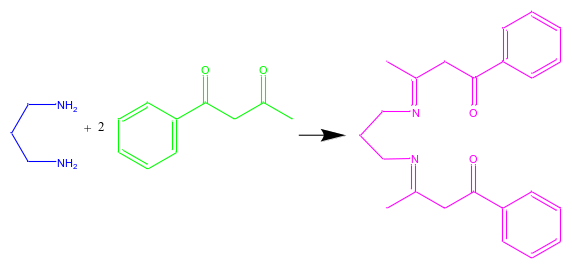
Scheme 1. Synthesis of the Schiff base H₂L. For clarity the product is drawn as the keto-imine tautomer; the keto-enamine form, which is reported to predominate for this class of compounds [17] and which was used in the calculations, is discussed under “Synthesis and tautomerism of the ligand”
Synthesis of the complex [CuL]
The ligand H2L (0.03625 g, 0.1 mmol) was dissolved in ethanol (20 ml) at 60–70 °C. Copper(II) acetate dihydrate (0.0218 g, 0.1 mmol) was dissolved in aqueous ammonia (20 ml), and the resulting solution was added dropwise to the hot solution of the ligand with continuous stirring, the metal-to-ligand molar ratio being 1:1. The colour of the mixture changed to dark green. Stirring was continued for 2 h at the same temperature; the precipitate was filtered off, washed with ethanol and dried in air, giving 0.0385 g of a dark green solid. The procedure follows that reported for related benzoylacetone-derived Schiff base complexes [17]. The product was not recrystallised and its yield is deliberately not expressed as a percentage, because its composition has not been established; for a 1:1 chelate of composition [CuL] 0.1 mmol would correspond to 0.0424 g.
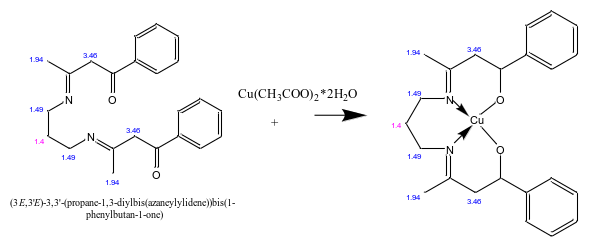
Scheme 2. Chelation of the Schiff base with copper(II) acetate dihydrate. The product is drawn as the assumed 1:1 chelate [CuL]; its composition remains to be established
Computational details
The ligand was submitted to the calculations as the SMILES string C/C(=C/C(=O)c1ccccc1)NCCCN/C(C)=C\C(=O)c1ccccc1, which encodes the keto-enamine tautomer. Physicochemical descriptors, four independent octanol/water partition coefficients, three water-solubility estimates, pharmacokinetic predictions and drug-likeness verdicts were obtained with the SwissADME web tool [4]; gastrointestinal absorption and blood–brain barrier permeation were assessed within the BOILED-Egg model [5]. Aqueous solubility is reported according to the ESOL [11], Ali and SILICOS-IT models, the partition coefficients according to the iLOGP, XLOGP3, WLOGP [12] and MLOGP schemes, and the synthetic accessibility score according to Ertl and Schuffenhauer [13]. Structural alerts were screened against the PAINS [9] and Brenk [10] substructure filters. Since the models underlying these predictions are parameterised for organic molecules and do not treat metal–ligand bonding, the analysis was restricted to the free ligand and was not applied to the copper(II) chelate.
Results and Discussion
Synthesis and tautomerism of the ligand
The reaction of benzoylacetone with 1,3-diaminopropane in a 2:1 molar ratio gives the tetradentate Schiff base H2L, in which two β-enaminone fragments are linked by a trimethylene bridge. The two nitrogen atoms and the two benzoyl oxygen atoms form a preorganised N,N′,O,O′ donor set; on deprotonation of the two acidic N–H positions the ligand acts as a dibasic tetradentate chelator and encloses the metal ion in two fused six-membered rings, which accounts for the high stability expected of the resulting chelate. Chelation was carried out in the presence of aqueous ammonia, which was intended to act as a base and to remove the two N–H protons of the ligand. It must be stressed, however, that ammonia is itself a good N-donor towards copper(II) and readily forms ammine complexes, so that on the present evidence the isolated dark green solid cannot be assumed to be the simple chelate. Establishing its composition requires elemental analysis together with infrared and EPR spectroscopy, which are planned as the next step.
β-Enaminones of this type are subject to keto–enamine tautomerism. The proton may reside on the nitrogen atom, giving the keto-enamine form stabilised by a six-membered intramolecular N–H···O hydrogen bond, or formally on carbon, giving the keto-imine with a localised C=N bond. The latter form, (3E,3′E)-3,3′-(propane-1,3-diylbis(azanylylidene))bis(1-phenylbutan-1-one), is the one drawn in Scheme 1 for clarity of presentation; the former, (3Z,3′Z)-3,3′-(propane-1,3-diyldiazanediyl)bis(1-phenylbut-2-en-1-one), is the form named in the title and employed in the calculations. For benzoylacetone-derived ligands of this family the keto-enamine form is reported to predominate [17], and it was therefore adopted for the calculations; for the present compound the tautomeric form has not been established experimentally. The two tautomers are identical in composition (C23H26N2O2, M = 362.46 g/mol) and in molecular size, but they differ in the number of hydrogen-bond donors and in the fraction of sp3-hybridised carbon, so that the predicted parameters refer specifically to the keto-enamine form.
UV-Vis spectroscopic study
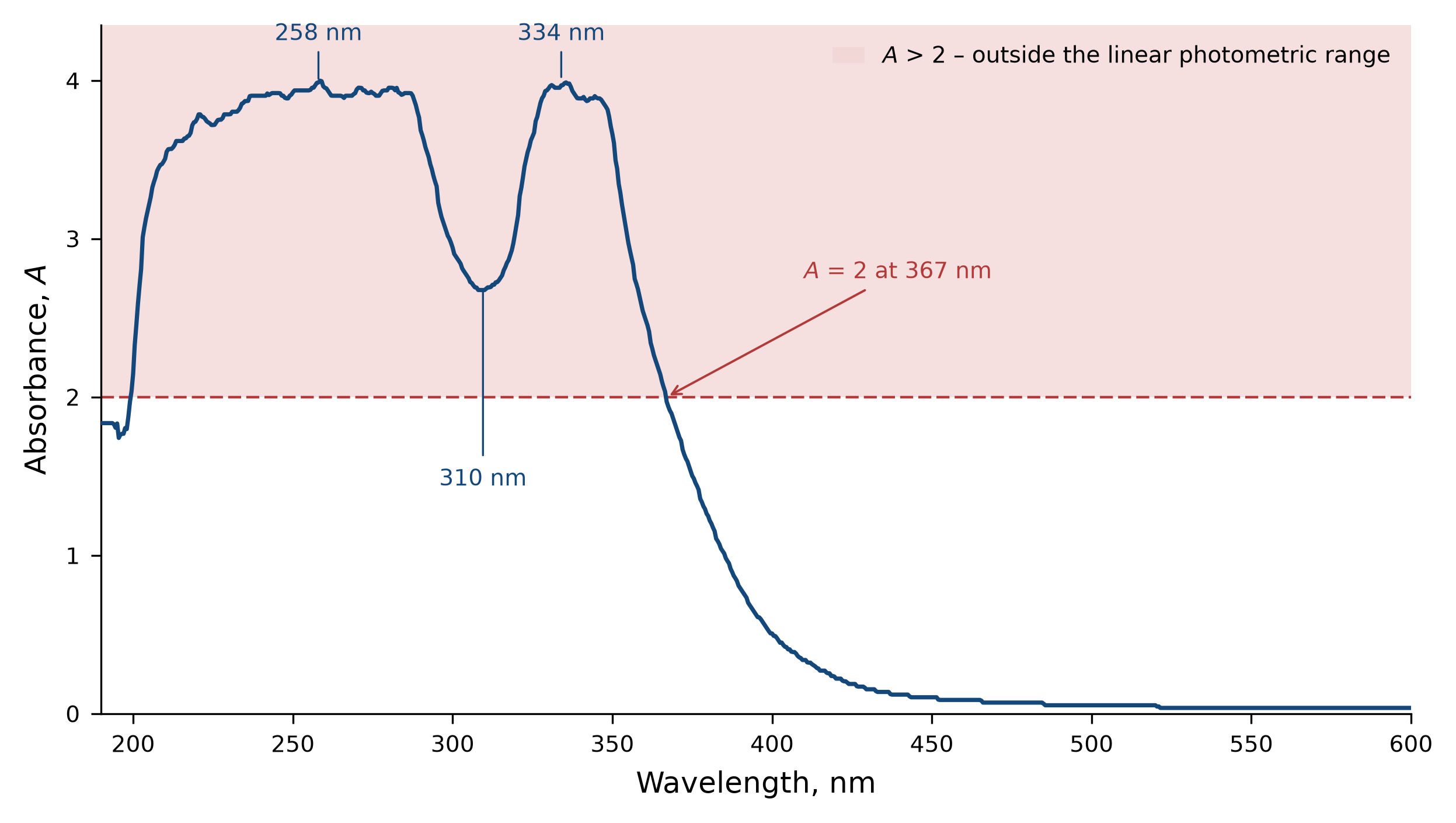
The electronic absorption spectrum of the isolated dark green solid, recorded in ethanol, is shown in Figure 1. The compound absorbs strongly throughout the ultraviolet region: a broad, structured absorption envelope extends from the short-wavelength edge to about 290 nm with apparent maxima near 258 and 281 nm, passes through a pronounced minimum at 310 nm and rises again to a well-defined band at 334 nm. Beyond this band the absorbance falls steeply, crossing A = 2 at 367 nm and reaching the baseline (A ≈ 0.04) from about 450 nm onwards. These bands are assigned to π→π* transitions of the benzoyl chromophore and of the conjugated enaminone fragment, with a contribution from n→π* transitions of the carbonyl and azomethine groups. Since the spectrum of the free ligand was not recorded under identical conditions, no ligand-to-complex comparison can be drawn, and the spectrum is reported here solely as a preliminary characterisation of the isolated solid.
It must be emphasised that at the concentration employed the absorbance exceeds A = 2 over 41 % of the recorded range, reaching 3.9–4.0 between 200 and 290 nm, which corresponds to a transmittance of the order of 0.01 %. In this region the response of the instrument is no longer linear in concentration, so the band positions quoted above are apparent values given for qualitative comparison only, and no molar absorption coefficients are reported; the corresponding part of the spectrum is shaded in Figure 1. Furthermore, no d–d transition was detected. For square-planar copper(II) chromophores with an N,N′,O,O′ donor set such a band is expected at 540–650 nm, that is, within the recorded range; its molar absorptivity, however, is two to three orders of magnitude smaller than that of the ligand-centred bands, so that at the dilution used it lies below the detection limit, and in the 450–600 nm interval the absorbance is at the baseline. Quantitative measurements on more dilute solutions over an extended spectral range, which would yield λmax, ε and the position of the d–d band, form part of the continuing work.
In silico ADME and drug-likeness evaluation
The parameters calculated for the free ligand with the SwissADME server are collected in Table 1.
Table 1.
Physicochemical, pharmacokinetic and drug-likeness parameters of the ligand H₂L calculated with SwissADME (keto-enamine tautomer)
| Parameter | Value |
| Physicochemical properties | |
| Formula | C23H26N2O2 |
| Molecular weight, g/mol | 362.46 |
| Num. heavy atoms | 27 |
| Num. aromatic heavy atoms | 12 |
| Fraction Csp3 | 0.22 |
| Num. rotatable bonds | 10 |
| Num. H-bond acceptors | 2 |
| Num. H-bond donors | 2 |
| Molar refractivity | 109.46 |
| TPSA, Å2 | 58.20 |
| Lipophilicity | |
| Log Po/w (iLOGP v1.5) | 3.85 |
| Log Po/w (XLOGP3) | 5.64 |
| Log Po/w (WLOGP) | 4.13 |
| Log Po/w (MLOGP) | 2.48 |
| Log Po/w (SILICOS-IT) | 4.58 |
| Consensus Log Po/w | 4.13 |
| Water solubility | |
| Log S (ESOL); solubility; class | –5.31; 1.78·10–3 mg/ml; moderately soluble |
| Log S (Ali); solubility; class | –6.63; 8.58·10–5 mg/ml; poorly soluble |
| Log S (SILICOS-IT); solubility; class | –7.04; 3.34·10–5 mg/ml; poorly soluble |
| Pharmacokinetics | |
| GI absorption | High |
| BBB permeant | Yes |
| P-gp substrate | No |
| CYP1A2 inhibitor | Yes |
| CYP2C19 inhibitor | Yes |
| CYP2C9 inhibitor | Yes |
| CYP2D6 inhibitor | No |
| CYP3A4 inhibitor | Yes |
| Log Kp (skin permeation), cm/s | –4.51 |
| Drug-likeness | |
| Lipinski | Yes; 0 violations |
| Ghose | Yes |
| Veber | Yes |
| Egan | Yes |
| Muegge | No; 1 violation: XLOGP3 > 5 |
| Bioavailability score | 0.55 |
| Medicinal chemistry | |
| PAINS alerts | 0 alerts |
| Brenk alerts | 1 alert: michael_acceptor_1 |
| Leadlikeness | No; 3 violations: MW > 350, Rotors > 7, XLOGP3 > 3.5 |
| Synthetic accessibility | 3.28 |
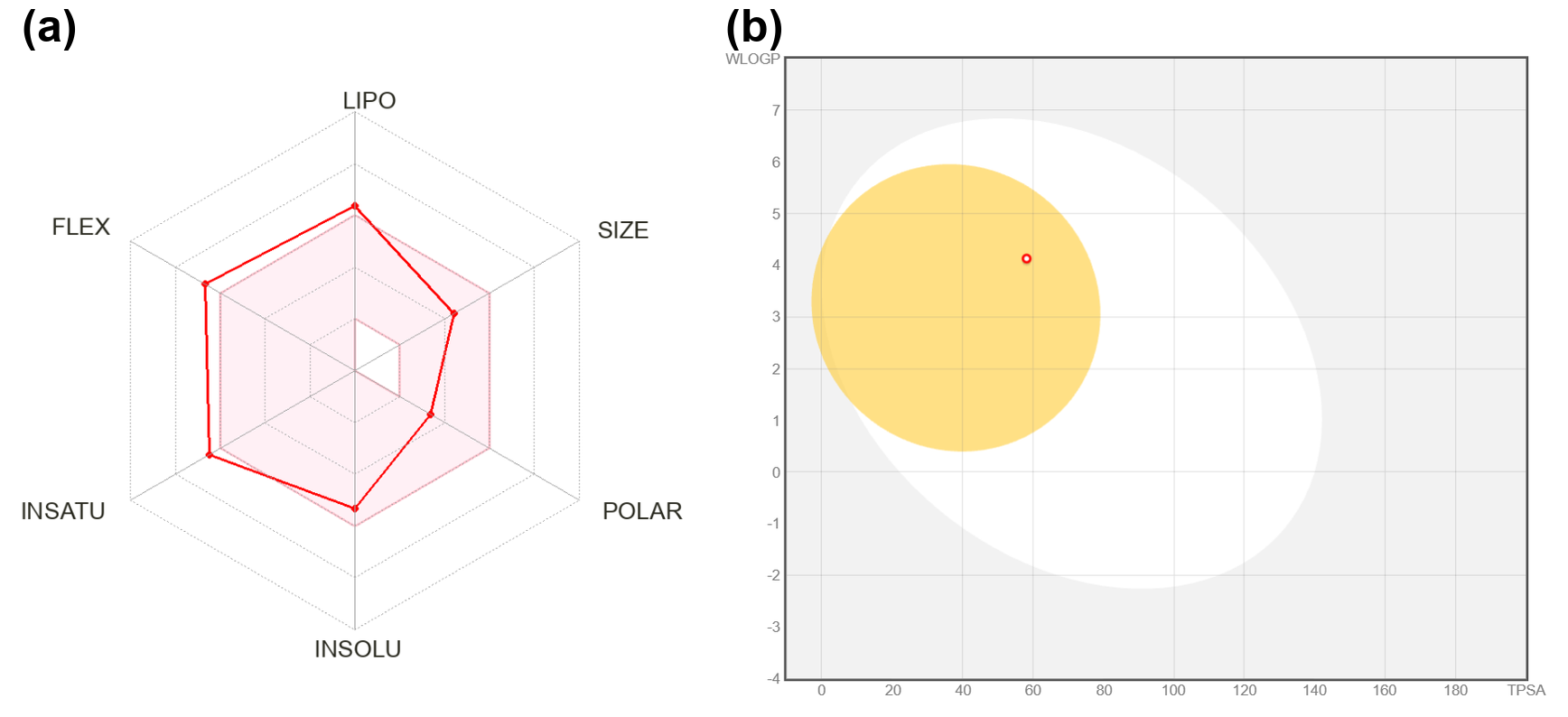
The molecular mass of the ligand (362.46 g/mol) lies well below the 500 g/mol threshold, the numbers of hydrogen-bond acceptors and donors (two each) are far from the permitted limits, and the topological polar surface area of 58.20 Å2 falls inside the interval associated with efficient passive membrane transport. Accordingly, H2L satisfies the rules of Lipinski [6], Ghose [7], Veber [8] and Egan [14] without a single violation, and the bioavailability score of 0.55 corresponds to the class of compounds for which oral bioavailability in the rat exceeding 10 % is expected [18]. Within the BOILED-Egg model the combination of a moderate polar surface area with a pronounced lipophilicity places the molecule in the region of high gastrointestinal absorption and, moreover, inside the “yolk” corresponding to predicted blood–brain barrier permeation (Figure 2). The ligand is not predicted to be a substrate of P-glycoprotein, so that active efflux from the cell is not expected to limit its accumulation.
The single deviation from the drug-likeness filters concerns the Muegge criteria [15], which are violated in one parameter only, XLOGP3 > 5. It is instructive that this verdict is not contradicted by the other filters: each of them relies on a different lipophilicity model, and the five coefficients calculated for H2L span a wide interval — MLOGP 2.48, iLOGP 3.85, WLOGP 4.13, SILICOS-IT 4.58 and XLOGP3 5.64, with a consensus value of 4.13. The Lipinski rule uses MLOGP, for which the threshold of 4.15 is not reached, while Ghose and Egan operate with WLOGP, which also lies within the permitted range; only the Muegge filter, which relies on XLOGP3, registers excessive lipophilicity. The compound is thus a borderline case with respect to lipophilicity rather than an unambiguous violator, which is entirely characteristic of a fully elaborated chelating ligand bearing two phenyl substituents.
The three solubility models likewise place the ligand near the boundary between the “moderately soluble” and “poorly soluble” classes: Log S = –5.31 (ESOL), –6.63 (Ali) and –7.04 (SILICOS-IT), corresponding to 1.78·10–3–3.34·10–5 mg/ml. This agrees with the behaviour reported for closely related benzoylacetone-derived Schiff bases, which are insoluble in water but dissolve in common organic solvents [17], and it indicates that biological testing will require either an organic co-solvent or a suitable formulation. A further limitation revealed by the calculation is the predicted inhibition of four of the five cytochrome P450 isoforms examined (CYP1A2, CYP2C19, CYP2C9 and CYP3A4; CYP2D6 is not affected), which points to a risk of metabolic drug–drug interactions and should be taken into account when planning in vivo experiments. The predicted skin permeability coefficient, Log Kp = –4.51 cm/s, is typical of lipophilic organic molecules of comparable size.
The medicinal-chemistry filters confirm the acceptability of the scaffold. No PAINS substructures were detected, so the ligand is not expected to give false-positive responses in biochemical screening assays. A single Brenk alert was returned, for the α,β-unsaturated carbonyl fragment acting as a Michael acceptor; in the chelate this very fragment is incorporated into the delocalised six-membered ring bound to the metal ion, so that the electrophilicity underlying the alert is substantially attenuated on complexation. Three deviations from the leadlikeness criteria were registered (molecular mass above 350 g/mol, more than seven rotatable bonds and XLOGP3 above 3.5), which is to be expected for a fully elaborated tetradentate chelator rather than for a starting fragment intended for further optimisation. Finally, the synthetic accessibility score of 3.28 on a scale from 1 to 10 confirms that the compound is readily available, in agreement with the one-step preparative procedure described above.
Conclusion
A tetradentate N,N′,O,O′-donor Schiff base was prepared in 86.2 % yield by the condensation of benzoylacetone with 1,3-diaminopropane in a 2:1 molar ratio. Its chelation with copper(II) acetate dihydrate was examined in a preliminary experiment that afforded a dark green solid, whose electronic absorption spectrum in ethanol shows intense ligand-centred absorption with a band at 334 nm and a minimum at 310 nm. Because the reaction medium contained aqueous ammonia, a potential N-donor towards copper(II), and because no elemental, infrared or EPR data are as yet available, the composition of this solid is left open in the present work. The keto–enamine tautomerism inherent in the β-enaminone fragment was taken into account, and the keto-enamine form was used in the calculations.
The in silico assessment showed that the free ligand complies with the Lipinski, Ghose, Veber and Egan rules without a single violation and departs from the Muegge criteria in the XLOGP3 lipophilicity alone, is predicted to be highly absorbed from the gastrointestinal tract and able to cross the blood–brain barrier, and is not a P-glycoprotein substrate. Its limitations are the low aqueous solubility and the predicted inhibition of four cytochrome P450 isoforms. Taken together, these data identify the compound as a promising platform for the design of biologically active copper(II) coordination compounds. Elemental analysis together with infrared and EPR spectroscopy, which are required to establish the composition and the coordination geometry of the copper-containing product, quantitative electronic spectra on dilute solutions over an extended wavelength range, and studies of the antimicrobial and antioxidant activity, none of which has yet been carried out for this system, constitute the next stage of the investigation.
References