
student of Kazan national research technological university, Russia, Kazan
APPLICATION OF BIOTESTING TO ANALYSE RIVER WATER TOXICITY
ПРИМЕНЕНИЕ БИОТЕСТИРОВАНИЯ ДЛЯ АНАЛИЗА ТОКСИЧНОСТИ РЕЧНОЙ ВОДЫ
01.09.2026
549
Цитировать:
Knyazeva O., Stepanova S. APPLICATION OF BIOTESTING TO ANALYSE RIVER WATER TOXICITY // Universum: химия и биология : электрон. научн. журн. 2025. 6(132). URL: https://7universum.com/ru/nature/archive/item/20089 (дата обращения: 20.10.2026).
ABSTRACT
The article presents the results of a comprehensive assessment of the environmental state of the Kazanka River. The method of biotesting was used to assess the toxicity of water resources. Radish seeds (Raphanus sativus var. Radicula Pers.) were used as test objects. The aim of the study was to determine the toxicity index of water samples in different seasons, namely autumn and spring. During the experiments conducted, it was determined that both samples analysed were characterised by a weak degree of contamination. The results showed that the toxicity index values are higher in spring.
АННОТАЦИЯ
В статье представлены результаты комплексной оценки экологического состояния реки Казанки. Для оценки токсичности водных ресурсов применялся метод биотестирования. В качестве тест-объектов использовались семена редиса (Raphanus sativus var. Radicula Pers.). Целью исследования стало определение индекса токсичности проб воды в разные сезоны, а именно осенью и весной. В ходе проведенных экспериментов было определено, что оба проанализированных образца характеризуются слабой степенью загрязнения. Результаты показали, что в весенний период значения индекса токсичности выше.
Keywords: biotesting, seed germination, germination energy, toxicity, toxicity index.
Ключевые слова: биотестирование, всхожесть семян, энергия прорастания, токсичность, индекс токсичности.
Introduction
Currently, the state of the Kazanka River, being under conditions of intensive anthropogenic impact, is characterised by deterioration of water quality. Pollutants of various origins, entering the environment, are able to transform, while enhancing the toxic effect [7]. This leads to systematic non-compliance of their condition with the established environmental standards.
Pollution of water bodies under the influence of human activity is constantly increasing, which is due to two key factors: population growth and the urbanisation processes characteristic of modern times, expressed in the congestion of population and economic activity in urban areas [2].
The main source of pollution of the Kazanka River is surface runoff, which is formed not only under the influence of industrial and agricultural activities, but also as a result of household and drinking water supply. Due to surface runoff, the river receives significant amounts of phosphates, nitrates, ammonium nitrogen, phenols, SPAVs and other toxic substances. The use of polluted water is the cause of many diseases among the population [6].
Systematic monitoring and analysis of water samples for the content of a wide range of pollutants will highlight the potential danger to aquatic organisms and public health.
Material and method
Biotesting is one of the most modern and effective methods of toxicity assessment, which makes it possible to identify hidden risks associated with anthropogenic impact and to predict the effects of pollution on ecosystems. This method is based on the study of the viability and behaviour of the organisms used as test subjects and their response to the presence of toxic substances in water. This procedure provides a reliable assessment of the dynamics of surface water bodies, including changes in key parameters characterising the ecological status of water resources.
In this study, water samples collected from the territory of the beach «Nizhneye Zarechy» of the Kazanka River were analysed to determine their phytotoxicity in two key periods of the year - autumn (October) 2024 and spring (April) 2025. This method will make it possible to identify patterns associated with seasonal factors: firstly, before the winter period, when there is an accumulation of various pollutants, and secondly, in the period after snowmelt, accompanied by the entry into water bodies of substances that are washed off the surface, which can lead to changes in the composition and toxicity of water [1].
Distilled water was used as a control. Radish seeds (Raphanus sativus var. Radicula Pers.) were used as test objects. The selected culture demonstrates high sensitivity to pollutants, which allows their use for rapid and reliable assessment of water quality [4].
Experimental Part
The experiment was carried out in parallel in four Petri dishes for each season, which allowed further calculation of the mean value for data accuracy. Germination was carried out on filter paper. For this purpose, 10 seeds each were placed in Petri dishes on two layers of filter paper, which were previously wetted in the water under study. The samples were additionally covered with moistened paper.
Evaluation and accounting of germinated seeds for determination of germination energy and germination was carried out in accordance with GOST 12038-84 «Seeds of agricultural crops. Methods of germination determination» [3]. Determination terms and germination conditions for Raphanus Sativus L. var. radicula Pers. are presented in table 1.
Table 1.
Conditions and timing of radish seed germination
|
The agriculture crop |
Germination conditions |
Determination deadline, day. |
|
|
Temperature, °C |
Germination energy |
Germination capacity |
|
|
A radish Raphanus Sativus L. var. radicula Pers. |
20±5 |
3 |
6 |
The first germinated seeds were counted 3 days after they were planted. In this case, the day of planting for germination and the day of calculating germination energy or germination are counted as one day. The data are given in table 2.
Table 2.
Seed germination energy
|
№ sample |
Tested water |
||
|
Control |
River water (07.10.2024) |
River water (06.04.2025) |
|
|
1 |
8 |
7 |
7 |
|
2 |
9 |
6 |
5 |
|
3 |
10 |
8 |
6 |
|
4 |
9 |
6 |
5 |
|
Average value |
9 |
6,75 |
5,75 |
Seed germination energy indicates the number of seeds that have germinated in a shorter period of time than required to determine germination. Its decrease may indicate the presence of toxic substances in the medium, which allows to assess the degree of contamination.
Table 2 shows that the germination energy values of radish seeds watered with river water samples are significantly lower than the control samples. At the same time, the germination of seeds watered with samples collected in the spring period shows lower values compared to the results obtained for autumn samples.
After 3 days after intermediate counting, the control seed germination was recorded (table 3).
Table 3.
Germination of radishes
|
№ sample |
Tested water |
||
|
Control |
River water (07.10.2024) |
River water (06.04.2025) |
|
|
1 |
10 |
8 |
8 |
|
2 |
10 |
8 |
6 |
|
3 |
10 |
9 |
8 |
|
4 |
9 |
8 |
6 |
|
Average value |
9,75 |
8,25 |
7 |
According to the results of Table 3, it can be concluded that the average value of seed germination is the lowest when the crop is germinated on filter paper moistened with river water taken in April. These data indicate changes in the toxicological profile of water in the Kazanka River during the period after snowmelt, when surface runoff products enter the water bodies.
Based on the collected data, a toxicity index was calculated, reflecting the quantitative value of the extent to which the life processes of the test organisms deviate from normal values (table 4).
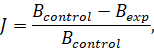
where  – the toxicity index;
 – seed germination in the control;
 – seed germination in the experimental variant.
Table 4.
River water toxicity index
|
Selection period |
Autumn |
Spring |
|
Toxicity index |
0,15 |
0,28 |
According to V.P. Lebedev in table 5, both studied water samples taken from the Kazanka River have a weak degree of pollution [5]. However, the toxicity index calculated for the sample collected in the spring period exceeds the corresponding index of the autumn sample, which corresponds to an increase in toxic effects in the spring period.
Table 5.
Indicators of water pollution criterion
|
Indicator |
Degree of contamination |
|
||
|
No contamination |
Mild contamination |
Average pollution |
Heavy pollution |
|
|
Germination, % |
90-100 |
65-90 |
30-65 |
<30 |
|
Toxicity index |
<0,1 |
0,1-0,35 |
0,36-0,7 |
>0,7 |
Conclusion
The study confirmed the high efficiency of biotesting as a method of assessing the toxicity of water samples. The use of this approach allowed to reveal the relationship between the level of phytotoxicity and seasonal changes. In particular, it was found that the spring period is characterised by a higher toxicity index compared to the autumn period, which reflects the influence of seasonal factors on the quality of water resources.
The results obtained confirm the need to take into account seasonal changes when monitoring the ecological state of water bodies and developing environmental protection measures, which include the introduction of stormwater treatment facilities that are able to retain and neutralise toxic substances before they reach water bodies. It is also important to organise systems of collection and disposal of surface wastewater, its mechanical (sedimentation, filtration, flotation), physical-chemical (adsorption, coagulation, flotation, ion exchange) and biochemical (aerobic oxidation, anaerobic fermentation) treatment [8].
Application of these measures will reduce the level of surface water toxicity and minimise the negative impact on aquatic ecosystems.
References:
- Wuncheng Wang Toxicity assessment of the aquatic environment using phytoassay methods. - Peoria, IL 61652, 1989. – Pp. 76.
- Anthropogenic load on rivers from point sources of pollution [Electronic resource] // CyberLeninka: website. – URL: https://cyberleninka.ru/article/n/antropogennaya-nagruzka-na-reki-ot-tochechnyh-istochnikov-zagryazneniya/viewer (date of reference: 19.04.2025).
- GOST 12038-84 «Seeds of agricultural crops. Methods of determining germination».
- GOST 33061-2014 «Test methods for chemical products posing a risk to the environment. Terrestrial plants: seed germination and seedling development test».
- Lebedev V.P. Biotesting of pollution and toxicity of aquatic environment / Lebedev V.P. // Environmental Culture and Education: Innovative Experience of the Vologda Oblast – Vologda, 2006. – Pp. 94-98.
- Mitina N.N., Garifullina D.R. Ecological state of resources of the Republic of Tatarstan // Water: chemistry and ecology. – 2009. – №9. – Pp. 26-31.
- Assessment of water quality of the Kazanka River [Electronic resource] // CyberLeninka: website. – URL: https://cyberleninka.ru/article/n/otsenka-kachestva-vody-reki-kazanka/viewer (date of reference: 19.04.2025).
- Surface wastewater treatment [Electronic resource] // EcoService: –URL: https://www.ecosvc.ru/about/blog/ochistka-poverkhnostnykh-stochnykh-vod.htm (date of reference: 19.04.2025).
Информация об авторах

студент, Казанский национальный исследовательский технологический университет, РФ, г. Казань
Doctor of Technical Sciences, professor of Kazan national research technological university, Russia, Kazan
д-р техн. наук, доц. Казанского национального исследовательского технологического университета, РФ, г. Казань