Evaluation of the osteoprotective potential of field horsetail and stinging nettle as potential additives in the production of functional bread
УДК 664.66+615.32
Abstract
The search for accessible plant sources of minerals and vitamins involved in bone formation is relevant to the development of functional bread aimed at preventing osteoporosis. The aim of the study was to assess the quality indicators and osteoprotective potential of field horsetail (Equisetum arvense) and stinging nettle (Urtica dioica) powders as additives in bread production. The aerial part of horsetail and nettle leaves were dried, crushed and freeze-dried; the organoleptic, physicochemical, structural-mechanical and sanitary-hygienic indicators of the powders were determined, the content of nutrients significant for bone tissue was analysed, and the expected technological, functional and physiological effects of using the powders in breadmaking were systematised on the basis of published data. The moisture content of the powders was 5.0 ± 0.5 % for horsetail and 6.5 ± 0.5 % for nettle, the ash content was 5.1 ± 0.3 % and 4.2 ± 0.3 %, and the water absorption capacity was 20.0 ± 1.4 % and 22.2 ± 1.3 %, respectively; in terms of sanitary-hygienic indicators, the raw materials complied with the requirements of Technical Regulation TR CU 021/2011. Nettle is a source of calcium (481 mg/100 g), magnesium (57 mg/100 g) and vitamins C and K, while horsetail is a source of silicon (70 mg/100 g). Nettle powder had more attractive organoleptic properties and better flowability. The combination of silicon, calcium, vitamin K and antioxidant compounds justifies the combined use of the studied plants. The results can be used in developing formulations of bakery products for osteoporosis prevention.
Аннотация
Поиск доступных растительных источников минеральных веществ и витаминов, участвующих в формировании костной ткани, актуален для разработки хлеба функционального назначения, направленного на профилактику остеопороза. Цель исследования — оценить показатели качества и остеопротективный потенциал порошков хвоща полевого (Equisetum arvense) и крапивы двудомной (Urtica dioica) как добавок в производстве хлеба. Надземную часть хвоща и листья крапивы высушивали, измельчали и подвергали сублимационной сушке; в полученных порошках определяли органолептические, физико-химические, структурно-механические и санитарно-гигиенические показатели, анализировали содержание нутриентов, значимых для костной ткани, а ожидаемые технологические, функциональные и физиологические эффекты применения порошков в хлебопечении систематизировали на основе литературных данных. Влажность порошков составила 5,0 ± 0,5 % для хвоща и 6,5 ± 0,5 % для крапивы, зольность — 5,1 ± 0,3 и 4,2 ± 0,3 %, водопоглотительная способность — 20,0 ± 1,4 и 22,2 ± 1,3 % соответственно; по санитарно-гигиеническим показателям сырьё соответствовало требованиям технического регламента Таможенного союза ТР ТС 021/2011. Крапива является источником кальция (481 мг/100 г), магния (57 мг/100 г), витаминов C и K, а хвощ — кремния (70 мг/100 г). Порошок крапивы отличался более привлекательными органолептическими свойствами и лучшей сыпучестью. Сочетание кремния, кальция, витамина K и антиоксидантных соединений обосновывает совместное применение исследованных растений. Полученные результаты могут быть использованы при разработке рецептур хлебобулочных изделий для профилактики остеопороза.
Keywords: functional foods; osteoporosis; bakery products; field horsetail; stinging nettle; silicon; calcium.
Ключевые слова: функциональные продукты; остеопороз; хлебобулочные изделия; хвощ полевой; крапива двудомная; кремний; кальций.
Introduction
Medicinal plants are considered a promising source of biologically active substances with a broad spectrum of physiological effects, including osteoprotective properties. Field horsetail (Equisetum arvense) and stinging nettle (Urtica dioica) are of particular scientific interest, traditionally used in folk and traditional medicine for mineral metabolism disorders and diseases of the musculoskeletal system.
In modern conditions, a priority area of food science is the creation of functional products capable of exerting targeted physiological effects on the body. One technologically and economically feasible approach is the enrichment of bakery products with plant-based ingredients containing minerals and vitamins involved in the formation and maintenance of bone tissue [2; 4; 5; 9]. Of particular interest is their combined use, which provides a synergistic effect due to the combination of silicon, calcium, vitamins, and antioxidant compounds.
The purpose of the research is to study the properties of field horsetail and stinging nettle powders and assess their potential as functional ingredients in the development of targeted bakery products. To achieve this purpose, the following tasks were set: to evaluate the organoleptic, physicochemical and structural-mechanical properties of the powders; to analyse their content of nutrients significant for bone tissue; and to systematise the expected technological, functional and physiological effects of their use in bread production.
Materials and Methods
The objects of the research were:
- field horsetail (aerial part, June–July);
- stinging nettle (leaves, May–June).
The raw materials were dried to a moisture content of 10.0–12.0 %, then crushed and freeze-dried. Freeze-drying was carried out according to standard protocols in order to preserve the maximum amount of biologically active substances and achieve high flowability of the raw materials. The resulting powders were sieved through a 0.2 mm sieve.
Quality assessment was conducted based on the following parameters: organoleptic; physicochemical; structural and mechanical; chemical composition; and sanitary and hygienic parameters, the latter in accordance with the requirements of TR CU 021/2011 [11].
The research methods complied with current regulatory documents.
Results and Discussion
Medicinal plants, due to their rich biochemical composition, represent a promising source of biologically active substances with a broad spectrum of pharmacological activity, including osteoprotective action. Horsetail and stinging nettle are widely known and readily available medicinal plants, traditionally used in folk medicine to treat various ailments, including those associated with mineral metabolism disorders [3; 8]. Including extracts or powders of medicinal plants in bread recipes can be an effective way to enhance its therapeutic and prophylactic value.
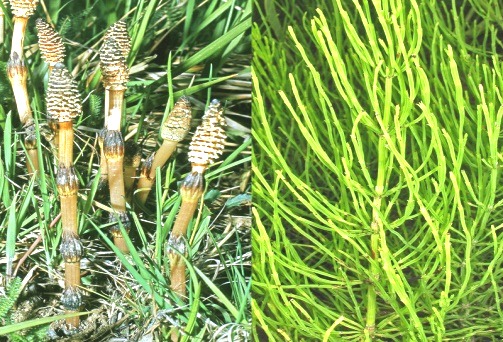
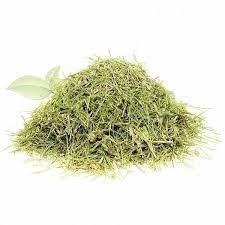
Field horsetail (Equisetum arvense) is a perennial spore-bearing plant common in temperate climates. Its medicinal properties are due to a complex of biologically active compounds (Figure 1, a).
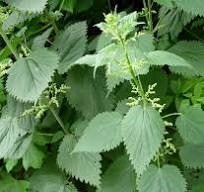
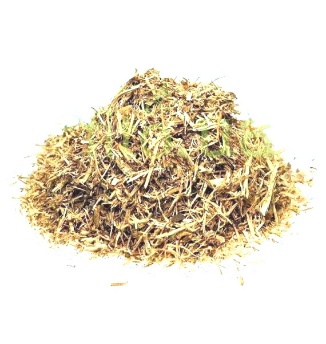
Stinging nettle (Urtica dioica) is a common herbaceous plant known for its numerous medicinal properties, including its use in the treatment of arthrosis, arthritis, and gout in folk and traditional medicine (Figure 1, b).
 |
 |
|---|---|
| a) | |
 |
 |
| b) | |
An analysis of the quality indicators of the studied supplements (Table 1) revealed that both powders had a characteristic color, odor, and taste with no signs of spoilage. However, horsetail powder had a duller color and a neutral taste, while stinging nettle retained a green color and a distinct herbaceous aroma. Based on organoleptic characteristics, stinging nettle appears more “food-grade” and appealing to consumers.
Table 1.
Quality indicators of horsetail and stinging nettle powders
| Indicator | Powder quality values | |
|---|---|---|
| horsetail | nettle | |
| Organoleptic properties | ||
| Appearance | Homogeneous fine powder, free of foreign impurities | |
| Color | Gray-green or greenish-brown | Green (light to dark green) |
| Odor | Faint, herbaceous, characteristic | Herbaceous, fresh, characteristic |
| Taste | Neutral, slightly astringent | Herbaceous, slightly tart |
| Physicochemical properties | ||
| Moisture content, %, no more than 12.0 | 5.0 ± 0.5 | 6.5 ± 0.5 |
| Total ash content, % | 5.1 ± 0.3 | 4.2 ± 0.3 |
| Active acidity, pH | 6.2 ± 0.3 | 6.8 ± 0.2 |
| Solubility | Average, poorly wetted | Good |
| Structural and mechanical properties | ||
| Dispersity, mm | 0.3 ± 0.2 | 0.3 ± 0.2 |
| Bulk density, g/cm³ | 0.62 ± 0.1 | 0.47 ± 0.1 |
| Water absorption capacity, % | 20.0 ± 1.4 | 22.2 ± 1.3 |
| Flowability | Average | Good |
| Caking | Does not cake at normal humidity | |
The moisture content of the samples does not exceed standard values (≤12.0 %). Horsetail ash content reaches 20.0 %, due to its high mineral content, primarily silicon. The finely dispersed structure (0.1–0.5 mm) ensures high bioavailability and technological suitability of the powders.
An analysis of the biochemical composition and osteoprotective potential of the studied raw materials revealed that horsetail is a rich source of silicon, while stinging nettle contains calcium, magnesium, and vitamins C and K (Table 2).
Table 2.
Pharmacologically active substances and compounds in medicinal herbs that are significant for osteoporosis
| Nutrients | Value in 100 g / range | |
|---|---|---|
| horsetail | nettle | |
| Silicon, mg | 70 | 10 |
| Calcium, mg | 15 | 481 |
| Iron, mg | 0.5 | 2.7 |
| Magnesium, mg | 20 | 57 |
| Phosphorus, mg | 190 | 270 |
| Vitamin C, mg | 0 | 93 |
| Vitamin K, mcg | 0 | 481 |
| Phytochemicals | Flavonoids (quercetin, kaempferol), terpenes (α-pinene, limonene), essential oils | Phenolic acids (caffeic acid), chlorophyll, bioflavonoids |
A description of the essential and distinguishing features (definitions) of these herbal preparations is presented in Table 3.
Table 3.
Definitions of the active components of raw materials for osteoporosis prevention
| Active component | Definitions of the active component |
|---|---|
| Field horsetail | |
| Silicon | Has anti-inflammatory properties. Plays an important role in bone metabolism, participating in collagen synthesis and bone mineralization, and accelerates bone recovery after fractures [1, p. 99–110] |
| Phenols | Low-molecular compounds that have antioxidant activity and help protect cells from oxidative stress [10] |
| Stinging nettle | |
| Chlorophyll | A pigment that supports cellular health and has antioxidant properties, promoting detoxification |
| Calcium | An essential mineral necessary for the formation and maintenance of strong bones. A calcium deficiency can lead to osteoporosis |
| Vitamin K | Promotes bone mineralization and improves absorption |
Based on the presented data (Tables 2, 3), it was established that stinging nettle has a more pronounced potential for replenishing the deficiency of key minerals and vitamins necessary for the prevention of osteoporosis. Of greatest importance is the high content of calcium and vitamin K, which play a fundamental role in the formation, mineralization, and maintenance of bone strength. Calcium is the main structural component of bones [10], while vitamin K is involved in the regulation of bone metabolism and a reduction in the risk of fractures by activating the synthesis of proteins that ensure mineralization [12].
Additionally, stinging nettle contains flavonoids, phenolic acids, sterols, and chlorophyll, which possess antioxidant and anti-inflammatory activity and thus have a positive effect on bone tissue [8; 10].
Field horsetail, in turn, is characterized by a high content of bioavailable silicon [6; 7] and can be considered an effective source of this micronutrient, essential for the formation and strengthening of bone matrix.
Combined use of these plants provides a comprehensive effect:
- silicon improves calcium absorption;
- calcium and vitamin K enhance bone mineralization;
- antioxidants reduce oxidative stress.
Thus, a synergistic effect is achieved, increasing the effectiveness of osteoporosis prevention.
Next, a structured review of the use of horsetail and nettle powders in bread production was conducted, with an emphasis on osteoporosis prevention, in three areas: technological effect (impact on the baking process and product properties), functional characteristics (enrichment with nutrients), and physiological activity (Table 4).
The review showed that field horsetail improves bread porosity and volume, increases the gas-retaining capacity of the dough and enriches the product with silicon; stinging nettle increases nutritional value, improves color and aroma and stabilizes the dough structure; a mixture of the plants provides a comprehensive improvement in the structure and quality of bread, increases the functional value of the product and forms attractive organoleptic properties (Table 4).
Table 4.
Expected technological effect of using horsetail and nettle powders in bread production for osteoporosis prevention
| Technological effect | Functional characteristics | Physiological activity of food ingredients |
|---|---|---|
| Field horsetail | ||
| Increases bread porosity and volume | Enriches the product with minerals (silicon) | Improves metabolism, supports joint and skin health |
| Improves texture | Improves consistency | Has a diuretic effect, cleanses the body of toxins |
| Relevance for osteoporosis | High | |
| Stinging nettle | ||
| Increases nutritional value | Enriches with vitamins and minerals (iron, calcium) | Anti-inflammatory properties |
| Improves color and aroma | Promotes improved taste | Normalizes blood sugar levels |
| Relevance for osteoporosis | High | |
| A mixture of field horsetail and stinging nettle | ||
| Increases bread porosity and volume | Enriches the product with minerals (silicon, iron) and vitamins (C, K) | Improves metabolism and supports joint and skin health |
| Improves dough texture and elasticity | Improves consistency and taste | Anti-inflammatory properties, normalizes blood sugar level |
| Improves color and aroma | Gives the product a natural greenish tint and a pleasant herbal aroma | Diuretic properties, detoxifies the body |
| Relevance for osteoporosis | Maximum | |
Powders from the studied medicinal plants transform ordinary bread into a functional product for the prevention of osteoporosis, combining technological improvements (better texture, taste) with nutritional value. The mixture is most effective, providing a balance of silicon (for bone formation) and calcium (for density), which is confirmed by studies on the role of nutrients and plant compounds in osteoporosis prevention [1; 10; 12].
Conclusion
Field horsetail and stinging nettle powders have been found to possess high quality and meet safety requirements. Nettle is a source of calcium and vitamins, while horsetail is a source of silicon, which determines their osteoprotective potential. The combined use of these plants provides a pronounced synergistic effect. Adding these powders to bread recipes improves its technological and functional properties. Developing bakery products using these components is a promising direction in the development of preventative products.
References