Screening of entomopathogenic fungal isolates of the genus Metarhizium under the conditions of Uzbekistan
УДК 632.937
Abstract
This study aimed to isolate and preliminarily identify entomopathogenic fungi of the genus Metarhizium under the environmental conditions of Uzbekistan and compare the insecticidal activities of selected isolates. Thirty-two fungal isolates were recovered from Tenebrio molitor adults exhibiting signs of mycosis. Preliminary taxonomic identification was performed using MALDI-TOF mass spectrometry with a filamentous-fungi reference library. Six isolates were assigned to the genus Metarhizium and subsequently examined in bioassays against fourth- and fifth-instar larvae of Galleria mellonella. Conidial and blastospore suspensions were tested at a concentration of 1.0 × 10⁷ spores/mL over a 14-day observation period, with mortality corrected using Abbott’s formula. The most active isolate was Meta-Uz-23. On day 14, larval mortality reached 94.42 ± 1.26 % following treatment with its conidial suspension and 96.65 ± 1.18 % following treatment with its blastospore suspension. For isolate Meta-Uz-24, the corresponding mortality values were 90.18 ± 1.62 % and 93.10 ± 1.65 %, respectively. Blastospores of the most active isolates generally produced a more rapid insecticidal response than conidia during the initial observation period. These findings identify Meta-Uz-23 and Meta-Uz-24 as promising candidates for further studies aimed at developing fungal biological control agents. However, genus-level identification based on MALDI-TOF MS should be confirmed by molecular methods, and the laboratory results require validation under application conditions. The study provides initial evidence of the potential of locally obtained entomopathogenic isolates for future biological control research.
Аннотация
Целью исследования являлось выделение и предварительная идентификация энтомопатогенных грибов рода Metarhizium в условиях Узбекистана, а также сравнительная оценка инсектицидной активности полученных изолятов. Из особей Tenebrio molitor с признаками микоза были выделены 32 грибных изолята. Предварительную идентификацию проводили методом масс-спектрометрии MALDI-TOF MS с использованием референсной библиотеки филаментозных грибов. Шесть изолятов были отнесены к роду Metarhizium и изучены в биологических испытаниях на личинках Galleria mellonella IV–V возрастов. Активность конидиальных и бластоспоровых суспензий оценивали при концентрации 1,0 × 10⁷ спор/мл в течение 14 суток; смертность корректировали по формуле Абботта. Наиболее выраженное действие продемонстрировал изолят Meta-Uz-23. На 14-е сутки смертность личинок при обработке его конидиями составила 94,42 ± 1,26 %, а при обработке бластоспорами — 96,65 ± 1,18 %. У изолята Meta-Uz-24 аналогичные показатели достигли 90,18 ± 1,62 % и 93,10 ± 1,65 % соответственно. При применении бластоспор развитие эффекта у наиболее активных изолятов происходило быстрее, чем при применении конидий. Полученные результаты свидетельствуют о перспективности изолятов Meta-Uz-23 и Meta-Uz-24 для дальнейшего изучения и создания микробиологических средств защиты растений. Вместе с тем предварительное определение принадлежности к роду Metarhizium требует последующего подтверждения молекулярно-генетическими методами, а результаты лабораторных опытов — проверки в условиях практического применения. Работа расширяет сведения о местных изолятах энтомопатогенных грибов и служит основой для их дальнейшего технологического исследования.
Keywords: Metarhizium; entomopathogenic fungi; screening; conidia; blastospores; Galleria mellonella; biopesticides.
Ключевые слова: Metarhizium; энтомопатогенные грибы; скрининг; конидии; бластоспоры; Galleria mellonella; биопестициды.
Introduction
Under climate change, world agriculture faces very serious threats. Rising mean temperatures, soil degradation, water scarcity, expanding salinisation, the increasing number and impact of insect pests and diseases, and, in particular, the growing adaptation of microbial diseases to existing control products are leading to a sharp decline in the rate of food and feed production. Entomopathogenic fungi such as Beauveria bassiana or Metarhizium anisopliae, Isaria fumosorosea, Lecanicillium lecanii and Purpureocillium lilacinum have been regarded as the principal fungal sources for biopesticide production worldwide. Another important property of entomopathogenic fungi is their ability to colonise the area around plant roots [the rhizosphere] and thereby stimulate plant growth and development. The prospects for using fungi in agriculture are evaluated by several factors: in addition to stimulating plant growth and development, fungi increase plant tolerance to various stress factors and protect plants against phytopathogenic microorganisms and insect pests. Their bioremediation properties in mitigating stress factors under soil and climatic conditions are also highly valued, including reducing soil mineralisation [salinity], degrading heavy metals and converting salts into forms readily available for plant uptake. Research aimed at discovering new species and strains of entomopathogenic fungi, developing biological control agents based on them and introducing these agents into practice is therefore of great importance.
1. Literature review and research background
1.1. Biological control agents in world agriculture and their significance. The production of biological control agents based on fungi has several advantages [Razikova et al., 2026]. In addition to their entomopathogenic effect on insect pests of plants [Peng et al., 2021; Hyde et al., 2019; Wang et al., 2024; Razikova et al., 2026], fungi are distinguished by antifungal and antibacterial activity against a wide range of phytopathogens [Dara, 2019a; Pérez-Pizá et al., 2024; Liao et al., 2025; Razikova et al., 2026], nematicidal activity [Berhanu et al., 2024; Razikova et al., 2026] and bioherbicidal activity against weeds [Htet et al., 2022; Razikova et al., 2026] [Ayaz et al., 2023; Chaudhary et al., 2024; Razikova et al., 2026]. They are described as ecologically sustainable biopesticides that mitigate and reduce chemical [pesticide] resistance [Rauf, 2024; Wang et al., 2024; Diepenbrock et al., 2024; Razikova et al., 2026] and prevent soil and water pollution [Chaudhary et al., 2024; Diepenbrock et al., 2023; Ranadev et al., 2025; Saminathan et al., 2025; Razikova et al., 2026].
The mechanism of action of entomopathogenic fungi is explained mainly by antagonism (antibiotics, siderophores, pH changes, etc.) [Avis et al., 2001; Ansari et al., 2005; Vinale et al., 2008; Razikova et al., 2026], mycoparasitism [Németh et al., 1991; Howell, 2003; Razikova et al., 2026], hyperparasitism [Askary et al., 1998; Whipps et al., 2008; Benhamou et al., 2012; Razikova et al., 2026], competition for nutrients among microorganisms and with insects and nematodes [Alabouvette et al., 2009; Pedrini, 2018; Freimoser et al., 2019; Spescha et al., 2023; Puža et al., 2023; Barszczewska et al., 2025; Razikova et al., 2026], anabiosis [dormancy] [Ortiz-Urquiza et al., 2013; Zhao et al., 2016; Quesada-Moraga et al., 2022; Hong et al., 2023; Razikova et al., 2026] and endophytism [Ahsan et al., 2024; Razikova et al., 2026] [Razikova et al., 2026].
According to the literature, a number of primary and secondary products are used for the industrial cultivation of entomopathogenic fungi [Poveda et al., 2021; Manawasinghe et al., 2025; Razikova et al., 2026]. Although wheat bran is generally reported as the most widely used mass-production medium, rice bran and ground rice are also widely used in many countries [Razikova et al., 2026]. In studies conducted by researchers in India, the highest conidial yield was recorded on a ground-rice-based medium (25.2 ± 0.13 g/100 mL), whereas the lowest was recorded on rice bran (1.15 ± 0.1 g/100 mL) [Anitha et al., 2017; Razikova et al., 2026].
1.2. Entomopathogenic fungi of the genus Metarhizium and their significance in agriculture. The literature indicates that species of the genus Metarhizium such as M. anisopliae, M. guizhouense, M. pingshaense and M. taii have been studied most extensively [Bischoff et al., 2009; Razikova et al., 2026]; however, modern molecular-genetic methods have recently identified nearly 100 species, which are being widely studied [Bischoff et al., 2009; Fernández-Bravo et al., 2021; Razikova et al., 2026]. More than 700 fungal species belonging to about 90 genera have been reported as entomopathogens of insect pests, and the genera Beauveria (B. bassiana (Balsamo-Crivelli) Vuillemin), Metarhizium (M. anisopliae (Metschnikoff) Sorokin), Isaria (I. fumosorosea Wize), Lecanicillium (L. lecanii (Zimmerman) Viegas) and Hirsutella (H. thompsonii Fisher) are recognised as the most studied genera and as the basis of commercially introduced biopesticides [Chen et al., 2015; Bamisile et al., 2021; Razikova et al., 2026].
Depending on their feeding type, biopesticides based on entomopathogenic fungi have been recommended in the literature for the control of various insect pests, including arthropod pests [Dara, 2019; Razikova et al., 2026], aphids, locusts and thrips [Gulzar et al., 2021; Razikova et al., 2026], larvae [Wakil et al., 2017; Yasin et al., 2019; Razikova et al., 2026], noctuid moths [cutworms] [Ali et al., 2015; Tahir et al., 2019; Razikova et al., 2026], mites, mosquitoes, whiteflies and fruit flies [Dong et al., 2016; Bamisile et al., 2020; Canassa et al., 2020; Usman et al., 2020; Razikova et al., 2026]. Some studies have also reported improvements in soil structure and microbiota, easier uptake of nutrients and water by plants and stimulation of the plant immune system [Sasan et al., 2012; Jaber et al., 2014; Behie et al., 2015; Jaber et al., 2018; Razikova et al., 2026]. It has also been established that the use of entomopathogenic fungi in plant protection increases plant tolerance to chemical pesticides [Bamisile et al., 2021; Razikova et al., 2026]. The most frequently studied targets include arthropod insect pests (Bemisia argentifolii, Bombyx mori, Brevicoryne brassicae, Cetonia aurata, Choristoneura fumiferana, Coptotermes formosanus, Culex pipiens, Delia antigena, Drosophila melanogaster, Empoasca vitis, Epilachna sparsa, Galleria mellonella, Heliothis virescens, Manduca sexta, Musca domestica, Myzus persicae, Oryctes rhinoceros, Otiorhynchus sulcatus, Phaedon cochlearia, Plutella xylostella, Rhagoletis pomonella, Rhopalosiphum padi, Schistocerca gregaria) [Pedras et al., 2002; Pedras et al., 2003; Razikova et al., 2026].
1.3. Significance of entomopathogenic fungi as biofertilisers. As noted above, it has been widely shown that entomopathogenic fungi applied as protective agents simultaneously act on plants as biofertilisers [Razikova et al., 2026]. Entomopathogenic fungi applied to plants produce phytohormones that promote plant growth and development, thereby stimulating plant growth and the ability to withstand stress factors [Razikova et al., 2026]. According to the literature, by producing phytohormones such as auxin [Dutta et al., 2014; Razikova et al., 2026], gibberellic acid [Khan et al., 2014; Razikova et al., 2026], cytokinin [Kang et al., 2012; Razikova et al., 2026] and indole-3-acetic acid [Gao et al., 2017; Razikova et al., 2026], entomopathogenic fungi stimulate metabolic synthesis in the plant, activate plant cell division, promote the development of fibrous roots and the root system, accelerate seed germination, and regulate pigment formation and photosynthesis [Gao et al., 2017; Bamisile et al., 2021; Razikova et al., 2026].
1.4. Safety aspects of the use of entomopathogenic fungi. The steadily increasing number of insect pest species in nature and the heavy saturation of soil microbiota with phytopathogens are reducing crop production by up to 50 % [Razikova et al., 2026]. This, in turn, is increasing the share of chemical products used [Razikova et al., 2026]. Chemical pesticides adversely affect the environment, soil composition and human health, causing sharp increases in allergies, blood disorders, infectious diseases and immune deficiencies in humans. They also reduce the export [import] potential of agricultural products [Razikova et al., 2026].
Analysis of systematic scientific and applied studies on the biological plant protection and plant growth-promoting effects of entomopathogenic fungi has revealed several problems [Smagghe et al., 2023; Vivekanandhan et al., 2024a; Shahbaz et al., 2024; Razikova et al., 2026]. In particular, besides their beneficial properties as insecticides and biofertilisers in agriculture, the widespread dissemination of entomopathogenic fungi in the environment may lead to a number of unexpected consequences [Kumar et al., 2024; Vivekanandhan et al., 2024b; Razikova et al., 2026]. When entomopathogenic fungi are applied directly to crops, their spores (blastospores, conidia) may land on agricultural produce; the fungus may then use this produce as a growth substrate and release into it metabolites that can cause allergic reactions in humans [Zimmermann, 2007; Razikova et al., 2026].
Metarhizium, one of the most widely used genera of entomopathogenic fungi, has been shown to synthesise six types of destruxins (A, B, E, A1, A2, B1) and cytochalasins (C and D) [Zimmermann, 2007; Strasser et al., 2000; Vey et al., 2000; Razikova et al., 2026]. In addition, new antibiotics with insecticidal properties, hydroxyfungerins A and B, have been isolated from the culture broth of Metarhizium sp. strain FKI-1079 [Uchida et al., 2005; Razikova et al., 2026] and shown to have inhibitory activity against brine shrimp (Artemia salina). Two new mutagenic metabolites, NG-391 and NG-393, have also been found in the fermentation extract of M. anisopliae [Krasnoff et al., 2006; Razikova et al., 2026].
It is known from the literature that destruxin production by entomopathogenic fungi depends on specific conditions, the composition of the culture medium and the mode of cultivation (liquid or solid); in addition, the method of storing the fungi directly affects destruxin synthesis [Razikova et al., 2026]. In most studies, increased destruxin synthesis was observed mainly on peptone- and rice-based media, whereas no destruxin production was observed on solid Czapek-Dox medium [Wang et al., 2004; Razikova et al., 2026]. It has also been reported that the amount of destruxin produced by M. anisopliae does not determine its insecticidal activity, indicating that destruxin is not the sole determinant of its pathogenicity [Amiri-Besheli et al., 2000; Wang et al., 2004; Zimmermann, 2007; Razikova et al., 2026]. Thus, the single most reliable safety argument for the use of entomopathogenic fungi is that, under natural conditions, they produce toxins in very small amounts that are insignificant in terms of toxicity [Razikova et al., 2026].
Furthermore, questions arising from the wide use of entomopathogenic fungi in agriculture, such as their relationships with symbiotic soil bacteria and their synergism and antagonism with beneficial microbiota, have not yet been fully resolved [Razikova et al., 2026]. In addition, the naturally variable character of the factors that directly affect the efficacy of biopesticides based on entomopathogenic fungi (soil moisture, temperature, nutrient sources, etc.) is a major obstacle to their effective performance [Razikova et al., 2026]. Therefore, promoting and widely introducing the use of secondary rather than primary products of entomopathogenic fungi may serve as a comparatively safe and effective approach [Razikova et al., 2026].
It has also been demonstrated that volatile organic compounds of the entomopathogenic fungus B. bassiana, and pure compounds such as 2,3-butanediol, acetoin, dimethyl disulfide, C16-dimethylamine, 6-pentyl-2H-pyran-6-one and 3-methylbutanol from microorganisms such as Bacillus subtilis, Bacillus methylotrophicus, Pseudomonas stutzeri, Arthrobacter agilis, Trichoderma atroviride and Cladosporium halotolerans, can be used to obtain elicitors that promote growth and development in various plants, as well as biopesticides against phytopathogens [Razikova et al., 2026]. Moreover, the combined application of the entomopathogenic fungi B. bassiana and M. anisopliae has been reported to show high activity against Spodoptera frugiperda larvae, to stimulate the growth and development of cucumber plants and improve their biochemical composition, and to prevent root rot (Rhizoctonia solani) [Adame-Garnica et al., 2026; Razikova et al., 2026]. The fungi B. bassiana and Trichoderma atroviride have also been found to synthesise 3-methylbutanol, which is active against insect pests and phytopathogens [Batool et al., 2020; Razikova et al., 2026].
Worldwide, the cultivation of agricultural products using large amounts of chemical fertilisers and pesticides is causing severe environmental damage and serious ecological problems related to human health [Razikova et al., 2026]. The wide use of biofertilisers in agricultural production is of great importance not only for producing ecologically clean products but also for controlling the transfer of heavy metals from soil into the final product [Razikova et al., 2026]. In recent years, the sharp development of organic agriculture has been driven by the adverse effects on human health of the quality of products grown by conventional methods, including their chemical composition, residues of applied chemicals in fruits and produce, and the accumulation of excessively applied mineral fertilisers in products [Razikova et al., 2026]. This, in turn, calls for the wide use of biopesticides, including entomopathogenic fungi, and for promoting the production of indigenous biopesticides for the domestic market and their wide introduction into practice [Razikova et al., 2026].
2. Materials and Methods
2.1. Microbiological sources. The main objects of the study were mycological isolates obtained from samples of the beetle Tenebrio molitor (Coleoptera) naturally infected and showing signs of mycosis, collected in the territory of the Tashkent State Forestry Enterprise (Adolat mahalla, Tuyabuguz settlement, Urtachirchik district, Tashkent region). The isolates were identified with a MALDI-TOF MS system (against Metarhizium anisopliae, Metarhizium robertsii, Beauveria bassiana, Beauveria brongniartii, Trichoderma harzianum, Trichoderma viride and Trichoderma atroviride).
2.2. Culture media used for the cultivation of fungal isolates
Czapek-Dox medium (g/L): distilled water, 1.0 [L]; sucrose, 30.0; NaNO3, 2.0; K2HPO4, 1.0; MgSO4, 0.5; KCl, 0.5; FeSO4, 0.01; agar, 15.0; pH 7.3 ± 0.2. Sterilisation was performed at a pressure of 1 atm at 121 °C for 20 min.
Sabouraud medium (g/L): distilled water, 1.0 [L]; glucose, 40.0; peptone, 10.0; agar, 18.0; pH 6.5 ± 1. Sterilisation was performed at a pressure of 0.5 atm at 121 °C for 20 min.
Mandels medium: KH2PO4, 2.0 g/L; (NH4)2SO4, 1.4 g/L; FeSO4·7H2O, 0.0027 g/L; MnSO4·H2O, 0.0016 g/L; ZnSO4·H2O, 0.0014 g/L; CoCl2·6H2O, 0.0037 g/L; MgSO4·7H2O, 0.6 g/L; CaCl2·2H2O, 0.4 g/L; peptone, 0.75 g/L; urea, 0.3 g/L; and glucose, 30 g/L; pH 4.8. Sterilisation was performed at 121 °C for 20 min.
Potato dextrose agar (PDA): distilled water, 1.0 [L]; starch or sucrose, 10.0–30.0; NaNO3, 9.2; KCl, 0.5; MgSO4·7H2O, 0.5 g/L; KH2PO4, 1.0; FeSO4, 0.01; agar, 20.0–30.0; pH 4.9–5.2. Sterilisation was performed at a pressure of 1 atm at 121 °C for 20 min.
2.3. Identification by MALDI-TOF MS. Pure cultures of the micromycete isolates obtained in this study were identified to genus and species level using a Microflex LT/SH MALDI-TOF mass spectrometer (Bruker Daltonics, Germany) equipped with a nitrogen laser [Normand et al., 2017; Wilkendorf et al., 2020]. Because the thick hydrophobic protein layer of mature spores and the polysaccharides of solid culture media impair desorption, protein extraction was performed only from young vegetative mycelial biomass grown in liquid culture. To obtain biomass, actively growing young vegetative mycelium was taken from the edge of a colony on an agar plate and inoculated into 1.0 mL of liquid Sabouraud dextrose broth (SDB; pH 5.6 ± 0.2), ensuring that no agar particles or mature spores were carried into the medium. Samples were incubated statically at 28 °C for 36–72 h, and the absence of conidiogenesis was checked by microscopy. Conserved ribosomal proteins (m/z 2000–20000 Da) were extracted using a full ethanol–formic acid extraction protocol. Mycelial biomass from the liquid culture was pelleted by centrifugation at 14000 rpm (16000 × g) for 5 min and washed with deionised water (Milli-Q, 18.2 MΩ·cm). The mycelial pellet was homogenised in a mixture of 900 µL absolute ethanol and 300 µL water; the ethanol was then removed completely by centrifugation, and the pellet was dried at room temperature. Depending on the biomass volume, 20–50 µL of 70 % formic acid was added to the dried pellet and mixed by mechanical grinding. Pure acetonitrile was then added at a 1:1 ratio, and the mixture was centrifuged at 14000 rpm (4 °C, 5 min). After the cell debris had settled at the bottom of the tube, the clear supernatant rich in extracted proteins was collected separately. A 1.0 µL aliquot of the protein supernatant was spotted in triplicate onto a Bruker MSP 96 steel target plate and allowed to dry. The dried spot was overlaid with 1.0 µL of saturated α-cyano-4-hydroxycinnamic acid (HCCA) matrix solution to allow co-crystallisation. The instrument was calibrated with the Bacterial Test Standard (BTS) (mass deviation ≤ 300 ppm). Mass spectra were acquired in linear positive ion mode (Linear Positive Mode; laser frequency 60 Hz) over the m/z range 2000–20000 Da, summing at least 240–300 laser shots per spot. The spectral data were processed with MALDI Biotyper Compass software and compared with a specialised reference database (Bruker Filamentous Fungi Library). The reliability of identification was assessed using the system’s standard logarithmic score (Log Score Value): scores ≥ 2.000 confirmed identification at species level, scores of 1.700–1.999 at genus level, and results < 1.700 were considered unreliable, in which case the extraction was repeated.
2.4. Determination of entomopathogenic activity. Insect mortality and insecticidal activity were calculated using the conventional Abbott formula [Abbott, 1925]:
where T is the mortality observed in the treatment, %; and N is the natural mortality observed in the control, %.
3. Results and Discussion
3.1. Screening of Metarhizium entomopathogenic fungi. Entomopathogenic fungi such as Beauveria bassiana or Metarhizium anisopliae, Isaria fumosorosea (Paecilomyces fumosoroseus), Lecanicillium lecanii (Verticillium lecanii) and Purpureocillium lilacinum (Paecilomyces lilacinus) have been regarded as the principal fungal sources for biopesticide production worldwide [Xie et al., 2019; Park et al., 2012; Sasan et al., 2012].
Another important property of entomopathogenic fungi is their ability to colonise the area around plant roots and thereby stimulate plant growth and development [Venkatesh et al., 2022; Yinmei et al., 2022]. The prospects for using fungi in agriculture are evaluated by several factors: in addition to stimulating plant growth and development [Hossain et al., 2017; 2020; Thambugala et al., 2020], fungi increase plant tolerance to various stress factors and protect plants against phytopathogenic microorganisms and insect pests [Thambugala et al., 2020, 2022; Adedayo et al., 2023]. Their bioremediation properties in mitigating stress factors under soil and climatic conditions are also highly valued, including reducing soil mineralisation, degrading heavy metals and converting salts into forms readily available for plant uptake [Kim et al., 2013; Baron et al., 2018, 2021].
The production of biological control agents based on fungi has several advantages. In addition to their entomopathogenic effect on insect pests of plants [Peng et al., 2021; Hyde et al., 2019; Wang et al., 2024], fungi are distinguished by antifungal and antibacterial activity against a wide range of phytopathogens [Dara, 2019a; Pérez-Pizá et al., 2024; Liao et al., 2025], nematicidal activity [Berhanu et al., 2024] and bioherbicidal activity against weeds [Htet et al., 2022] [Ayaz et al., 2023; Chaudhary et al., 2024]. They are described as ecologically sustainable biopesticides that mitigate and reduce chemical resistance [Rauf, 2024; Wang et al., 2024; Diepenbrock et al., 2024] and prevent soil and water pollution [Chaudhary et al., 2024; Diepenbrock et al., 2023; Ranadev et al., 2025; Saminathan et al., 2025].
It has also been established that the use of entomopathogenic fungi in plant protection increases plant tolerance to chemical pesticides [Bamisile et al., 2021]. Nevertheless, the use of entomopathogenic fungi in local agricultural practice remains low. Local manufacturers of insecticidal biopesticides mainly offer a few products based on the entomopathogenic fungus Beauveria bassiana, and no biopesticides based on Metarhizium entomopathogenic fungi are among the products offered [Razikova et al., 2026].
The development of biopesticides based on Metarhizium entomopathogenic fungi and their use in agricultural practice are therefore of considerable scientific and practical importance. The aim of the present study was to isolate Metarhizium entomopathogenic fungi from insect pests under local conditions and to screen the isolates for biological activity.
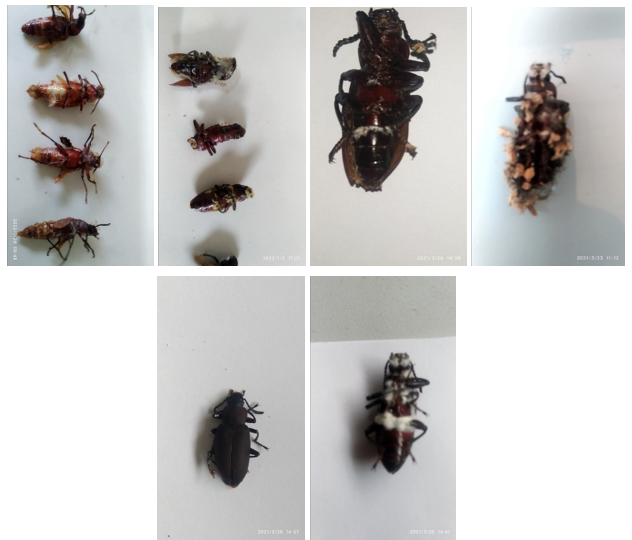
During field surveys conducted under local conditions, isolates were obtained from samples of the beetle Tenebrio molitor (Coleoptera) naturally infected and showing signs of mycosis in the territory of the Tashkent State Forestry Enterprise (Adolat mahalla, Tuyabuguz settlement, Urtachirchik district, Tashkent region). The isolates were preliminarily identified by MALDI-TOF MS (matrix-assisted laser desorption/ionisation time-of-flight mass spectrometry) by comparison with the standard spectra available in the Bruker Filamentous Fungi Library database (Metarhizium anisopliae, Metarhizium robertsii, Beauveria bassiana, Beauveria brongniartii, Trichoderma harzianum, Trichoderma viride, Trichoderma atroviride) (Table 1).
Preliminary MALDI-TOF MS identification of the fungal isolates obtained from T. molitor adults showing signs of mycosis revealed that the 32 isolates belonged to the genera Fusarium, Trichoderma, Alternaria, Metarhizium, Aspergillus and Beauveria (Table 1).
These results showed that the micromycetes isolated from T. molitor adults were taxonomically heterogeneous and comprised fungi of different genera.
Among the isolates obtained, the genera Fusarium sp. and Trichoderma sp. occurred more frequently than the other fungal genera, each accounting for 8 isolates, or 25.0 % of all isolates. The genera Alternaria sp. and Metarhizium sp. were each represented by 6 isolates (18.75 % each), whereas Aspergillus sp. and Beauveria bassiana occurred relatively rarely in the samples examined, each being represented by 2 isolates (6.25 %).
Table 1.
Preliminary identification by MALDI-TOF MS of fungal isolates obtained from Tenebrio molitor adults
| No. | Isolate | log(score) ≥ 2.00: species level | log(score) 1.70–1.99: genus level | No. | Isolate | log(score) ≥ 2.00: species level | log(score) 1.70–1.99: genus level |
|---|---|---|---|---|---|---|---|
| 1 | Meta-Uz-01 | – | Fusarium sp. | 17 | Meta-Uz-17 | – | Alternaria sp. |
| 2 | Meta-Uz-02 | Beauveria bassiana | – | 18 | Meta-Uz-18 | Beauveria bassiana | – |
| 3 | Meta-Uz-03 | – | Aspergillus sp. | 19 | Meta-Uz-19 | – | Fusarium sp. |
| 4 | Meta-Uz-04 | – | Trichoderma sp. | 20 | Meta-Uz-20 | – | Aspergillus sp. |
| 5 | Meta-Uz-05 | – | Trichoderma sp. | 21 | Meta-Uz-21 | – | Fusarium sp. |
| 6 | Meta-Uz-06 | – | Trichoderma sp. | 22 | Meta-Uz-22 | – | Alternaria sp. |
| 7 | Meta-Uz-07 | – | Trichoderma sp. | 23 | Meta-Uz-23 | – | Metarhizium sp. |
| 8 | Meta-Uz-08 | – | Alternaria sp. | 24 | Meta-Uz-24 | – | Metarhizium sp. |
| 9 | Meta-Uz-09 | – | Fusarium sp. | 25 | Meta-Uz-25 | – | Trichoderma sp. |
| 10 | Meta-Uz-10 | – | Metarhizium sp. | 26 | Meta-Uz-26 | – | Alternaria sp. |
| 11 | Meta-Uz-11 | – | Fusarium sp. | 27 | Meta-Uz-27 | – | Fusarium sp. |
| 12 | Meta-Uz-12 | – | Alternaria sp. | 28 | Meta-Uz-28 | – | Metarhizium sp. |
| 13 | Meta-Uz-13 | – | Metarhizium sp. | 29 | Meta-Uz-29 | – | Trichoderma sp. |
| 14 | Meta-Uz-14 | – | Trichoderma sp. | 30 | Meta-Uz-30 | – | Fusarium sp. |
| 15 | Meta-Uz-15 | – | Metarhizium sp. | 31 | Meta-Uz-31 | – | Alternaria sp. |
| 16 | Meta-Uz-16 | – | Trichoderma sp. | 32 | Meta-Uz-32 | – | Fusarium sp. |
Note: “–”, no result at the corresponding identification level.
Fungi of the genera Fusarium and Trichoderma accounted for 50.0 % of all isolates obtained from the samples examined, whereas the combined share of the genera Alternaria and Aspergillus was 25.0 %. In the MALDI-TOF MS analysis, 2 of the 32 isolates, namely Meta-Uz-02 and Meta-Uz-18, were identified at species level as Beauveria bassiana. All remaining 30 isolates were identified at genus level as belonging to Fusarium sp., Trichoderma sp., Alternaria sp., Metarhizium sp. and Aspergillus sp. Because 6.25 % of the isolates were identified at species level and 93.75 % at genus level, it was concluded that the taxonomic position of these isolates needs to be confirmed by molecular-genetic methods.
In line with the aim of the study, isolates Meta-Uz-10, Meta-Uz-13, Meta-Uz-15, Meta-Uz-23, Meta-Uz-24 and Meta-Uz-28 were specifically noted as belonging to the genus Metarhizium. These 6 isolates accounted for 18.75 % of all isolates obtained. As these isolates belong to the entomopathogenic fungi, it is appropriate to screen them for insecticidal activity.
3.2. Screening of Metarhizium isolates for conidial activity
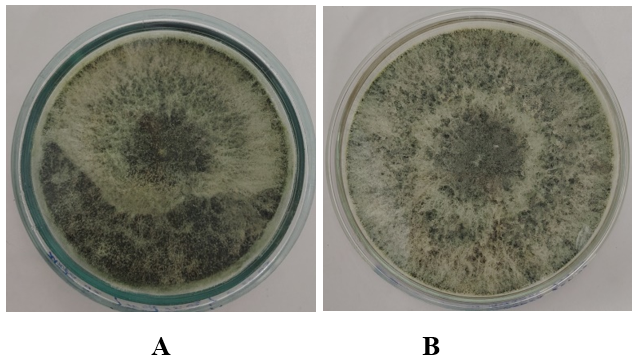
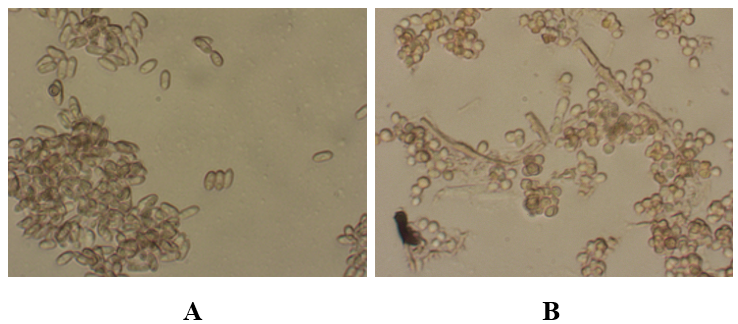
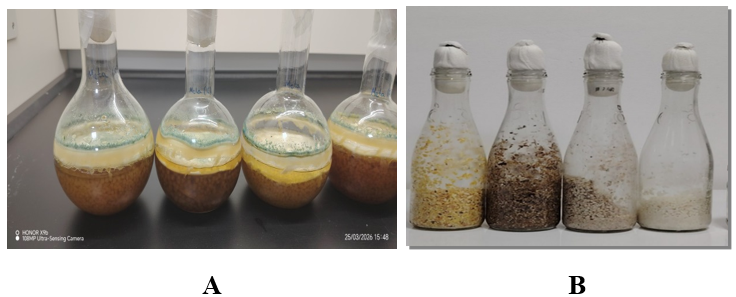
In line with the aim of the study, isolates Meta-Uz-10, Meta-Uz-13, Meta-Uz-15, Meta-Uz-23, Meta-Uz-24 and Meta-Uz-28, selected from the 32 isolates as belonging to the genus Metarhizium on the basis of preliminary identification, were screened by assessing their insecticidal activity against the greater wax moth (Galleria mellonella Linnaeus, 1758) (Table 2; Figs. 3.1–3.4).
Table 2.
Insecticidal activity of conidial suspensions of Metarhizium isolates against greater wax moth (G. mellonella L.) larvae
| No. | Isolate | Day 3 | Day 5 | Day 7 | Day 10 | Day 12 | Day 14 |
|---|---|---|---|---|---|---|---|
| 1 | Control (0.05% Tween 80) | 0.0 ± 0.0c | 1.12 ± 0.45d | 2.24 ± 0.72d | 3.15 ± 0.94d | 3.85 ± 1.02e | 4.22 ± 1.15e |
| 2 | Meta-Uz-10 | 4.18 ± 1.05bc | 18.74 ± 2.10bc | 38.92 ± 2.86b | 56.35 ± 3.18b | 67.10 ± 2.75b | 72.64 ± 2.32b |
| 3 | Meta-Uz-13 | 2.10 ± 0.85c | 11.45 ± 1.72c | 26.18 ± 2.45c | 39.72 ± 3.10c | 48.65 ± 2.90c | 54.30 ± 2.64c |
| 4 | Meta-Uz-23 | 16.34 ± 1.82a | 48.15 ± 2.64a | 74.68 ± 3.11a | 86.52 ± 2.45a | 91.84 ± 1.73a | 94.42 ± 1.26a |
| 5 | Meta-Uz-15 | 0.0 ± 0.0c | 6.85 ± 1.42cd | 17.40 ± 2.15c | 28.62 ± 2.74c | 36.15 ± 2.95d | 41.80 ± 2.58d |
| 6 | Meta-Uz-24 | 12.85 ± 1.54a | 41.20 ± 2.85a | 68.45 ± 3.24a | 81.14 ± 2.68a | 87.36 ± 2.05a | 90.18 ± 1.62a |
| 7 | Meta-Uz-28 | 7.42 ± 1.20b | 25.60 ± 2.34b | 49.15 ± 3.42b | 64.80 ± 2.95b | 73.52 ± 2.40b | 78.25 ± 2.15b |
Note: Larval mortality (%) by day of observation. Mortality in the treatments was calculated using the Abbott formula with correction for the control and expressed as M ± m; n = 5; 30 larvae were used per replicate. The experiments were conducted on fourth- to fifth-instar (IV–V) larvae, which were fed dried apples and apricots throughout the study. Suspensions of the isolates at 1.0 × 10⁷ conidia/mL were applied. Means within a column sharing at least one letter do not differ significantly; values without a common letter differ significantly (ANOVA, Tukey’s HSD, p < 0.05).
Comparative assessment over 14 days of the insecticidal activity of suspensions of the six Metarhizium isolates at 1.0 × 10⁷ conidia/mL against greater wax moth (G. mellonella L.) larvae showed that the effect of the isolates increased with time, but their insecticidal activity against the larvae differed considerably. Isolate Meta-Uz-23 caused larval mortality of 16.34 ± 1.82 % as early as day 3, 48.15 ± 2.64 % on day 5, 74.68 ± 3.11 % on day 7, 86.52 ± 2.45 % on day 10, 91.84 ± 1.73 % on day 12 and 94.42 ± 1.26 % on day 14, and was rated as the most active isolate.
Isolate Meta-Uz-24 also showed high insecticidal activity: 12.85 ± 1.54 % on day 3, 41.20 ± 2.85 % on day 5, 68.45 ± 3.24 % on day 7, 81.14 ± 2.68 % on day 10, and 87.36 ± 2.05 % and 90.18 ± 1.62 % on days 12 and 14, respectively. Compared with Meta-Uz-23, isolate Meta-Uz-24 showed lower insecticidal activity; the values [of Meta-Uz-23] were higher by 3.49 % on day 3, 6.23 % on day 7, 5.38 % on day 10 and 4.24 % on day 14. Nevertheless, these isolates (Meta-Uz-23 and Meta-Uz-24) were rated as statistically equally highly active.
Isolates Meta-Uz-28 and Meta-Uz-10 showed moderate but steadily increasing insecticidal activity. Meta-Uz-28 showed insecticidal activity of 7.42 ± 1.20 % on day 3, 49.15 ± 3.42 % on day 7, 64.80 ± 2.95 % on day 10 and 78.25 ± 2.15 % on day 14, whereas the corresponding values for Meta-Uz-10 were 4.18 ± 1.05, 38.92 ± 2.86, 56.35 ± 3.18 and 72.64 ± 2.32 %. Isolate Meta-Uz-13 acted relatively slowly and weakly, showing insecticidal activity of 2.10 ± 0.85 % on day 3, 11.45 ± 1.72 % on day 5, 26.18 ± 2.45 % on day 7, 39.72 ± 3.10 % on day 10, 48.65 ± 2.90 % on day 12 and 54.30 ± 2.64 % on day 14.
This isolate showed lower insecticidal activity than Meta-Uz-28 and Meta-Uz-10; on day 14, the value for Meta-Uz-13 was 40.12 % lower than that of Meta-Uz-15 [sic; this difference corresponds to Meta-Uz-23], 35.88 % lower than that of Meta-Uz-24, 23.95 % lower than that of Meta-Uz-28 and 18.34 % lower than that of Meta-Uz-10. Among the isolates studied, Meta-Uz-15 showed the lowest insecticidal activity: no larval mortality was observed in this treatment on day 3, while insecticidal activity reached 6.85 ± 1.42 % on day 5, 17.40 ± 2.15 % on day 7, 28.62 ± 2.74 % on day 10, 36.15 ± 2.95 % on day 12 and 41.80 ± 2.58 % on day 14.
It is known from the literature that, in selecting insecticidally active strains, the main focus is on strains that show at least 85 % insecticidal activity on day 10 of observation. The analysis therefore focused mainly on the insecticidal activity of the isolates on day 10. On day 10, isolate Meta-Uz-23 caused 86.52 ± 2.45 % mortality of G. mellonella larvae, while isolate Meta-Uz-24 also showed relatively high activity, with 81.14 ± 2.68 % insecticidal activity.
For isolates Meta-Uz-28, Meta-Uz-10, Meta-Uz-13 and Meta-Uz-15, mortality at this time point was 64.80 ± 2.95, 56.35 ± 3.18, 39.72 ± 3.10 and 28.62 ± 2.74 %, respectively; as their insecticidal activity was well below the selection criterion, they were excluded from further study. Comparative analysis of the results thus showed that the insecticidal activity of Meta-Uz-23 increased to 91.84 ± 1.73 % on day 12 and 94.42 ± 1.26 % on day 14, confirming the high insecticidal activity of this isolate. Accordingly, on the basis of the criterion of ≥ 85 % insecticidal activity on day 10 of observation, isolate Meta-Uz-23 was selected for the next stage of the study.
Because no active Metarhizium strains were available in our laboratory for biological comparison in subsequent experiments, isolate Meta-Uz-24 was adopted as the control [reference] culture: although its insecticidal activity did not reach 85 % over 10 days of observation, it showed the closest insecticidal activity (81.14 ± 2.68 %).
3.3. Screening of Metarhizium isolates for blastospore activity
In subsequent studies, assessment of the insecticidal activity of blastospore suspensions of the Metarhizium isolates against greater wax moth larvae revealed considerable differences among the isolates in the level of effect and the speed with which it developed (Table 3; Figs. 3.1–3.4). Larval mortality increased consistently over time with all isolates. At the same time, the ranking of the isolates by activity was maintained throughout the observation period, with the highest values recorded for Meta-Uz-23 and Meta-Uz-24 and relatively low values for Meta-Uz-13 and Meta-Uz-15.
Table 3.
Insecticidal activity of blastospore suspensions of Metarhizium isolates against greater wax moth (Galleria mellonella L.) larvae
| No. | Isolate | Day 3 | Day 5 | Day 7 | Day 10 | Day 12 | Day 14 |
|---|---|---|---|---|---|---|---|
| 1 | Control (0.05% Tween 80) | 0.67 ± 0.42e | 1.33 ± 0.54e | 2.00 ± 0.61e | 2.67 ± 0.74d | 3.33 ± 0.81d | 3.78 ± 0.88e |
| 2 | Meta-Uz-10 | 11.84 ± 2.15cd | 38.42 ± 3.68c | 62.75 ± 4.12c | 74.30 ± 3.45b | 81.15 ± 2.80b | 84.60 ± 2.18b |
| 3 | Meta-Uz-13 | 5.40 ± 1.42de | 19.85 ± 2.84d | 34.60 ± 3.40d | 46.15 ± 3.25c | 54.80 ± 2.90c | 61.80 ± 2.45c |
| 4 | Meta-Uz-23 | 29.40 ± 3.12a | 69.15 ± 3.85a | 89.64 ± 2.90a | 93.80 ± 2.10a | 95.75 ± 1.54a | 96.65 ± 1.18a |
| 5 | Meta-Uz-15 | 3.85 ± 1.18de | 17.40 ± 2.60d | 28.15 ± 3.10d | 38.90 ± 3.35c | 46.20 ± 3.15c | 51.40 ± 2.70d |
| 6 | Meta-Uz-24 | 23.15 ± 2.80ab | 59.70 ± 3.70ab | 81.25 ± 3.45ab | 88.40 ± 2.75a | 91.60 ± 2.15ab | 93.10 ± 1.65ab |
| 7 | Meta-Uz-28 | 16.70 ± 2.42bc | 46.85 ± 3.54bc | 71.40 ± 3.92bc | 81.15 ± 3.18ab | 86.25 ± 2.65ab | 88.90 ± 2.12ab |
Note: Larval mortality (%) by day of observation. Results were calculated using the Abbott formula and expressed as M ± m; n = 5, 30 larvae per replicate. Blastospore concentration, 1.0 × 10⁷ blastospores/mL. Means within a column sharing at least one letter do not differ significantly (ANOVA, Tukey’s HSD, p < 0.05).
Differences between the isolates were already clearly apparent at the start of the experiment, on day 3. The highest mortality, 29.40 ± 3.12 %, was recorded for Meta-Uz-23. The corresponding values were 23.15 ± 2.80 % for Meta-Uz-24, 16.70 ± 2.42 % for Meta-Uz-28 and 11.84 ± 2.15 % for Meta-Uz-10. In the Meta-Uz-13 and Meta-Uz-15 treatments, the initial effect was relatively weak, at 5.40 ± 1.42 and 3.85 ± 1.18 %, respectively. The mortality of 0.67 ± 0.42 % recorded in the control indicates that the results observed in the treatments were attributable mainly to the blastospore suspensions applied. By day 5, the differences between the isolates had become even more pronounced. Larval mortality reached 69.15 ± 3.85 % with Meta-Uz-23 and 59.70 ± 3.70 % with Meta-Uz-24. For Meta-Uz-28 and Meta-Uz-10, this value was 46.85 ± 3.54 and 38.42 ± 3.68 %, respectively, whereas mortality with Meta-Uz-13 and Meta-Uz-15 remained at 19.85 ± 2.84 and 17.40 ± 2.60 %. Thus, during the first five days, the effect of Meta-Uz-23 and Meta-Uz-24 developed faster than that of the other treatments.
On day 7, mortality in the Meta-Uz-23 treatment reached 89.64 ± 2.90 %; that is, almost 90 % of the larvae died within one week. The corresponding values were 81.25 ± 3.45 % for Meta-Uz-24, 71.40 ± 3.92 % for Meta-Uz-28 and 62.75 ± 4.12 % for Meta-Uz-10. During this period, the effect of Meta-Uz-13 and Meta-Uz-15 was considerably lower, at 34.60 ± 3.40 and 28.15 ± 3.10 %, respectively. These results indicate that the high insecticidal activity of Meta-Uz-23 and Meta-Uz-24 develops not only at the final stage but already at a relatively early phase of the infection process.
Day 10 of observation was particularly important for the selection of isolates. Mortality reached 93.80 ± 2.10 % with Meta-Uz-23 and 88.40 ± 2.75 % with Meta-Uz-24. Thus, only these two isolates caused mortality above 85 % by day 10. Values of 81.15 ± 3.18 % and 74.30 ± 3.45 % were recorded for Meta-Uz-28 and Meta-Uz-10, respectively, whereas mortality in the Meta-Uz-13 and Meta-Uz-15 treatments was 46.15 ± 3.25 and 38.90 ± 3.35 %, respectively. These results provide an experimental basis for distinguishing Meta-Uz-23 and Meta-Uz-24 as highly active isolates.
By day 12, mortality was 95.75 ± 1.54 % with Meta-Uz-23 and 91.60 ± 2.15 % with Meta-Uz-24. For Meta-Uz-28 and Meta-Uz-10, the values increased to 86.25 ± 2.65 % and 81.15 ± 2.80 %, respectively, while mortality of 54.80 ± 2.90 and 46.20 ± 3.15 % was recorded for Meta-Uz-13 and Meta-Uz-15, respectively. At this stage, the high activity of Meta-Uz-23 and Meta-Uz-24 was maintained, and Meta-Uz-28 also exceeded 85 %. However, the fact that Meta-Uz-28 reached this level only on day 12 indicates that its effect developed more slowly than that of Meta-Uz-23 and Meta-Uz-24.
On day 14 of the experiment, isolate Meta-Uz-23 caused the highest mortality, 96.65 ± 1.18 %. Values of 93.10 ± 1.65 %, 88.90 ± 2.12 % and 84.60 ± 2.18 % were recorded for Meta-Uz-24, Meta-Uz-28 and Meta-Uz-10, respectively. Final mortality in the Meta-Uz-13 and Meta-Uz-15 treatments was 61.80 ± 2.45 and 51.40 ± 2.70 %, respectively, whereas mortality in the control at the end of the entire observation period was only 3.78 ± 0.88 %. The ranking Meta-Uz-23 > Meta-Uz-24 > Meta-Uz-28 > Meta-Uz-10 > Meta-Uz-13 > Meta-Uz-15 was therefore also maintained for the final efficacy of the isolates. Analysis of the data in terms of time dynamics showed that between days 3 and 14 mortality increased from 29.40 % to 96.65 % with Meta-Uz-23, from 23.15 % to 93.10 % with Meta-Uz-24, from 16.70 % to 88.90 % with Meta-Uz-28 and from 11.84 % to 84.60 % with Meta-Uz-10.
Mortality with Meta-Uz-13 and Meta-Uz-15 also increased steadily over time, but their final values did not reach the level of the highly active isolates. Thus, the main difference between the isolates lay not only in the final result on day 14 but also in how quickly the effect developed.
In particular, mortality of 29.40 % as early as day 3, 69.15 % on day 5 and 89.64 % on day 7 with Meta-Uz-23 indicates that its effect developed early and rapidly. Meta-Uz-24 showed similar dynamics, giving 81.25 % on day 7, 88.40 % on day 10 and 93.10 % on day 14. Although Meta-Uz-28 achieved high activity at the final stage, its values of 71.40 % on day 7 and 81.15 % on day 10 indicate that its effect developed more slowly than that of the first two isolates. Isolates should therefore be evaluated not only on final mortality but also on the speed with which a high insecticidal effect is achieved.
Statistical grouping also confirms these differences between the isolates. However, letters such as a, ab and bc cannot be interpreted as an independent scale of activity: values sharing at least one letter do not differ statistically on the given day. The statistical letters were therefore evaluated together with the biological dynamics. Overall, the experimental results distinguished Meta-Uz-23 and Meta-Uz-24 not only by their final mortality but also by the early onset of their effect and the stable maintenance of high activity throughout the observation period.
Testing of suspensions of the six Metarhizium isolates at 1.0 × 10⁷ blastospores/mL on fourth- to fifth-instar G. mellonella larvae showed that their insecticidal activity depended on the isolate and on the duration of exposure. Although mortality increased over time with all isolates, Meta-Uz-23 and Meta-Uz-24 showed the highest activity throughout the experiment. Larval mortality caused by these isolates was 93.80 ± 2.10 and 88.40 ± 2.75 %, respectively, on day 10 and 96.65 ± 1.18 and 93.10 ± 1.65 % on day 14. Although Meta-Uz-28 gave a high final result (88.90 ± 2.12 %), its effect developed more slowly than that of Meta-Uz-23 and Meta-Uz-24. Meta-Uz-10 was characterised by moderately high insecticidal activity, and Meta-Uz-13 and Meta-Uz-15 by relatively low insecticidal activity. On the basis of these results, isolates Meta-Uz-23 and Meta-Uz-24 were selected as promising isolates for the next stage of the study, namely the investigation of the concentration–response relationship of their blastospores and the determination of LC50 and LC90 values.
Conclusion
The insecticidal activity of six isolates of the genus Metarhizium was evaluated, and Meta-Uz-23 and Meta-Uz-24 were selected as the most active isolates. On day 14, the insecticidal activity of isolate Meta-Uz-23 was 94.42 % in conidial form and 96.65 % in blastospore form. Blastospores acted faster and had a quantitatively greater effect than conidia during the first days. These results indicate the potential of isolates Meta-Uz-23 and Meta-Uz-24 for further research on the development of effective bioinsecticide products.
References