Development of the composition of CAC 35 alumina cement clinker based on local raw materials
УДК 666.94
Abstract
This article examines the formation of the raw material mixture composition for producing CAC 35 alumina cement clinker based on local mineral raw materials. The mineralogical composition of calcium aluminate cements and the conditions for forming the main clinker phases — calcium monoaluminate (CA), calcium dialuminate (CA2), and C12A7, which determine the properties of alumina cement, are analyzed. The possibility of using Al2O3-rich mineral raw materials, limestone, and corrective components is substantiated. When selecting the raw material mixture composition, the influence of the CaO-to-Al2O3 ratio, as well as the contents of SiO2 and Fe2O3, on the mineralogical composition of the clinker is considered. X-ray fluorescence and X-ray diffraction analyses are proposed to determine the chemical and mineralogical composition of the clinker. The research results may contribute to assessing the technological feasibility of producing CAC 35 clinker from local raw materials, rational resource utilization, improved production efficiency, and reduced cement production costs. Particular attention is given to achieving the required phase composition and technological characteristics of the final material. Optimizing component ratios enables controlled formation of aluminate phases, improved cement performance, and stable quality during industrial production and application.
Аннотация
В данной статье рассмотрены вопросы формирования состава сырьевой смеси для получения глиноземистого цементного клинкера ГЦ 35 на основе местного минерального сырья. Проанализированы минералогический состав кальциевых алюминатных цементов и условия образования основных клинкерных фаз — моноалюмината кальция (CA), диалюмината кальция (CA2) и C12A7, определяющих свойства глиноземистого цемента. Обоснована возможность использования богатого Al2O3 минерального сырья, известняка и корректирующих компонентов. При выборе состава сырьевой смеси рассмотрено влияние соотношения CaO и Al2O3, а также содержания SiO2 и Fe2O3 на формирование минерального состава клинкера. Для определения химического и минералогического состава предусмотрено применение рентгенофлуоресцентного и рентгенодифракционного анализа. Результаты исследования могут способствовать оценке технологической возможности получения клинкера ГЦ 35 на основе местного сырья, рациональному использованию ресурсов, повышению эффективности производства и снижению себестоимости цемента. Особое внимание уделено обеспечению требуемого фазового состава и основных технологических характеристик получаемого готового материала. Установление оптимального соотношения компонентов позволяет целенаправленно регулировать образование алюминатных фаз, улучшать эксплуатационные свойства цемента и обеспечивать стабильность его качества при промышленном производстве и эксплуатации.
Keywords: alumina cement; calcium aluminate cement; CAC 35; cement clinker.
Ключевые слова: глиноземистый цемент; кальциевый алюминатный цемент; ГЦ 35; цементный клинкер.
Introduction
Calcium aluminate cements (CAC) differ significantly from Portland cements in terms of their mineralogical composition. In their clinker, the main binding phases include monocalcium aluminate (CA), calcium dialuminate (CA2), and, in some cases, phases such as C12A7 [1, 2]. Scientific sources identify the CA phase as an important mineral component of calcium aluminate cements [5].
The book Lea’s Chemistry of Cement and Concrete, edited by Hewlett and Liska, provides a detailed discussion of the chemical composition, production technology, hydration, and applications of calcium aluminate cements [1]. In this source, the abbreviated chemical formula of CA is given as CaO·Al2O3, and calcium aluminate cements are classified as a group of special cements [1].
Although calcium aluminate cements were initially developed as sulfate-resistant cements, they are currently also used for rapid setting, high-temperature resistance, resistance to abrasive wear, and in special repair materials [5, 6].
From this perspective, the development of the composition of CAC 35 alumina cement clinker based on local raw materials is important not only technologically but also economically.
Research Objective
The main objective of the study is to develop an appropriate raw material composition for CAC 35 alumina cement clinker using local Al2O3-rich mineral raw materials, limestone, and corrective components.
To achieve this objective, the following tasks were established: determination of the chemical composition of local raw material samples; selection of Al2O3-rich components; determination of the optimal ratio of CaO and Al2O3; investigation of the formation conditions of CA, CA2, and C12A7 phases in the clinker; determination of the firing regime of the raw material mixture; evaluation of the mineralogical and physical-mechanical properties of the resulting clinker.
Materials and Methods
The chemical analysis of the clinker was carried out using a Rigaku NEX CG energy-dispersive X-ray fluorescence spectrometer (USA).
X-ray diffraction analysis was performed based on diffraction patterns obtained using an XRD-6100 (Shimadzu, Japan) instrument.
The strength and setting time of the cement stone were determined in accordance with GOST 30744-2001. The chemical composition of the raw materials is presented in Table 1 [1].
Mineralogical Composition of Alumina Cement Clinker
The main mineral components of calcium aluminate cements are CA, CA2, and C12A7 [1, 2, 5]. Their amounts depend on the ratio of CaO to Al2O3 in the raw material composition, as well as on the amounts of additional oxides such as SiO2 and Fe2O3.
The formation reaction of monocalcium aluminate can be expressed in simplified form as follows:
or, in the abbreviated notation used in cement science:
This phase is considered one of the important hydraulically active components in calcium aluminate cements [1, 5].
CA2 is formed according to the following reaction:
The C12A7 phase is one of the important components of the high-alumina calcium aluminate system, and its presence can significantly affect the setting process of cement [2, 5].
Scientific studies have shown that the hydration process of calcium aluminate cements is complex and that hydration products vary depending on temperature and moisture conditions [7]. In particular, the transformation of metastable hydrates into stable phases may affect the later-age strength of the cement stone [7,].
Selection of Local Raw Materials
When selecting raw materials for CAC 35 clinker, the main criteria are their chemical composition and their ability to provide the required oxides. Al2O3 is the most important component for alumina cement [1, 2].
Bauxite, alumina-rich clay, and other aluminum-containing mineral rocks can be used as sources of Al2O3.
Limestone serves as the main source of CaO. During the firing process:
As a result of this reaction, free CaO is formed, which reacts with Al2O3 to form calcium aluminate phases.
It is important to control the amount of SiO2 in the raw material composition. In calcium aluminate cements, silicon oxide is generally present in limited amounts, because an increase in its content may lead to the formation of aluminosilicate phases such as C2AS [1, 5].
Results and discussion
Calculation of the Raw Material Mixture.
Table 1.
Chemical composition of the main raw materials
| Raw material | SiO₂ | Al₂O₃ | Fe₂O₃ | CaO | MgO | Other oxides | SO₃ | L.O.I. |
|---|---|---|---|---|---|---|---|---|
| Limestone | 3.0 | 1.5 | 1.0 | 50.0 | 1.2 | 1.1 | 0.2 | 42.0 |
| Kaolin (AKF 78) | 55.0 | 30.0 | 0.8 | 0.2 | 0.5 | 1.3 | 0.2 | 12.0 |
| Granule (Shurtangaz) | 0.2 | 89.0 | 0.1 | 0.4 | 0.2 | 2.0 | 0.1 | 8.0 |
| Iron-containing industrial waste of Almalyk Mining and Metallurgical Complex | 25.0 | 7.0 | 44.0 | 3.0 | 1.5 | 17.3 |
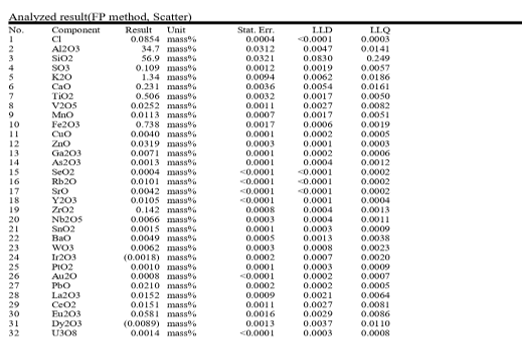
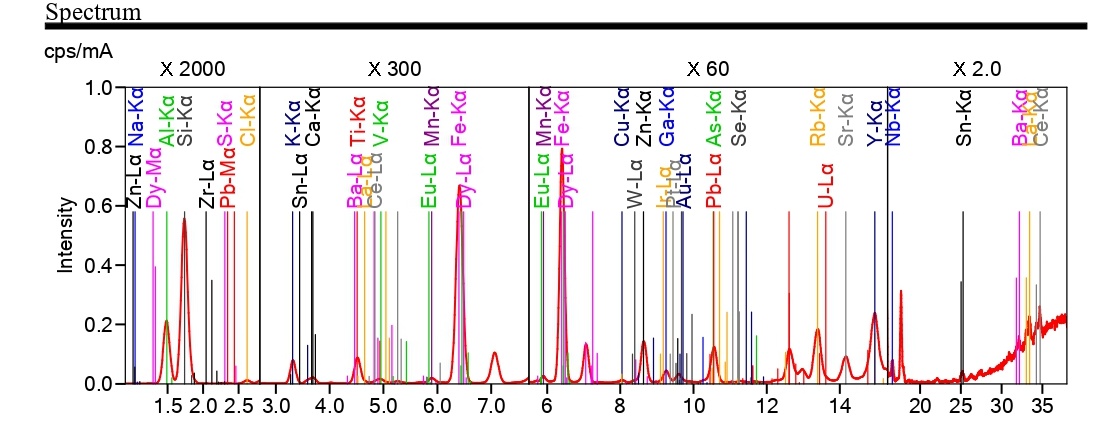
When calculating the raw material composition of CAC 35 clinker, primary attention is paid to the ratio between CaO and Al2O3. The final composition of the raw material should be determined based on the chemical analysis of actual samples from the relevant deposits or quarries.
For laboratory experiments, several mixture variants consisting of Al2O3-rich raw materials, limestone, and corrective components can be prepared.
Table 2.
Composition of the raw material mixture
| Oxide | Mass content, % |
|---|---|
| SiO₂ | 14.7 |
| Al₂O₃ | 27.6 |
| Fe₂O₃ | 5.5 |
| CaO | 24.0 |
| MgO | 0.9 |
| Other oxides | 4.5 |
| SO₃ | 0.15 |
| L.O.I. | 23.9 |
Table 3.
Composition of the raw material mixtures
| Raw material | Mixture 1, % | Mixture 2, % | Mixture 3, % |
|---|---|---|---|
| Limestone | 47 | 47 | 45 |
| Kaolin (AKF 78) | 22 | 19 | 16 |
| Granule (Shurtangaz) | 23 | 23 | 23 |
| Slag | 8 | 11 | 16 |
| Total | 100 | 100 | 100 |
Table 4.
Main chemical and mineralogical composition of the clinker
| Chemical composition | Content, % | Mineralogical composition | Content, % | Name |
|---|---|---|---|---|
| CaO | 33.6 | CA (CaAl₂O₄) | 50–60 | Monocalcium aluminate |
| Al₂O₃ | 36.9 | CA₂ (CaAl₄O₇) | 10–20 | Monocalcium dialuminate |
| SiO₂ | 21.0 | C₁₂A₇ (12CaO·7Al₂O₃) | 5–15 | Calcium aluminate |
| Fe₂O₃ | 6.1 | C₂S (2CaO·SiO₂) | 5–10 | Belite |
| — | — | C₂AS | 5–10 | Gehlenite |
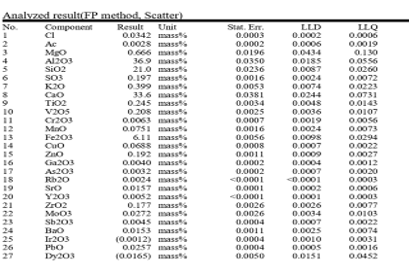
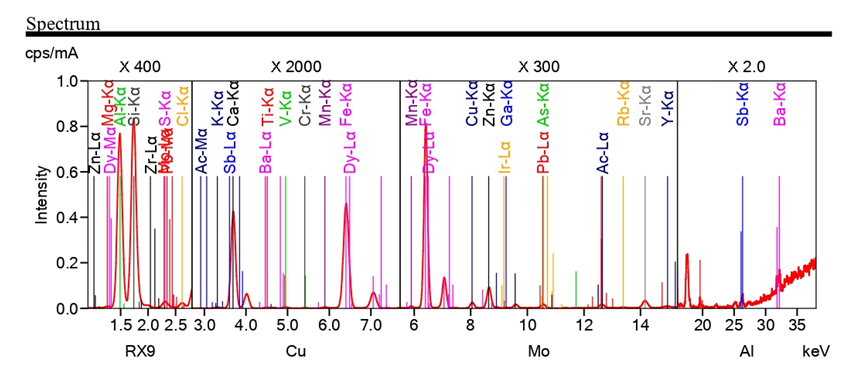
Clinker Formation Process. After being crushed and homogenized, the raw material mixture is sent to the firing process. Initially, moisture evaporation, decomposition of clay minerals, and decarbonization of limestone occur. At the subsequent stage, solid-state reactions between CaO and Al2O3 intensify.
Therefore, for CAC 35 clinker, it is advisable to determine the optimal firing regime by conducting experiments at several temperature points.
Clinker Quality Assessment. X-ray diffraction analysis is recommended for determining the mineralogical composition of the resulting clinker. This method makes it possible to identify the presence of CA, CA2, C12A7, and other phases [1, 5].
X-ray fluorescence analysis or conventional chemical methods can be used to determine the chemical composition [9].
For the prepared cement samples, the following parameters should be determined: standard consistency; initial and final setting time; water demand; volume stability; compressive strength; early-age and later-age strength; resistance to thermal effects.
The rapid development of strength in calcium aluminate cements is reported as one of their important advantages [5, 6]. However, scientific studies have shown that phase transformations of hydrates and the “conversion” process may affect long-term strength [7.8].
In the development of CAC 35 alumina cement clinker, one of the main tasks is to maintain a high Al2O3 content in the raw material composition while ensuring an optimal amount of CaO.
A deficiency of CaO may limit the formation of CA and lead to an increase in the proportion of CA2. An excessive amount of CaO, in turn, may increase the possibility of free CaO remaining in the clinker or the formation of other calcium-rich phases.
Conclusion
The development of CAC 35 alumina cement clinker based on local mineral raw materials is a technologically and economically promising direction.
In developing the clinker composition, Al2O3-rich raw materials and limestone should be selected as the main components, while the amounts of SiO2 and Fe2O3 should be controlled to ensure the target mineralogical composition.
According to the research results, the main active phases of the clinker may consist of CA, CA2, and C12A7. Their proportions depend on the raw material composition and firing regime [1, 5].
The use of local raw materials makes it possible to reduce the need for imported components, optimize transportation costs, and ensure the efficient use of regional mineral resources.
In further studies, it is recommended to determine the exact chemical composition of local bauxite, clay, and limestone, calculate several raw material formulations, produce clinker at different firing temperatures, and determine the optimal CAC 35 composition using XRD and physical-mechanical tests.
References