Antiradical activity of medicinal mixtures based on Cyperus rotundus L., Urtica dioica L. and Cinnamomum cassia Blume
УДК 615.32+547.56
Abstract
This article presents a comparative investigation of the antiradical activity of medicinal plant formulations prepared from Cyperus rotundus L. rhizomes, Urtica dioica L. leaves, and Cinnamomum cassia Blume bark. The aim of the study was to evaluate the influence of different component ratios on the ability of the obtained extracts to inhibit the stable DPPH free radical. Four formulations were prepared using different proportions of the three botanical components: 1:1:1, 2:1:1, 1:2:1, and 1:1:2. Extraction was performed using 96 % ethanol with ultrasonic treatment. Antiradical activity was determined spectrophotometrically at a wavelength of 517 nm over a reaction period of 30 minutes. The main physicochemical characteristics of the plant raw materials were also examined. The extractive substance contents of C. rotundus, U. dioica, and C. cassia were 35.70 %, 4.80 %, and 17.25 %, respectively. Their moisture contents were 7.40 %, 4.60 %, and 3.52 %, while the corresponding total ash contents were 5.90 %, 4.48 %, and 3.00 %. According to the DPPH assay results, the formulation with a component ratio of 1:1:2 exhibited the highest recorded antiradical activity among the reported numerical values, reaching 24.39 % after 30 minutes. The formulations with ratios of 2:1:1 and 1:2:1 demonstrated antiradical activities of 22.18 % and 13.23 %, respectively. These findings indicate that the DPPH radical-scavenging response of the investigated plant mixtures varies with their component proportions and provide a basis for further investigation of multicomponent botanical formulations.
Аннотация
В статье представлены результаты сравнительного исследования антирадикальной активности растительных композиций на основе корневищ Cyperus rotundus L., листьев Urtica dioica L. и коры Cinnamomum cassia Blume. Цель исследования заключалась в оценке влияния количественного соотношения растительных компонентов на способность полученных экстрактов ингибировать стабильный свободный радикал DPPH. Для исследования были приготовлены четыре композиции с различным соотношением компонентов: 1:1:1, 2:1:1, 1:2:1 и 1:1:2. Экстракцию проводили с использованием 96 %-ного этилового спирта и ультразвуковой обработки. Антирадикальную активность определяли спектрофотометрическим методом при длине волны 517 нм в течение 30 минут. Дополнительно изучены основные физико-химические показатели растительного сырья. Содержание экстрактивных веществ в C. rotundus, U. dioica и C. cassia составило соответственно 35,70 %, 4,80 % и 17,25 %; влажность — 7,40 %, 4,60 % и 3,52 %; общая зольность — 5,90 %, 4,48 % и 3,00 %. По результатам DPPH-анализа через 30 минут наибольшая зарегистрированная антирадикальная активность среди приведённых количественных значений отмечена у композиции с соотношением компонентов 1:1:2 и составила 24,39 %. Для композиций 2:1:1 и 1:2:1 данный показатель составил соответственно 22,18 % и 13,23 %. Полученные результаты характеризуют зависимость антирадикальной активности исследуемых растительных смесей от количественного соотношения компонентов и представляют интерес для дальнейшего изучения многокомпонентных растительных композиций.
Keywords: Cyperus rotundus; Urtica dioica; Cinnamomum cassia; medicinal plant mixtures; DPPH; antiradical activity; extractive substances; spectrophotometry.
Ключевые слова: Cyperus rotundus; Urtica dioica; Cinnamomum cassia; растительные композиции; DPPH; антирадикальная активность; экстрактивные вещества; спектрофотометрия.
Introduction
Medicinal plants contain chemically diverse constituents, including phenolic compounds and other reducing substances, which may contribute to their response in in vitro radical-scavenging assays. Combining different botanical materials can change the relative contribution of these constituents to an extract; consequently, the proportions of individual components are an important variable when comparing multicomponent formulations. The DPPH (2,2-diphenyl-1-picrylhydrazyl) assay, introduced by Blois [1] and subsequently adapted for antioxidant screening [2], is based on the decrease in absorbance of a stable radical following its reaction with reducing compounds. It is widely used as an accessible spectrophotometric method for preliminary comparison of plant extracts. Nevertheless, the observed response depends on experimental conditions, including solvent composition, reaction time, sample matrix, and concentration units; these factors must be considered when interpreting and comparing results [3-7]. Previous studies published in Universum: Chemistry and Biology have also investigated the DPPH responses of plant extracts from Uzbekistan and isolated plant polyphenols, illustrating the relevance of this approach to regional phytochemical research [8-10]. Against this background, the present study examines the reported DPPH responses of four mixtures prepared from Cyperus rotundus L., Urtica dioica L., and Cinnamomum cassia Blume at different component ratios. The objective is a preliminary within-study comparison of formulation-dependent radical inhibition at a common reaction time, rather than a demonstration of physiological antioxidant efficacy or clinical benefit.
Materials And Methods
Plant materials and mixture preparation
The plant materials used in this study consisted of rhizomes of C. rotundus, leaves of U. dioica, and bark of C. cassia. The collected plant materials were dried at 40 °C to constant mass, ground, and sieved to obtain particles not exceeding 0.5 mm in size. The physicochemical characteristics of the plant raw materials, including moisture content, total ash, and extractive substances, were evaluated and are presented in Table 2. Four medicinal plant formulations were prepared using different proportions of the three botanical components, as presented in Table 1 Mixture 1 was prepared using equal proportions of the three plant components (1:1:1), corresponding to approximately 33.33 % of each component. The moisture contents of C. rotundus, U. dioica, and C. cassia were 7.40 %, 4.60 %, and 3.52 %, respectively. The corresponding total ash contents were 5.90 %, 4.48 %, and 3.00 %, while the extractive substance contents were 35.70 %, 4.80 %, and 17.25 %, respectively. These physicochemical parameters were used to characterize the quality of the botanical raw materials prior to the preparation of the investigated formulations. The extractive substance content was considered a physicochemical characteristic of the raw materials and was distinguished from the dry extract yield obtained during ethanol extraction.
Table 1.
Composition of the investigated medicinal plant mixtures
| Mixture № | C. rotundus, % | U. dioica, % | C. cassia, % |
|---|---|---|---|
| 1 | 33 | 33 | 33 |
| 2 | 50 | 25 | 25 |
| 3 | 25 | 50 | 25 |
| 4 | 25 | 25 | 50 |
Extraction procedure
For extraction, 5 g of each prepared mixture was treated with 25 mL of 96 % ethanol in an ultrasonic bath at a frequency of 40 kHz and a temperature of 40 °C for 20 min. The extracts were filtered through a 0.45 μm syringe filter and diluted tenfold before spectrophotometric analysis.
DPPH assay and evaluation of antiradical activity
The antiradical activity of the investigated medicinal plant mixtures was evaluated using the DPPH spectrophotometric assay. An ethanolic DPPH working solution with a concentration of 7.92 µM was used. Absorbance was measured at 517 nm using a K7000 spectrophotometer over a reaction period of 30 min, with measurements recorded at 5-min intervals.
The percentage of radical inhibition, expressed as antiradical activity (ARF), was calculated according to the following equation:
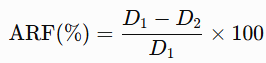
where D1 control represents the absorbance of the control solution and D2 represents the absorbance of the reaction mixture containing the investigated extract.
The antiradical activity of the four formulations was compared using the inhibition values recorded after 30 min of reaction. This approach enabled the evaluation of differences in DPPH radical-scavenging responses associated with variations in the proportions of the three botanical components.
The results were interpreted as indicators of in vitro radical-scavenging activity under the specified experimental conditions. Since the DPPH response may depend on solvent composition, reaction time, and the chemical characteristics of the investigated extracts, the findings were considered within the methodological limitations of this assay [3-6].
Data treatment
The antiradical activity of the investigated formulations was evaluated using the percentage of DPPH radical inhibition recorded after 30 min of reaction. The results were presented as descriptive antiradical activity values, without inferential statistical comparisons.
Results And Discussion
Table 2.
Physicochemical characteristics of the investigated medicinal plant raw materials
| Parameter | C. rotundus | U. dioica | C. cassia |
|---|---|---|---|
| Extractive substances, % | 35.70 | 4.80 | 17.25 |
| Moisture content, % | 7.40 | 4.60 | 3.52 |
| Total ash, % | 5.90 | 4.48 | 3.00 |
Note: Extractive substances are not equivalent to the dry extract yield of the experimental extraction.
The results demonstrated differences in DPPH radical inhibition among the investigated formulations after 30 min of reaction (Table 3). Mixture 4, prepared at a component ratio of 25:25:50, exhibited an antiradical activity of 24.39 %. Mixture 2, containing 50 % C. rotundus, demonstrated an antiradical activity of 22.18 %. Mixture 3, containing 50 % U. dioica, showed an antiradical activity of 13.23 %. The quantitative comparison focused on mixtures 2, 3, and 4, for which numerical ARF values at 30 min were available
Table 3.
Available 30-minute DPPH summary values
| Mixture No. | Ratio (C. rotundus : U. dioica : C. cassia) | Reported ARF at 30 min, % |
|---|---|---|
| 1 | 1 : 1 : 1 | Not available in supplied text |
| 2 | 2 : 1 : 1 | 22.18 |
| 3 | 1 : 2 : 1 | 13.23 |
| 4 | 1 : 1 : 2 | 24.39 |
The observed differences may be associated with variations in the chemical composition of the extracts resulting from changes in the proportions of the botanical components. However, these findings alone do not establish additive, synergistic, or antagonistic interactions between the individual plant constituents.
The use of 96 % ethanol may influence the extraction of compounds with different polarities, while solvent composition and reaction conditions can affect the DPPH assay response [4,5]. Therefore, the obtained results should be interpreted as indicators of antiradical activity under the specified experimental conditions. The 30-minute measurement represents a fixed reaction endpoint and does not necessarily indicate that all formulations reached reaction equilibrium. Previous methodological studies have also emphasized the importance of clearly defined concentration units and standardized experimental conditions when comparing IC50 values [3–6].
Conclusion
The comparative investigation of medicinal plant mixtures based on Cyperus rotundus L., Urtica dioica L., and Cinnamomum cassia Blume demonstrated that the proportions of botanical components influence their antiradical activity in the DPPH assay. Among the formulations with reported quantitative results, the mixture containing 25 % C. rotundus, 25 % U. dioica, and 50 % C. cassia exhibited the highest antiradical activity, reaching 24.39 % after 30 min of reaction. The corresponding values for the 50:25:25 and 25:50:25 formulations were 22.18 % and 13.23 %, respectively.
The physicochemical characterization of the plant raw materials revealed differences in extractive substance content, moisture, and total ash, providing additional information for their quality assessment and standardization. The findings indicate that the quantitative composition of multicomponent botanical formulations is an important factor affecting their in vitro radical-scavenging response. Further investigations involving standardized extraction procedures, concentration-dependent measurements, and replicated experiments are recommended to provide a more comprehensive evaluation of their antiradical properties.
References