Determination of water-soluble vitamins, flavonoids and amino acids in medicinal plants Matricaria chamomilla, Sophora japonica, Mentha piperitaand Juglans regia by HPLC and study of acute toxicity in animals
УДК 615.322:543.544
Abstract
The study aimed to quantify water-soluble vitamins, flavonoids, and amino acids in medicinal plant materials of Matricaria chamomilla, Sophora japonica, Mentha piperita, and Juglans regia by high-performance liquid chromatography (HPLC), compare the obtained profiles, and assess the acute toxicity of the plant powders in laboratory animals. Vitamins B1, B2, B3, B6, B9, and C, together with dihydroquercetin, rutin, quercetin, salidroside, and rosavin, were determined. The amino-acid profile comprised 20 compounds and was analyzed using an Agilent 1260 II Infinity system equipped with a fluorescence detector (FLD). Acute toxicity was evaluated after a single intragastric administration of the samples to mice at doses of 2000 and 5000 mg/kg followed by 14 days of observation. No deaths were recorded in the tested groups. Total amino-acid contents were 46.912, 41.967, 45.962, and 36.981 mg/g for Matricaria chamomilla, Sophora japonica, Mentha piperita, and Juglans regia, respectively. Under the experimental conditions, LD50 exceeded 5000 mg/kg for the investigated powders. The findings characterize the chemical profiles of the studied raw materials and provide a basis for further comparative assessment of their quality and safety.
Аннотация
В исследовании проведено количественное определение водорастворимых витаминов, флавоноидов и аминокислот в лекарственном растительном сырье Matricaria chamomilla, Sophora japonica, Mentha piperita и Juglans regia методом высокоэффективной жидкостной хроматографии (ВЭЖХ), выполнено сравнение полученных профилей, а также оценена острая токсичность порошков исследуемых растений на лабораторных животных. Были определены витамины B1, B2, B3, B6, B9 и C, а также дигидрокверцетин, рутин, кверцетин, салидрозид и розавин. Аминокислотный профиль включал 20 соединений и анализировался с использованием системы Agilent 1260 II Infinity, оснащённой флуоресцентным детектором (FLD). Острую токсичность оценивали после однократного внутрижелудочного введения исследуемых образцов мышам в дозах 2000 и 5000 мг/кг с последующим наблюдением в течение 14 дней. Летальных исходов в исследуемых группах не зарегистрировано. Общее содержание аминокислот составило 46,912; 41,967; 45,962 и 36,981 мг/г для Matricaria chamomilla, Sophora japonica, Mentha piperita и Juglans regia соответственно. В условиях проведённого эксперимента значение LD50 для исследуемых порошков превышало 5000 мг/кг. Полученные результаты характеризуют химические профили изученного лекарственного растительного сырья и создают основу для дальнейшей сравнительной оценки его качества и безопасности.
Keywords: medicinal plants; Matricaria chamomilla; Sophora japonica; Mentha piperita; Juglans regia; HPLC; amino acids.
Ключевые слова: лекарственные растения; Matricaria chamomilla; Sophora japonica; Mentha piperita; Juglans regia; ВЭЖХ; аминокислоты.
Introduction
Matricaria chamomilla, Sophora japonica, Mentha piperita and Juglans regia are medicinal plants with diverse profiles of flavonoids, terpenoids, phenolic compounds and other bioactive constituents. Chamomile is characterized by flavonoids and related phenolic compounds [10, p. 1–8]. Sophora japonica is a source of flavonols and other biologically active compounds, with rutin among its characteristic constituents [2, p. 308–316]. Peppermint contains essential-oil components and polyphenolic compounds, while walnut raw materials contain phenolic compounds, flavonoids, naphthoquinones and other secondary metabolites [3, p. 612–616; 4, p. 1–27; 5, p. 1–36; 8, p. 2326–2331; 9, p. 6086–6092].
Juglans regia is of particular interest because green fruits and husks contain phenolic compounds and juglone, whose biological activity has been widely investigated [1, p. 1–14; 6, p. 1–17; 7, p. 1–22; 5, p. 1–36]. The chemical composition of all four plants can vary with plant organ, origin, developmental stage, drying and processing conditions. Therefore, comparative instrumental analysis is needed to characterize the chemical profiles of the selected medicinal raw materials under common analytical conditions.
The aim of this study was to determine water-soluble vitamins, selected flavonoids and bioactive compounds, and amino acids in Matricaria chamomilla, Sophora japonica, Mentha piperita and Juglans regia by HPLC, and to assess the acute toxicity of the corresponding plant powders in laboratory animals.
Peppermint is characterized by essential-oil components such as menthol and menthone, whereas its non-volatile fraction includes phenolic acids and flavonoids [3, p. 612–616; 4, p. 1–27]. Walnut raw materials contain phenolic acids, flavonoids and tannins, and their composition differs among leaves, husks and immature fruits [5, p. 1–36; 8, p. 2326–2331; 9, p. 6086–6092].
The selected plants therefore represent complementary chemical matrices. Their comparative analysis can reveal differences in water-soluble vitamins, selected flavonoids and amino-acid profiles that are not apparent from a single plant species. The present work combines these chemical measurements with an acute-toxicity assessment of the corresponding powders.
Main Chemical Markers
The main chemical markers of the four studied medicinal plants are summarized in Table 1. Chamomile is mainly associated with flavonoids and related phenolic compounds; Sophora japonica with flavonols; peppermint with monoterpenoids and phenolic acids; and green walnut with naphthoquinones and polyphenols [2, p. 308–316; 3, p. 612–616; 4, p. 1–27; 5, p. 1–36; 8, p. 2326–2331; 9, p. 6086–6092; 10, p. 1–8].
Table 1.
Main chemical markers of Matricaria chamomilla, Sophora japonica, Mentha piperita, and Juglans regia
| Plant | Main chemical markers |
|---|---|
| Chamomile (Matricaria chamomilla) | apigenin, apigenin-7-glucoside, luteolin, quercetin, chlorogenic acid, bisabolol derivatives |
| Japanese pagoda tree (Sophora japonica / Styphnolobium japonicum) | rutin, quercetin, kaempferol, isorhamnetin |
| Peppermint (Mentha piperita) | menthol, menthone, menthyl acetate, menthofuran, rosmarinic acid |
| Green walnut (Juglans regia) | juglone, quercetin, kaempferol, phenolic acids, tannins, ascorbic acid |
For chamomile, flavonoids and related phenolic compounds predominate; for Japanese pagoda tree, flavonols; for peppermint, monoterpenoids and phenolic acids; and for green walnut, naphthoquinones and polyphenols constitute the principal chemical groups [2, p. 308–316; 3, p. 612–616; 4, p. 1–27; 5, p. 1–36; 8, p. 2326–2331; 10, p. 1–8]. These differences provide the scientific basis for comparative chemical investigation of the four plants. A common feature of chamomile, Japanese pagoda tree, peppermint, and green walnut is their richness in polyphenolic metabolites. However, the composition and dominant components of these polyphenols differ among the plants. In chamomile, apigenin derivatives and chlorogenic acid [10, p. 1–8]; in Japanese pagoda tree, rutin and quercetin [2, p. 308–316]; in peppermint, rosmarinic acid and eriocitrin [4, p. 1–27]; and in green walnut, gallic and ellagic acids, flavonoids, and tannins [5, p. 1–36; 8, p. 2326–2331] are important components. Thus, their combination may produce a broad-spectrum extract containing phenolic compounds from different chemical classes.
Materials and Methods
Plant materials of Matricaria chamomilla, Sophora japonica, Mentha piperita and Juglans regia were analyzed by high-performance liquid chromatography (HPLC) for water-soluble vitamins, flavonoids, selected bioactive compounds and amino acids. The samples were dried, powdered and subjected to extraction as described below.
Determination of flavonoids and selected bioactive compounds. A 1.0 g portion of each powdered sample was accurately weighed into a 300 mL flat-bottom flask. Then 50 mL of 70 % ethanol was added. The mixture was equipped with a magnetic stirrer and reflux condenser and heated at 70 °C with intensive stirring for 1 h. The mixture was then stirred at room temperature for 2 h, allowed to stand and filtered. The residue was re-extracted twice with 25 mL of 70 % ethanol. The filtrates were combined and transferred to a 100 mL volumetric flask, and the volume was adjusted to the mark with 70 % ethanol. The resulting solution was centrifuged at 8000 rpm for 20 min, and the supernatant was used for analysis.
Flavonoids and selected bioactive compounds were determined by HPLC using an Agilent 1200 chromatograph equipped with an autosampler and diode-array detector (DAD). Separation was performed on an Eclipse XDB C18 reversed-phase column (5 µm, 4.6 × 250 mm). Identification was performed at 254 and 276 nm. The mobile phase consisted of phosphate buffer and acetonitrile at a flow rate of 0.8 mL/min. The gradient program was: 0–5 min, 95:5; 6–12 min, 70:30; 12–13 min, 50:50; 13–15 min, 95:5. The column temperature was 30 °C and the injection volume was 10 µL. Working standard solutions were injected first, followed by the prepared sample solutions.
Determination of water-soluble vitamins. Water-soluble vitamins were determined by HPLC. A 5–10 g portion of the sample was accurately weighed into a 300 mL flask, and 50 mL of 40 % ethanol was added. The mixture was equipped with a magnetic stirrer and reflux condenser and heated with intensive stirring for 1 h, followed by stirring at room temperature for 2 h. The mixture was allowed to stand and filtered. The residue was re-extracted twice with 25 mL of 40 % ethanol. The combined filtrates were transferred to a 100 mL volumetric flask and diluted to the mark with 40 % ethanol. The solution was centrifuged at 7000 rpm for 10 min, and the supernatant was used for analysis. The working solutions of the water-soluble vitamin standards were prepared at a concentration of 1 mg/mL by accurately weighing 50.0 mg of each vitamin standard into a 50 mL volumetric flask, dissolving in 40 % ethanol and diluting to the mark. Literature data describe phosphate or acetate buffer systems and acetonitrile as eluents for HPLC determination of water-soluble vitamins; in the present study, an acetate buffer system and acetonitrile were used.
Vitamin analysis was performed on an Agilent 1200 chromatograph equipped with an autosampler and DAD. Separation was carried out on an Eclipse XDB C18 reversed-phase column (5 µm, 4.6 × 250 mm). Detection was performed at 250 nm. The flow rate was 0.8 mL/min. The mobile phase consisted of acetate buffer and acetonitrile with the following gradient: 0–5 min, 96:4; 6–8 min, 90:10; 9–15 min, 80:20; 15–17 min, 96:4. The column temperature was 25 °C and the injection volume was 5 µL. Working standard solutions were injected first, followed by the prepared sample solutions.
Determination of amino acids. For isolation of free amino acids, proteins and peptides in the aqueous sample extracts were precipitated in centrifuge vessels. For this purpose, 1 mL of the investigated sample was mixed with 1 mL of 20 % trichloroacetic acid (TCA). After 10 min, the precipitate was separated by centrifugation at 8000 rpm for 15 min. A 0.1 mL aliquot of the supernatant was collected and lyophilized. The hydrolysate was evaporated, and the dry residue was dissolved in a triethylamine-acetonitrile-water mixture (1:7:1) and evaporated. This operation was repeated twice to neutralize the acid. Phenylthiocarbamyl (PTC) derivatives of amino acids were prepared by reaction with phenyl isothiocyanate according to the method of Steven A. Cohen and Daviel. Identification of the amino-acid derivatives was performed by HPLC using an Agilent Technologies 1200 chromatograph equipped with a DAD detector and a Discovery HS C18 column (75 × 4.6 mm). Solution A consisted of 0.14 M CH3COONa + 0.05 % triethylamine, adjusted to pH 6.4; solution B was CH3CN. The flow rate was 1.2 mL/min and detection was performed at 269 nm. The gradient program (%B/min) was: 1–6 % at 0–2.5 min; 6–30 % at 2.51–40 min; 30–60 % at 40.1–45 min; 60–60 % at 45.1–50 min; 60–0 % at 50.1–55 min.
Acute toxicity. Acute toxicity was assessed in laboratory animals after a 10–14-day quarantine period. The animals used were white, outbred laboratory rats (Rattus norvegicus), predominantly males, with an initial body-weight range of approximately 180–200 g. Samples were administered once by gavage at 2000 and 5000 mg/kg, and control animals received an equivalent volume of purified water. Animals were monitored hourly on day 1 and daily for 14 days for general condition, activity, respiration, urination and body-weight changes. No mortality was observed during the observation period. The animal experiment was approved by the Ethics Committee for the in vivo Use of Laboratory Animals of the Institute of Bioorganic Chemistry, Academy of Sciences of the Republic of Uzbekistan (Protocol No. 1, approved 4 January 2025).
Results and Discussion
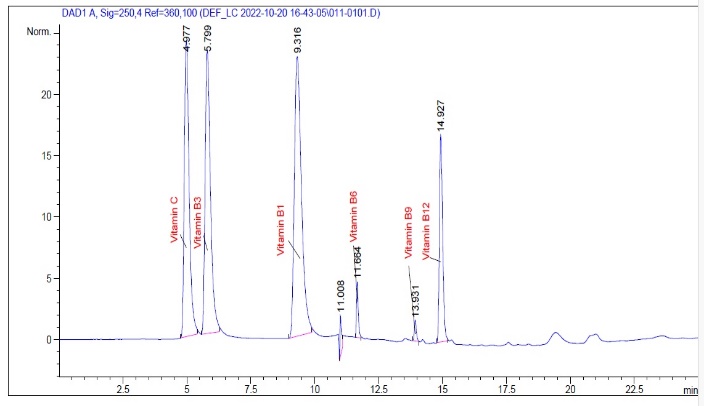
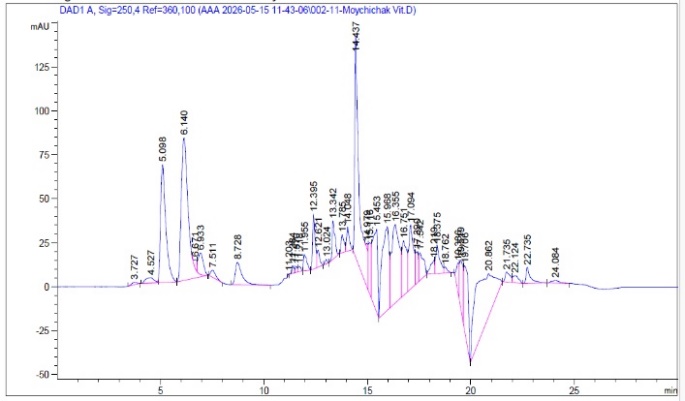
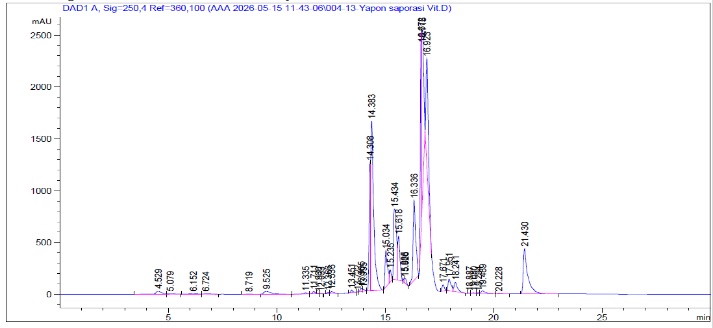
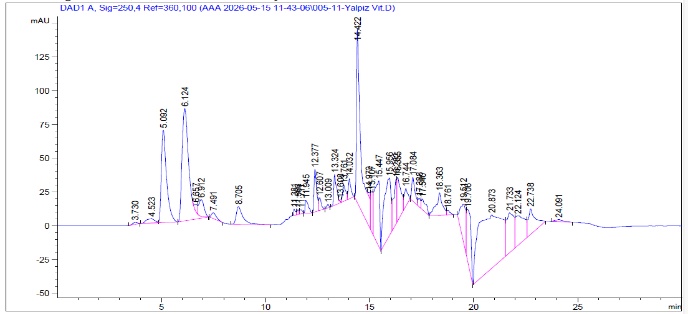
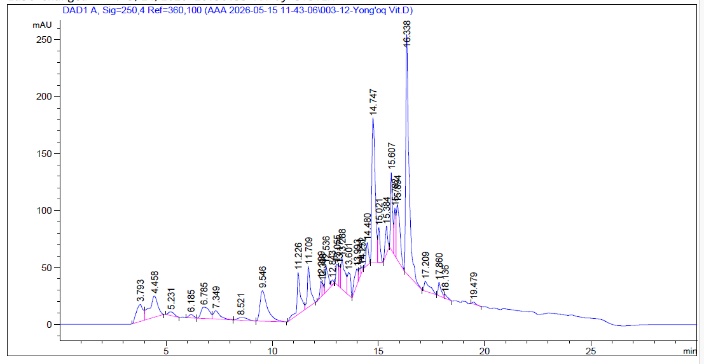
Table 2.
Concentration of water-soluble vitamins in Matricaria chamomilla, Sophora japonica, Mentha piperita, and Juglans regia (µg/g).
| Vitamins | M. chamomilla | S. japonica | M. piperita | J. regia |
|---|---|---|---|---|
| Concentration (µg/g) | ||||
| B1 | 0 | 28.56 | 0 | 9.61 |
| B2 | 2.65 | 11.41 | 3.75 | 9.88 |
| В3 | 0.65 | 0.81 | 0.59 | 0.29 |
| B6 | 9.87 | 15.43 | 9.61 | 11.66 |
| B9 | 19.32 | 6.55 | 17.66 | 8.88 |
| С | 42.56 | 68.26 | 39.65 | 19.88 |
Table 2 shows that M. chamomilla contained B2 (2.65 µg/g), B3 (0.65 µg/g), B6 (9.87 µg/g), B9 (19.32 µg/g) and C (42.56 µg/g); S. japonica contained B1 (28.56 µg/g), B2 (11.41 µg/g), B3 (0.81 µg/g), B6 (15.43 µg/g), B9 (6.55 µg/g) and C (68.26 µg/g); M. piperita contained B2 (3.75 µg/g), B3 (0.59 µg/g), B6 (9.61 µg/g), B9 (17.66 µg/g) and C (39.65 µg/g); and J. regia contained B1 (9.61 µg/g), B2 (9.88 µg/g), B3 (0.29 µg/g), B6 (11.66 µg/g), B9 (8.88 µg/g) and C (19.88 µg/g).
Determination of Flavonoids and Selected Bioactive Compounds by HPLC
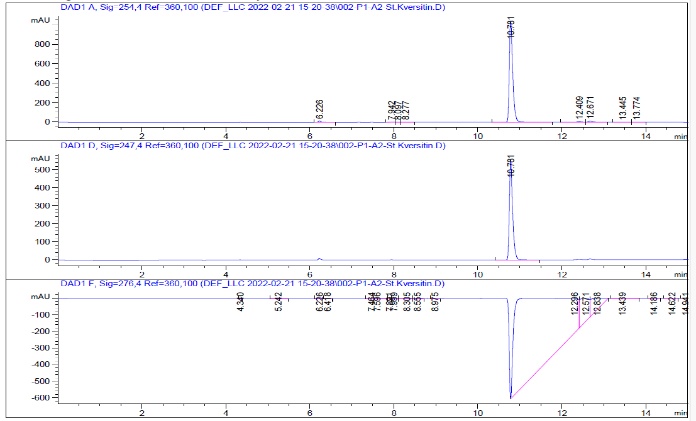
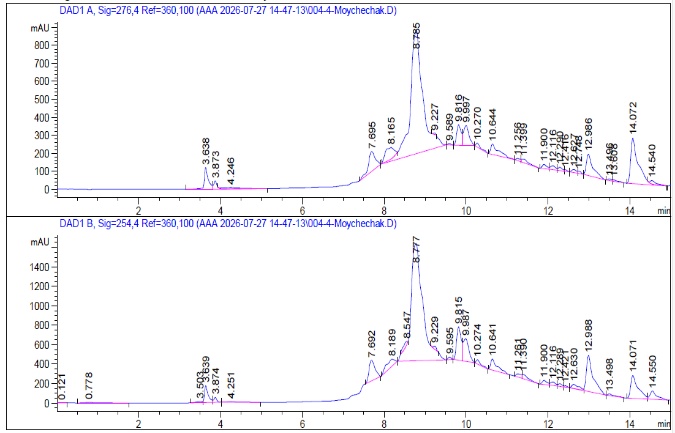
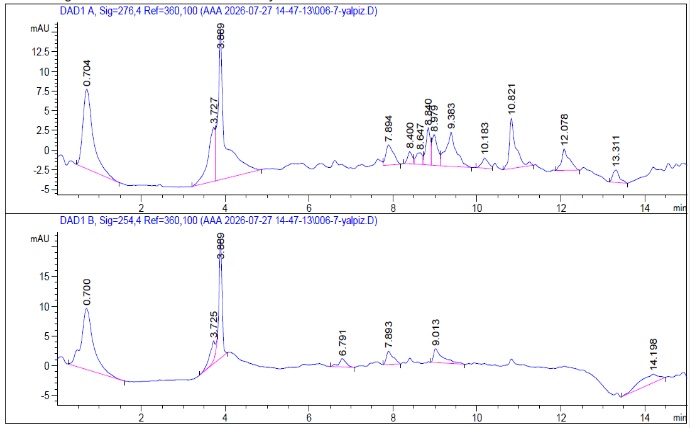
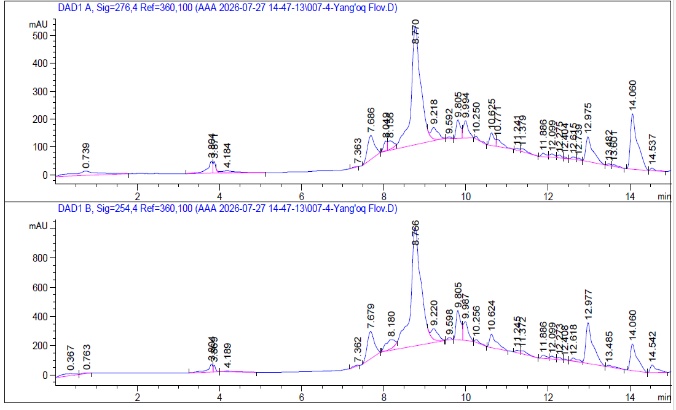
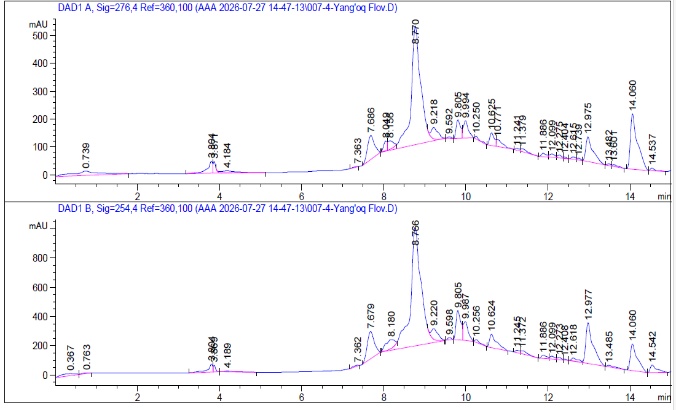
Table 3.
Concentrations of identified flavonoids and selected bioactive compounds in Matricaria chamomilla, Sophora japonica, Mentha piperita, and Juglans regia (mg/g).
| Compounds | M. chamomilla | S. japonica | M. piperita | J. regia |
|---|---|---|---|---|
| Concentration (mg/g) | ||||
| Dihydroquercetin | 52.55 | 5.98 | 3.83 | 41.3 |
| Rutin | 32.41 | 6.88 | 11.89 | 19.58 |
| Quercetin | 16.33 | 1.42 | 0.55 | 16.88 |
| Salidroside | 9.11 | 3.59 | 1.87 | 6.57 |
| Rosavin | 8.49 | 6.93 | 3.69 | 3.49 |
Table 3 shows that M. chamomilla contained dihydroquercetin (52.55 mg/g), rutin (32.41 mg/g), quercetin (16.33 mg/g), salidroside (9.11 mg/g) and rosavin (8.49 mg/g); S. japonica contained 5.98, 6.88, 1.42, 3.59 and 6.93 mg/g, respectively; M. piperita contained 3.83, 11.89, 0.55, 1.87 and 3.69 mg/g; and J. regia contained 41.3, 19.58, 16.88, 6.57 and 3.49 mg/g, respectively.
Determination of Amino Acids by HPLC
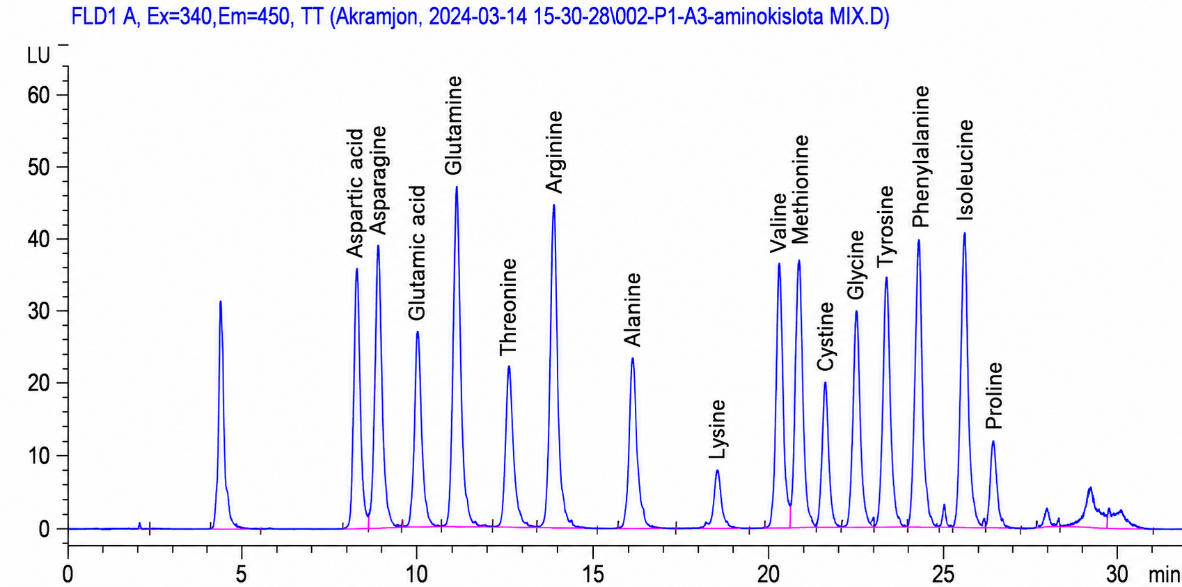
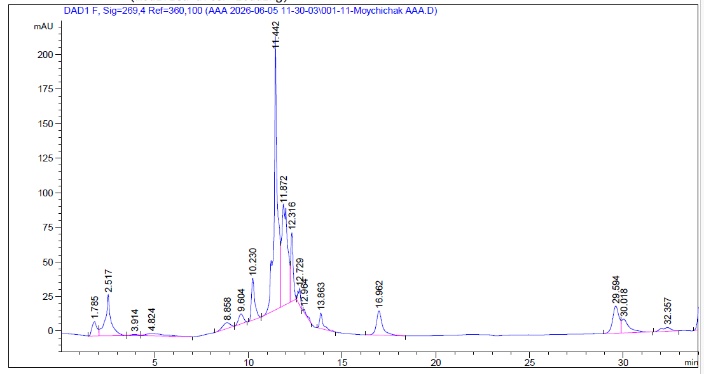
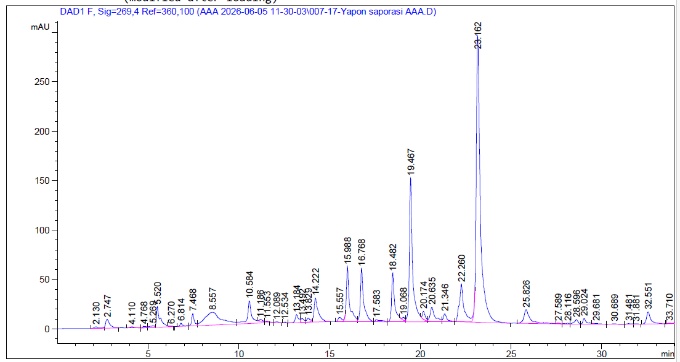
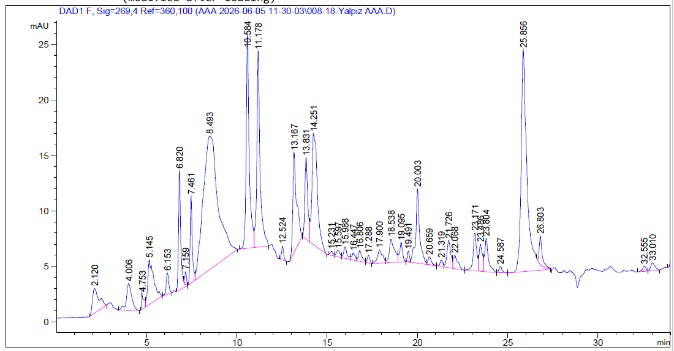
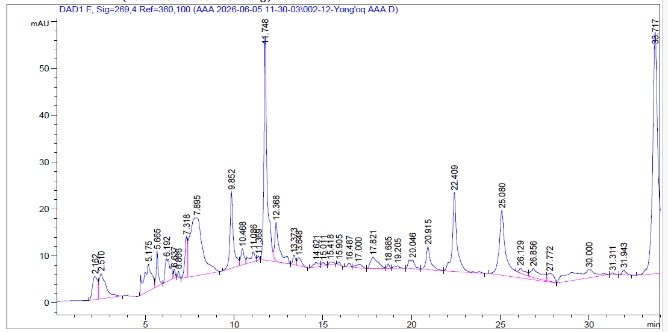
The results of the amino-acid determination in Matricaria chamomilla, Sophora japonica, Mentha piperita, and Juglans regia are presented in Table 4.
Table 4.
Amino-acid contents in Matricaria chamomilla, Sophora japonica, Mentha piperita, and Juglans regia (mg/g). The 20 detected amino acids had total contents of 46.912 mg/g in M. chamomilla, 41.967 mg/g in S. japonica, 45.962 mg/g in M. piperita and 36.981 mg/g in J. regia
| No. | Amino acid | M. chamomilla | S. japonica | M. piperita | J. regia |
|---|---|---|---|---|---|
| 1. | Aspartic acid | 0.606 | 1.273 | 0.214 | 0.121 |
| 2. | Glutamic acid | 0.805 | 0.774 | 0.554 | 1.746 |
| 3. | Serine | 3.956 | 1.837 | 1.100 | 0.639 |
| 4. | Glycine | 1.215 | 2.510 | 5.164 | 0.443 |
| 5. | Asparagine | 2.440 | 5.073 | 11.636 | 0.897 |
| 6. | Glutamine | 2.789 | 1.765 | 1.667 | 6.412 |
| 7. | Cysteine | 5.963 | 5.254 | 1.627 | 10.522 |
| 8. | Threonine | 0.786 | 1.219 | 1.789 | 1.241 |
| 9. | Arginine | 1.934 | 4.395 | 8.340 | 0.775 |
| 10. | Alanine | 0.297 | 0.334 | 3.841 | 0.942 |
| 11. | Proline | 12.133 | 1.577 | 0.703 | 1.662 |
| 12. | Tyrosine | 0.665 | 0.879 | 3.575 | 0.279 |
| 13. | Valine | 3.107 | 0.774 | 1.294 | 2.103 |
| 14. | Methionine | 0.469 | 0.330 | 0.419 | 2.582 |
| 15. | Histidine | 3.912 | 5.201 | 1.279 | 0.353 |
| 16. | Isoleucine | 1.267 | 1.517 | 0.223 | 1.318 |
| 17. | Leucine | 2.125 | 2.894 | 0.238 | 2.775 |
| 18. | Tryptophan | 1.692 | 2.396 | 0.199 | 1.418 |
| 19. | Phenylalanine | 0.306 | 0.726 | 1.390 | 0.633 |
| 20. | Lysine | 0.446 | 1.240 | 0.710 | 0.118 |
| Total | 46.912 | 41.967 | 45.962 | 36.981 | |
Assessment of Acute Toxicity in Animals
Acute toxicity was evaluated in white, outbred laboratory mice (Mus musculus), predominantly males, with an initial body-weight range of 20–21 g after a 10–14-day quarantine period. Samples were administered once by gavage at 2000 and 5000 mg/kg. No mortality occurred during the 14-day observation period; only transient respiratory acceleration, huddling and eye narrowing were observed in mice at 5000 mg/kg. Body weight remained comparable with controls, and LD50 was >5000 mg/kg for the tested powders.
Table 5.
Acute toxicity parameters of Matricaria chamomilla, Sophora japonica, Mentha piperita, and Juglans regia powders in mice (n=5); dose values are expressed as 10³ mg/kg.
| Sample / dose | Sex | Dose, mg/kg, mL | Animals / deaths | Weight day 1(g) | Weight day 7(g) | Weight day 14(g) | LD50 |
|---|---|---|---|---|---|---|---|
| Matricaria chamomilla | Mouse, male | 2 | 5/0 | 20 | 22 | 25 | >5000 mg/kg |
| 5 | 5/0 | 21 | 23 | 26 | |||
| Sophora japonica | 2 | 5/0 | 20 | 22 | 25 | ||
| 5 | 5/0 | 21 | 23 | 26 | |||
| Mentha piperita | 2 | 5/0 | 20 | 22 | 25 | ||
| 5 | 5/0 | 21 | 23 | 26 | |||
| Juglans regia | 2 | 5/0 | 20 | 22 | 25 | ||
| 5 | 5/0 | 21 | 23 | 26 | |||
| Control (water) | 0,5 ml | 5/0 | 20 | 23 | 26 | - |
The amino-acid profiles were also distinct. M. chamomilla had the highest proline content (12.133 mg/g), S. japonica showed relatively high histidine and arginine values, M. piperita had the highest asparagine and arginine contents, and J. regia showed the highest glutamine and cysteine concentrations. Despite these differences, no mortality was observed at 2000 or 5000 mg/kg, and the estimated LD50 exceeded 5000 mg/kg. Taken together, the HPLC profiles and acute-toxicity data provide a concise comparative characterization of the four plant powders and identify the major chemical features that may be useful for subsequent quality-control studies.
Comparative analysis showed clear differences among the four plants. S. japonica had the highest vitamin B1 and vitamin C concentrations, whereas M. chamomilla and M. piperita contained no detectable B1 under the applied conditions. M. chamomilla showed the highest dihydroquercetin concentration (52.55 mg/g) and the highest rutin content among the studied plants, while J. regia also had high dihydroquercetin and quercetin values. These differences confirm that the chemical profile of the raw material is strongly plant-specific and support the need for separate standardization of each species.
The chromatographic results also indicate that the four plants cannot be treated as chemically interchangeable raw materials. For water-soluble vitamins, the highest vitamin C value was observed in S. japonica (68.26 µg/g), followed by M. chamomilla (42.56 µg/g), M. piperita (39.65 µg/g) and J. regia (19.88 µg/g). Vitamin B9 was relatively high in M. chamomilla and M. piperita, while B1 was detectable mainly in S. japonica and J. regia. These differences may be useful for distinguishing the samples during comparative quality assessment. The flavonoid and selected bioactive-compound profile showed a similarly pronounced species effect. Dihydroquercetin was highest in M. chamomilla (52.55 mg/g) and J. regia (41.3 mg/g), while rutin was highest in M. chamomilla (32.41 mg/g) and lower in the other samples. Quercetin reached 16.88 mg/g in J. regia and 16.33 mg/g in M. chamomilla. Salidroside and rosavin were detected in all four plants, but their concentrations differed, providing additional markers for comparative characterization. The amino-acid data demonstrated complementary patterns rather than a single dominant profile. M. chamomilla had a particularly high proline content, whereas M. piperita showed high asparagine and arginine values. S. japonica showed relatively high aspartic acid, asparagine, arginine and histidine, while J. regia was distinguished by glutamine and cysteine. Nevertheless, total amino-acid content remained within the measured range for all four plants, from 36.981 to 46.912 mg/g. The acute-toxicity experiment provided an additional safety characterization. At both tested doses, no mortality was observed in the mouse groups during the 14-day observation period. Transient effects in mice at 5000 mg/kg resolved within approximately 25–30 minutes, and body-weight reduction compared with controls was not observed. Under the conditions of the present experiment, the estimated LD50 therefore exceeded 5000 mg/kg. These observations complement the chemical profiling and provide a consistent basis for further standardization studies of the four medicinal plant powders.
From a quality-control perspective, the combined dataset is useful because each analytical group provides a different level of discrimination. The vitamin profile separates S. japonica from the other plants through its relatively high B1 and vitamin C concentrations, while the flavonoid profile distinguishes M. chamomilla and J. regia through their higher dihydroquercetin and quercetin values. The amino-acid profile adds another independent pattern: proline predominated in M. chamomilla, asparagine and arginine were comparatively high in M. piperita, and glutamine and cysteine were prominent in J. regia. Using these three groups together is therefore more informative than relying on a single marker. The results can serve as baseline comparative data for subsequent work on authentication, standardization and batch-to-batch quality assessment of the investigated raw materials. The acute-toxicity findings should be interpreted within the experimental conditions of the present study. They demonstrate the absence of mortality at the tested doses and support a preliminary safety characterization, but they do not replace longer-term toxicity or pharmacological studies. This distinction is important when the plant powders are considered for further pharmaceutical or nutraceutical investigation.
Conclusion. The results demonstrated the presence of water-soluble vitamins, various bioactive compounds, and 20 amino acids in Matricaria chamomilla, Sophora japonica, Mentha piperita, and Juglans regia. The total amino-acid contents were 46.912, 41.967, 45.962, and 36.981 mg/g, respectively. No mortality was recorded at doses of 2000 and 5000 mg/kg in the acute toxicity tests; under the conditions of the experiment, LD50 was estimated to be >5000 mg/kg. These findings provide a basis for comparative characterization of the chemical composition and preliminary safety profile of the studied medicinal plant raw materials.
References