
Synthesis and spectroscopic characterization of thiourea-based TGF-8 modifier and its interaction mechanism with liquid glass
УДК 661.185:661.683
Abstract
This study investigates the synthesis of a novel TGF-8 modifier derived from thiourea, glycerin, and formaldehyde, along with its chemical structure analysis using FTIR spectroscopy (Shimadzu). The synthesis was carried out by reacting thiourea with glycerin at 110–120 °C, monitoring ammonia evolution, followed by polycondensation with formaldehyde. Spectral analysis confirmed the presence of NH2, C=S, C–N and OH functional groups within the TGF-8 modifier; these groups play a crucial role in enhancing the adhesion (stickiness) and flexibility of the resulting compound. Furthermore, the interaction mechanism between the TGF-8 modifier (added in the range of 2–8 %) and the sodium silicate liquid-glass matrix, with a silicate modulus ranging from 2.1 to 3.2, was examined. The composition Na2O·2.6SiO2 modified with 6 % TGF-8 was found to be optimal, achieving the highest adhesion strength (approximately 2.99 N/cm²). Experimental results demonstrate that the modification process leads to the formation of stable and durable chemical bonds between the oligomer's functional groups and the silicate chains. These findings represent a significant advancement in improving the rheological properties of modified liquid glass for modern high-performance composite applications in the construction and woodworking industries.
Аннотация
В данном исследовании рассматривается синтез нового модификатора ТГФ-8 на основе тиомочевины, глицерина и формальдегида, а также анализ его химической структуры методом ИК-спектроскопии (Shimadzu). Синтез проводился путём взаимодействия тиомочевины и глицерина при температуре 110–120 °C с последующим контролем выделения аммиака и поликонденсацией с формальдегидом. Спектральный анализ подтвердил наличие функциональных групп NH2, C=S, C–N и OH в составе модификатора ТГФ-8; эти группы играют решающую роль в повышении адгезии (липкости) и гибкости получаемого соединения. Кроме того, был исследован механизм взаимодействия модификатора ТГФ-8 (добавляемого в количестве 2–8 %) с матрицей жидкого стекла на основе силикатов натрия с силикатным модулем от 2,1 до 3,2. Установлено, что оптимальной является композиция Na2O·2,6SiO2 с 6 % содержанием ТГФ-8, обеспечивающая максимальную прочность адгезии (около 2,99 Н/см²). Экспериментальные результаты демонстрируют, что процесс модификации приводит к образованию стабильных и прочных химических связей между функциональными группами олигомера и силикатными цепями. Полученные результаты представляют значительное достижение в улучшении реологических свойств модифицированного жидкого стекла для современных высокопроизводительных композитных приложений в строительной и деревообрабатывающей промышленности.
Keywords: thiourea; oligothiourethane; oligomer; glycerin; spectral analysis; composition; sodium silicate; adhesion; polymer.
Ключевые слова: тиомочевина; тиоуретан; олигомер; глицерин; спектральный анализ; композиция; силикат натрия; адгезия; полимер.
Introduction
Currently, the global demand for adhesive materials based on liquid glass (aqueous sodium silicate solutions) is experiencing significant growth across various industrial sectors, particularly in construction, packaging, woodworking, and the paper industry. Its widespread industrial application is primarily attributed to its environmental safety, cost-effective production, and ease of processing. The anticipated high efficiency of such materials is directly dependent on their mechanical stability, adhesive strength, and rheological properties. However, the practical utilization of unmodified liquid glass is hindered by its inherent brittleness, poor moisture resistance, and insufficient adhesion to various substrates. To overcome these limitations, the chemical modification of silicate systems using organic oligomers has emerged as one of the most promising research frontiers today [9; 13; 15].
Among organic modifiers, compounds containing nitrogen, oxygen, and sulfur—specifically oligomers based on thiourea and glycerin—hold particular significance. Modifiers synthesized from thiourea exhibit unique characteristics, possessing the ability to form covalent bonds with the silicate matrix. The incorporation of thiourea-formaldehyde resins into the liquid glass system not only enhances the hydrophobicity of the resulting coatings but also significantly improves their mechanical flexibility and adhesive strength [5; 11].
In recent years, significant attention has been focused on the development of multi-component modifiers that exert a complex influence on the silicate structure. The incorporation of polyhydric alcohols, specifically glycerin, into the structure of thiourea-based modifiers allows for the formation of more branched and flexible molecular chains. Such structural modification is expected to act as an 'internal plasticizer,' reducing the internal stresses of the rigid silicate framework and enhancing the rheological properties of the entire system [4; 10; 16].
The objective of this research is to synthesize a novel TGF-8 modifier based on thiourea, glycerin, and formaldehyde, and to investigate its influence on the properties of liquid glass. The chemical structure of the synthesized TGF-8 modifier was characterized using FTIR spectroscopy (Shimadzu) to identify the functional groups responsible for the modification process. Furthermore, the interaction mechanism between the modifier and the silicate matrix was analyzed to evaluate adhesive strength and structural stability. The research findings provide a scientific foundation for developing high-performance modified silicate binders tailored for contemporary industrial requirements.
Materials and Methods
2.1. Materials and Reagents
All stages and conditions of the synthesis were performed under rigorous control. Such strict monitoring played a crucial role in ensuring that the final product, TGF-8 – a well-defined oligothiourethane rather than a simple reagent mixture – possessed the desired physicochemical properties, particularly in optimizing its efficiency for industrial applications.
Thiourea (GOST 6344 – 73)
Glycerin (Refined, trihydric alcohol, 98 % purity)
Formaldehyde (Technical grade, GOST 162 – 2016)
Liquid Glass (Sodium Silicate) Characterized by a silicate modulus (M) ranging from 2.1 to 3.2 and a density between 1.36 and 1.48 g/cm³
Sodium Hydroxide – 10 % aqueous solution used for precise pH adjustment of the reaction medium
Reflux Condenser – To prevent the evaporation of formaldehyde and other volatile components during the synthesis.
Precision Instruments: A thermometer and a digital pH meter were used to rigorously monitor the reaction temperature and acidity levels, respectively
Mechanical Stirrer: To ensure uniform mixing and a homogenous reaction environment.
2.2. Synthesis of TGF-8 Modifier
A quantity of 126 g of thiourea was placed into a 1-liter three-necked round-bottom flask. The flask was heated to a temperature range of 110–120°C under continuous thermal monitoring. Subsequently, 76 g of glycerin was introduced into the flask dropwise with constant mechanical stirring. During this addition, the reaction mixture's temperature was maintained strictly above 80°C.Once the addition of glycerin was complete, the reaction temperature was re-established at 110–120°C and maintained for 2 hours with continuous stirring. The progression of the reaction was confirmed by the liberation of ammonia NH3, which was detected using moistened red litmus paper. Upon the completion of the reaction between thiourea and glycerin (indicated by the cessation of ammonia evolution), the temperature was gradually decreased to 80°C. The resulting viscous, brownish adhesive mass was held at this temperature for an additional 30–40 minutes to stabilize the intermediate product before further processing..
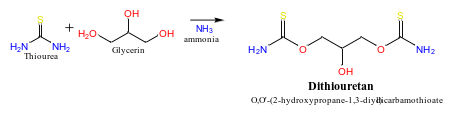
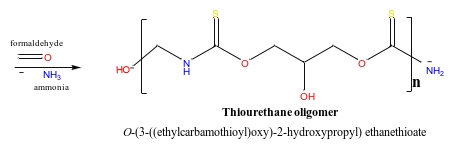
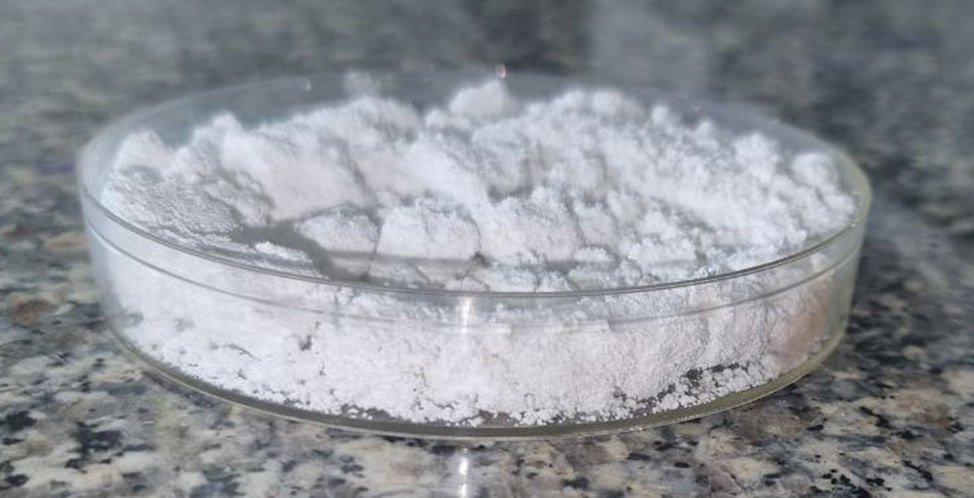
In the subsequent stage, the TGF-8 modifier (an oligomer containing thiourethane groups) was synthesized through the reaction of dithiourethane with formaldehyde. The procedure was carried out as follows: a mixture was prepared by adding 15 ml of 10 % NaOH solution to 150 g of a 37.5 % formaldehyde solution to adjust the pH. The previously synthesized dithiourethane was placed into a three-necked flask equipped with a reflux condenser, a dropping funnel, and a thermometer, and then heated to 110°C. With the mechanical stirrer in operation, the formaldehyde-NaOH mixture was introduced into the flask dropwise. During the addition process, the reaction temperature was gradually increased from 110°C to 130°C over a period of 40 minutes. Following the addition, the reaction was maintained at this temperature for 3 hours to ensure complete polycondensation. The resulting oligothiourethane is a white crystalline substance, characterized by poor solubility in water but high solubility in organic solvents.
2.3 Modification Process
The modification of liquid glass (sodium silicate) with the TGF-8 modifier is based on the formation of chemical bonds between the inorganic silicate matrix and the organic oligomer. During the modification process, the reactive hydroxyl (-OH) groups of the TGF-8 oligomer undergo polycondensation reactions with the silanol (Si–OH) groups of hydrolyzed sodium silicate. As a result, stable Si–O–C (siloxane–carbon) linkages are formed [6; 8].
Adhesion strength was determined in accordance with GOST 14760-69 (Adhesives -- Methods for the determination of bond strength), using an AMTs-2-20 electronic adhesiometer. Liquid-glass compositions, both unmodified and TGF-8-modified, were applied as a thin, uniform layer (thickness approx. 0.10 – 0.15 mm) onto birch plywood substrates -- a standard substrate for wood-adhesive testing -- and cured at room temperature (20 – 22 degrees C). Prior to testing, all specimens were conditioned at (23 +/- 2) degrees C and (50 +/- 5) % relative humidity for 24 h, following standard laboratory-atmosphere practice (cf. ISO 291).
Each adhesion value reported in this study represents the mean of three independent parallel measurements (n = 3) per composition, in line with the statistical protocol adopted for the parent study. The individual replicate readings and their standard deviations are retained in the original laboratory record; a full tabulation of replicate data together with the corresponding standard deviations and 95 % confidence intervals will be presented in an extended follow-up report.
Results
3.1 IR Spectroscopy of the TGF-8 Modifier
The molecular structure and functional groups of the synthesized TGF-8 modifier were investigated by infrared (IR) spectroscopy (Shimadzu) in the range of 500–4000 cm-¹. The obtained spectral data (Fig. 2) confirm that the polycondensation reaction between thiourea, glycerol, and formaldehyde proceeded successfully, leading to the formation of new functional groups.
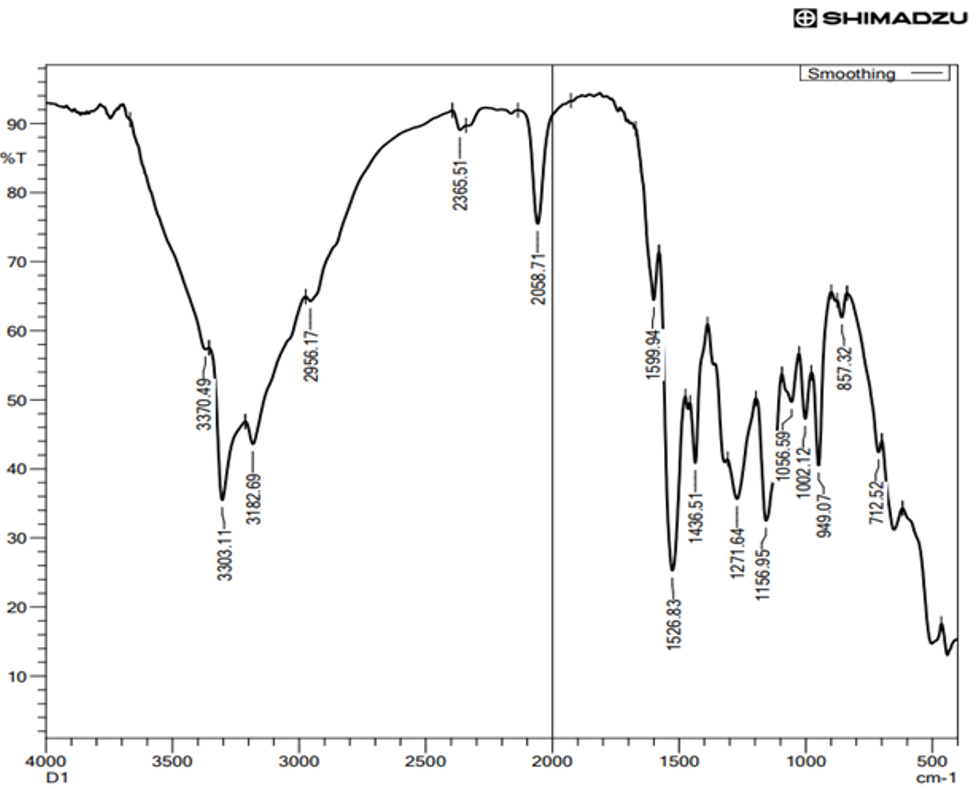
3370.49 cm-¹ and 3303.11 cm-¹ — These broad absorption peaks correspond to hydrogen bonding in –OH and –NH groups; such broad peaks are characteristic of polymers and oligomers, arising from intermolecular hydrogen-bonding interactions.3182.69 cm-¹ and 2956.17 cm-¹ — These peaks are attributed to C–H stretching vibrations, specifically of CH and CH2 groups; the signals indicate the presence of C–H bonds within the hydrocarbon framework of the oligomer [7; 17]. The strong absorption peak at 1526.83 cm-¹ corresponds to the combined deformation and stretching vibrations of the N–C=S system, characteristic of the thiourethane chain. In addition, in the region of 1271.64 cm-¹, the stretching vibrations of the thione C=S group were identified, representing one of the key centers responsible for the high chemical resistance of the modifier. The formation of the oligomer chain is further confirmed by absorptions at 1056.59 cm-¹ and 1156.95 cm-¹, which correspond to the stretching vibrations of simple ether C–O–C bonds and primary alcohol C–O bonds, respectively, arising from the reaction of glycerol with formaldehyde. The absorption peak at 1002.12 cm-¹ is attributed to the deformation vibrations of CH groups, particularly characteristic of aliphatic chains, thereby confirming the presence of hydrocarbon structures. Finally, the peak at 857.32 cm-¹ corresponds to the stretching vibrations of C–N bonds, indicating the presence of carbon–nitrogen linkages within thiourea-derived molecules [17].
3.2 Effect of Modifier Concentration on Adhesion
Following the modification of liquid glass with the synthesized TGF-8 oligomer, we compared the adhesion properties of modified and unmodified liquid glass. In addition, the experiments were conducted at different concentrations of the modifier. The results are presented in Fig. 3.
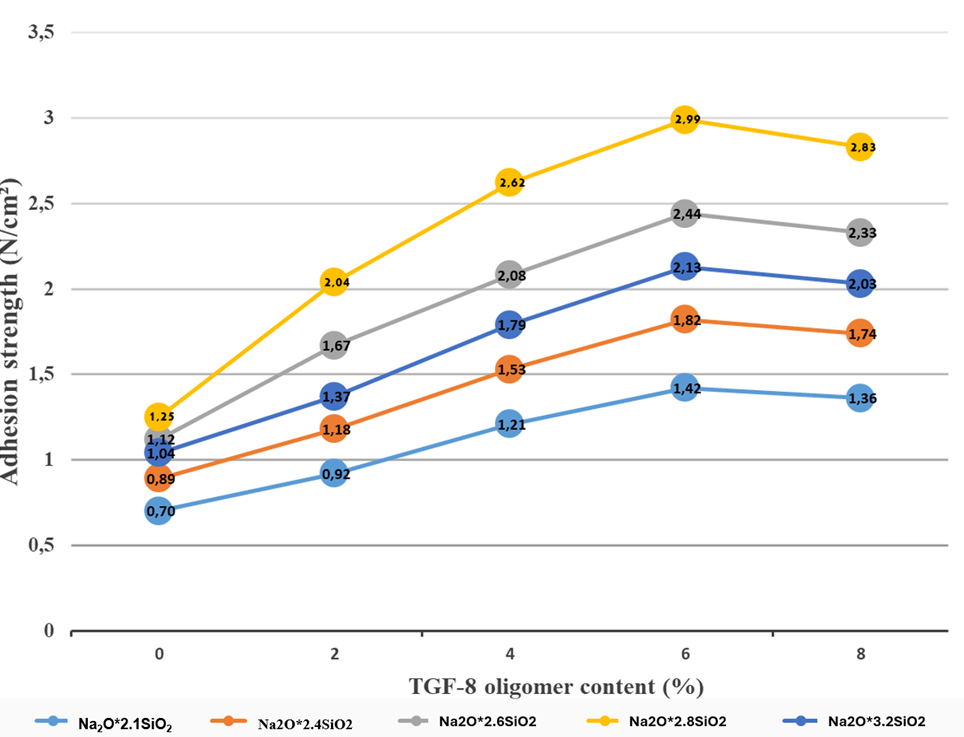
During the experiments, liquid glass solutions with Na2O:SiO2 ratios ranging from 1:2.1 to 1:3.2 (i.e., silicate modulus from 2.1 to 3.2) were modified by adding the TGF-8 oligomer in amounts between 2 % and 8 %. For each combination, the adhesion strength was measured in comparison with unmodified liquid glass. According to the obtained results, the incorporation of the TGF-8 oligomer significantly enhances the adhesion strength of sodium silicate. In particular, the solution with Na2O·2.6SiO2 (silicate modulus = 2.6) modified with 6 % TGF-8 achieved the optimal adhesion strength value (≈2.99 N/cm²,± 0.02 ).
Discussion
4.1 Comparison with Literature Data
The adhesion-enhancing effect of TGF-8 observed in this study is consistent with, and quantitatively comparable to, related work on organically modified sodium-silicate systems. Akhmedov, Kamolova and Olimov [1] reported that modifying a 10 % sodium-silicate solution (silicate modulus 2.2) with a related organic oligomeric modifier increased adhesion, measured with the same AMTs-2-20 adhesiometer used in the present work, by a factor of 2.5 – 3.02; the relative enhancement observed for TGF-8 in the present study falls within a comparable range. In an earlier study by the same research group [11], a thiourea-glycerol-based oligomer added at 5 – 15 % to a sodium-silicate wood adhesive (silicate modulus 2.6 – 2.8) raised adhesion strength from 2.28 to 3.15 MPa (a 27.6 % increase) at 10 % modifier content, measured in tensile (pull-off) mode; because that value is expressed in MPa (tensile mode) rather than in N/cm2 (peel mode, GOST 14760-69, as used here), the absolute figures are not directly interconvertible, but the direction and relative magnitude of the improvement are consistent with the present findings. Compared with organofunctional-silane-modified organomineral hybrids, for which Kopietz et al. [6] and Liang et al. [9] report mechanical-property gains of a broadly similar order, the thiourea-formaldehyde route explored here offers a lower-cost, isocyanate- and silane-free alternative based on locally available raw materials. Table 1 summarizes this comparison.
Table 1.
Comparison of TGF-8 adhesion performance with related organic modifiers of sodium silicate reported in the literature
| Modifier system | Adhesion metric | Improvement | Ref. |
|---|---|---|---|
| TGF-8 (this study), 6% in Na2O.2.6SiO2 | Peel adhesion, N/cm2 (GOST 14760-69) | ~2.99 N/cm2 (vs. unmodified) | - |
| Related oligomeric modifier, 8% in 10% sod. silicate (modulus 2.2) | Peel adhesion, AMTs-2-20 | 2.5-3.02x increase | [1] |
| Thiourea-glycerol oligomer, 10% in sod. silicate (modulus 2.6-2.8) | Tensile (pull-off), MPa | 2.28 to 3.15 MPa (+27.6%) | [11] |
| Organofunctional silane, organomineral hybrid | Flexural strength | Comparable-order gains | [6; 8] |
4.2 Molecular-Level Interaction Mechanism
The IR-confirmed functional groups of TGF-8 -NH2, -OH, C=S (thiourethane) and C-N -- provide several plausible pathways for interaction with the silicate matrix, consistent with mechanisms proposed for related organic-inorganic silicate systems [1; 8; 13]. First, the residual hydroxyl groups of the glycerol-derived fragments can undergo condensation with silanol (Si-OH) groups generated on hydrolysis of sodium silicate, forming Si-O-C linkages and releasing water; this is the mechanism already outlined in Section 2.3. Second, the polar thiourethane group, in which both the sulfur and the amide nitrogen carry lone electron pairs, is expected to act as a hydrogen-bond acceptor toward residual Si-OH and Si-OH2+ surface sites, supplementing the covalent Si-O-C network with a denser array of secondary interactions. Third, the free -NH2 groups may coordinate with the polysilicate anions through electrostatic/dipole interactions, consistent with the dipole-dipole mechanism proposed by Akhmedov et al. for a structurally related oligomeric modifier [1].
This combination of covalent (Si-O-C) and non-covalent (hydrogen-bonding, dipole) interactions is consistent with the observed concentration dependence of adhesion (Fig. 3): at low TGF-8 content (below 6 %), an insufficient number of modifier chains are available to bridge the silicate network, while beyond 6 – 8 % excess, unreacted oligomer is proposed to accumulate at the interface, plasticizing rather than reinforcing it, which is consistent with the decrease in adhesion reported at higher modifier loadings in the closely related system studied by Akhmedov et al. [1]. Direct spectroscopic confirmation of Si-O-C bond formation (e.g., by solid-state 29Si NMR or XPS) was not undertaken in the present short communication and is identified as a priority for future work.
Conclusion
In this study, the TGF-8 oligomer based on thiourea was employed as a modifier to improve the adhesion properties of sodium silicate (liquid glass) solutions. Laboratory tests demonstrated that the addition of the TGF-8 oligomer significantly increased the adhesion strength, viscosity, and rheological stability of sodium silicate-based adhesives. When the modifier was introduced into sodium silicate solutions (xNa2O:ySiO2) at concentrations ranging from 0 to 8 %, the highest adhesion strength (up to 2.99 N/cm²) was observed particularly at 6 % TGF-8. This confirms the formation of bonds between the silicate chains and the multifunctional groups of the oligomer. The presence of –NH2, –OH, –N–C, and –C=S groups in the synthesized TGF-8 modifier was verified by IR spectroscopy. Moreover, the adhesion of modified liquid glass was found to be superior compared to the unmodified system.
In conclusion, the modification of sodium silicate with the TGF-8 oligomer provides an environmentally friendly, cost-effective approach to obtaining composite materials with enhanced adhesion. This strategy offers a scientific basis for the development of a new generation of silicate-based binder systems with strong potential for widespread application in the composite materials industry.
References
